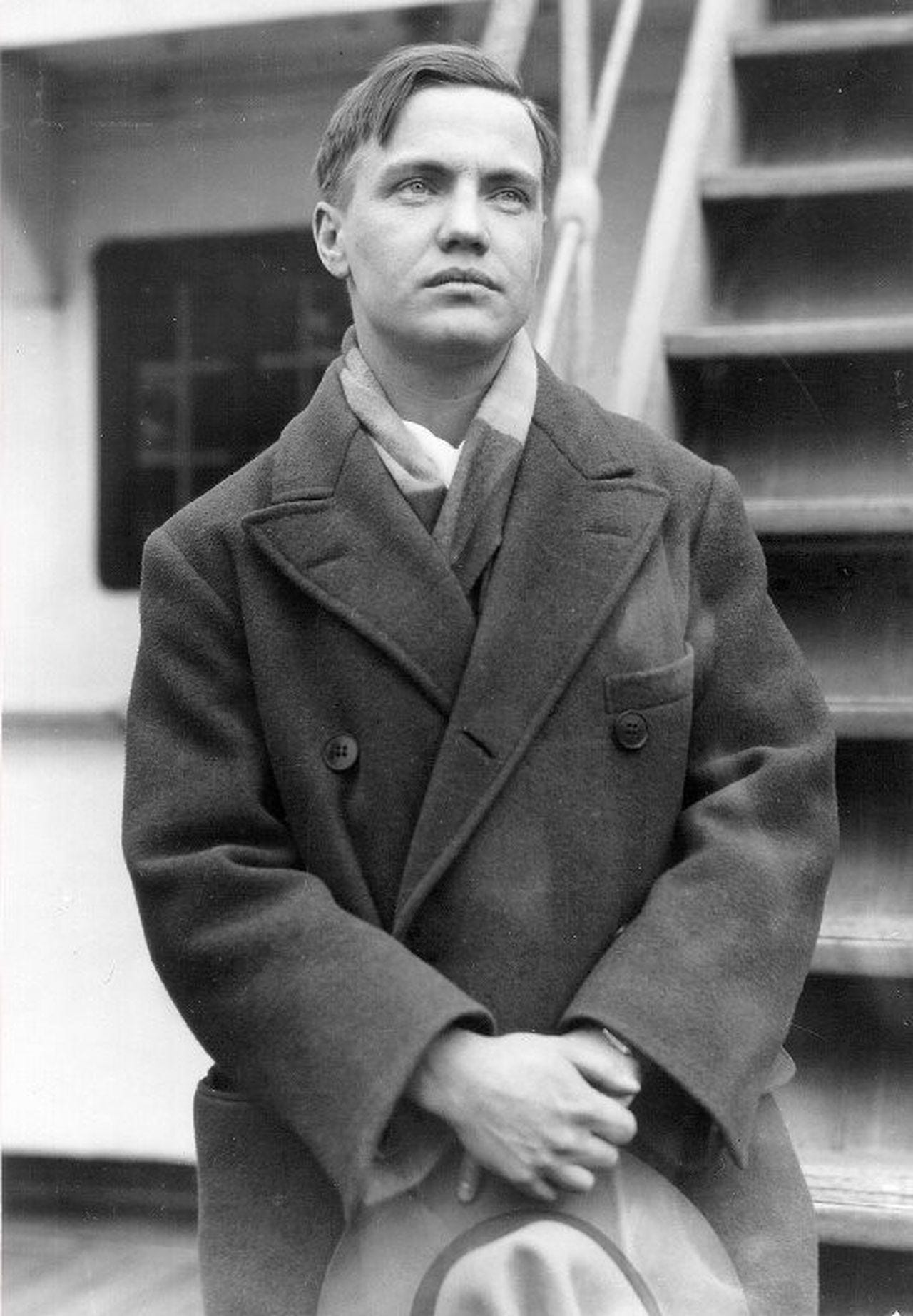
George Antheil (1900–1959) was an American avant‑garde composer and self‑styled “bad boy of music,” known for his ultramodern experiments of the 1920s and later for his wide‑ranging career as a film composer, writer, and inventor. His Ballet Mécanique (1924) began as a collaboration with filmmaker‑artist Fernand Léger and Dudley Murphy, an early attempt to pair a fiercely modern score with an equally modern film. The two works never aligned in their own time — the music ran nearly twice the length of the film, and the technology simply couldn’t synchronize them, so they remained separate for decades.
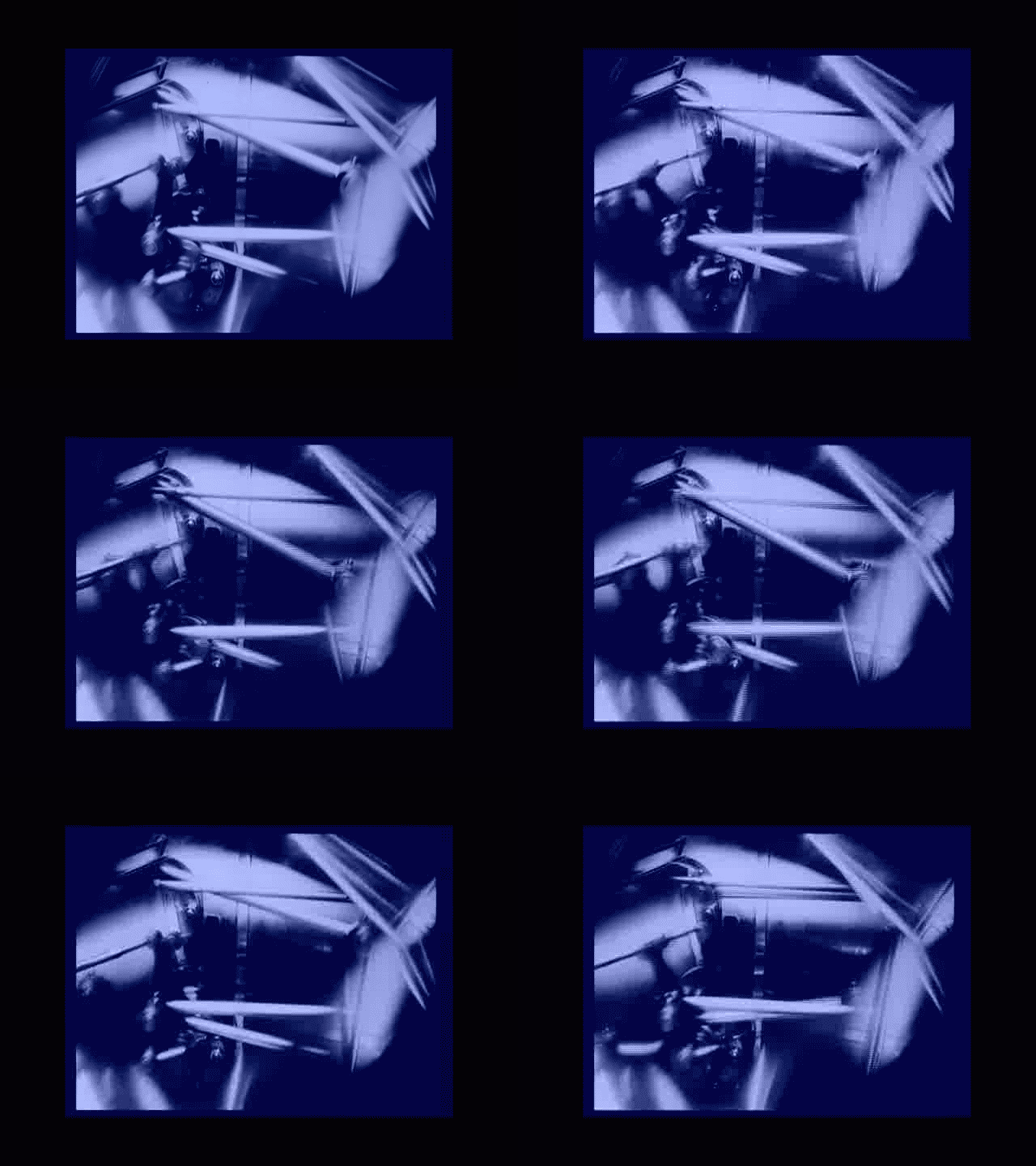
In the 1990s, that changed: new MIDI‑driven reconstructions made Antheil’s original, unplayable battery of 16 player pianos feasible and Paul D. Lehrman’s restoration work finally allowed the film and score to be brought together in a coordinated version, later refined through Bruce Posner’s archival reconstruction. Today, Ballet Mécanique stands as Antheil’s best‑known piece, remembered for its bold sonorities, its improbable instrumentation and the long, winding path that led to its first true realization. In performance, the “ballet” has no human dancers; instead, the motion comes from the machines themselves — player pianos, airplane propellers, electric bells — arranged across the stage and moving in their own mechanical rhythm, giving the work its visual presence and its unmistakable character.
And who’d have ever imagined this? In 1941, the glamorous Hollywood star Hedy Lamarr and Antheil devised a wartime invention that anticipated modern wireless technology. Drawing on Antheil’s experiments with synchronized player‑pianos, they developed a frequency‑hopping system that allowed radio‑guided torpedoes to switch signals rapidly, preventing enemy interception. Though the Navy dismissed the idea at the time, the underlying principle later became foundational to spread‑spectrum communication—the backbone of Wi‑Fi, Bluetooth, and GPS—making their unlikely partnership one of the most consequential creative alliances of the twentieth century. (HT: Tom Borengasser)
Breakthrough: Ideas that changed the World - George Antheil & Hedy Lamarr
George Antheil’s legacy rests on the audacity of his imagination: a composer who treated sound as a volatile material to be pushed, provoked, and re‑engineered. His later reinvention as a writer and film composer showed the same restless curiosity, a willingness to shed one identity and slip into another. And his partnership with Hedy Lamarr—an unlikely leap from avant‑garde music to wireless innovation—secured his place as a figure whose influence radiates far beyond the concert hall.