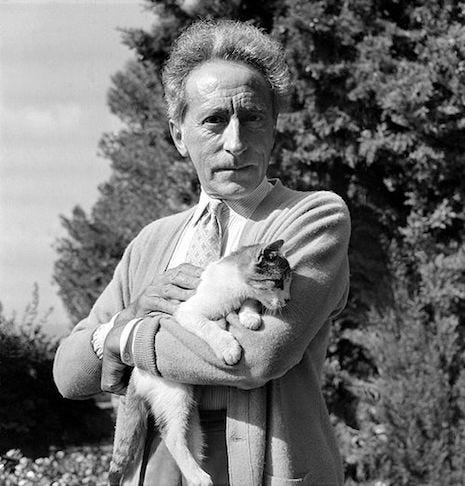
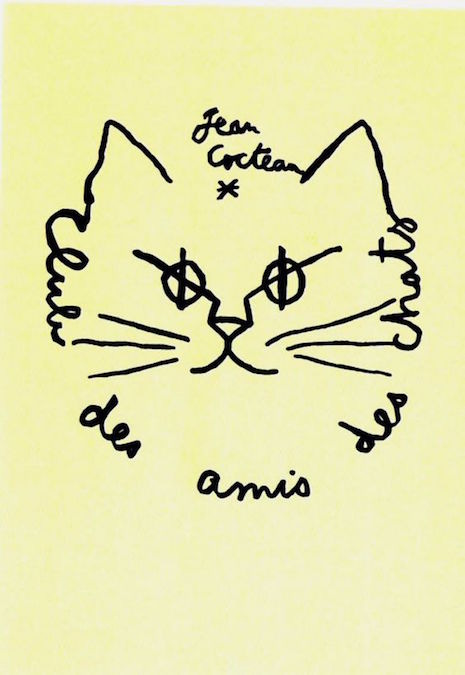
Jean Cocteau worked across nearly every artistic form — poetry, theater, fiction, design, film, and visual art — and his range made him a central figure in the early‑twentieth‑century avant‑garde. He played a visible role in Surrealism, Dada, and the early modernist movements, where his influence was unmistakable.

His work with the Ballets Russes helped pull the company toward a sharper, more modern theatrical sensibility, especially through his scenario for Parade. He brought a mischievous, avant‑garde spirit—mixing circus, cinema, and street life—to his collaboration with Picasso and Satie.
The ballet Parade with scenario by Jean Cocteau, costumes and sets by Pablo Picasso, choreography by Léonide Massine, and music by Erik Satie.
Cocteau was born into a bourgeois Catholic family, and Catholic imagery stayed with him his entire life, but he was not a conventionally observant Catholic. His relationship to the Church was intermittent, aesthetic, and symbolic rather than doctrinal.
He did have a brief return to Catholic practice in the 1920s during his recovery from opium addiction, guided by the Dominican priest Father Marie‑Alain Couturier, who later became a major force in modern sacred art. But Cocteau never became a model of orthodox belief. His faith was personal, idiosyncratic and often filtered through myth, ritual and the theatrical imagination.
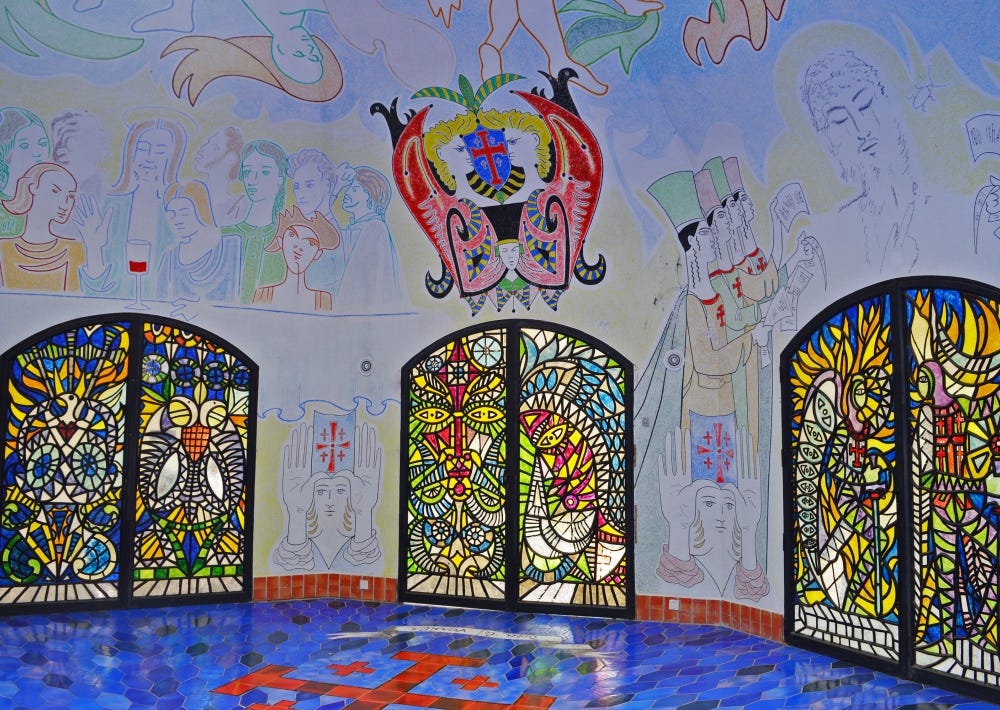
Cocteau was invited to design the Chapel of Jerusalem by Count Jean de Maupéou, who owned the property in Fréjus and admired Cocteau’s late work in sacred spaces. Cocteau had already completed the Chapel of Saint‑Pierre in Villefranche‑sur‑Mer, which established him as a credible figure in the modern revival of liturgical art.
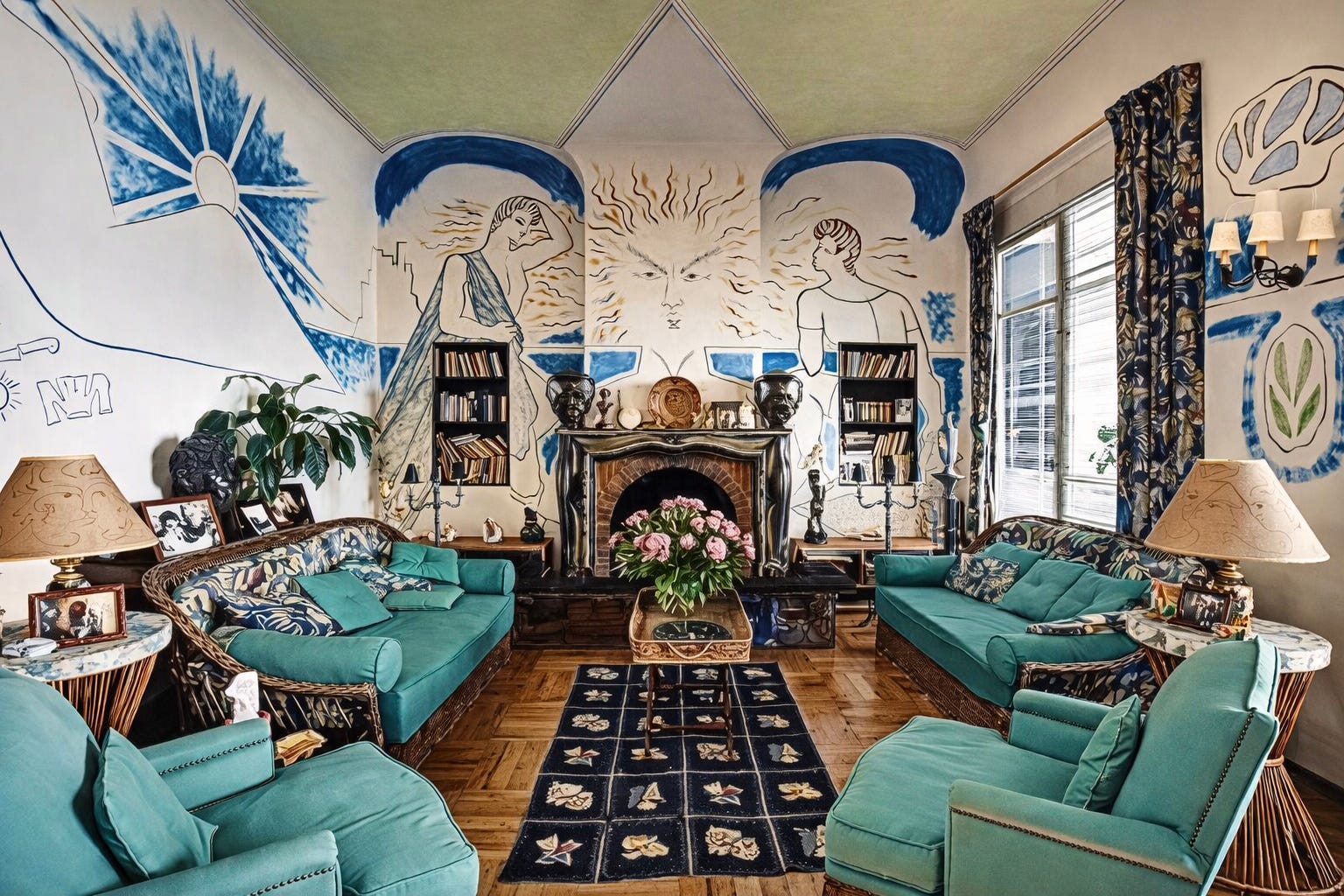
The Chapel of Jerusalem has the unmistakable clarity of Cocteau’s late style: spare, linear, and theatrical without excess. The murals wrap the small octagonal space in a continuous narrative that feels both intimate and ceremonial, giving the chapel the atmosphere of a modern passion play rendered in line and color.
As a film director, Cocteau transformed cinema into a poetic medium, a mirror for dreams, memory, and myth. His first film, Le Sang d’un Poète (The Blood of a Poet) (1930), treated the screen as a subconscious space, blending surreal imagery and symbolic gestures to explore the artist’s inner world. It has no plot, but is a meditation on creation and mortality, anticipating later experimental cinema. With La Belle et la Bête (Beauty and the Beast) (1946), Cocteau brought that same visionary sensibility to a fairy tale, using mirrors, slow motion, and theatrical lighting to turn a familiar story into a luminous allegory of love and transformation. Together, these works established him as one of the rare directors who made film feel like poetry made visible.
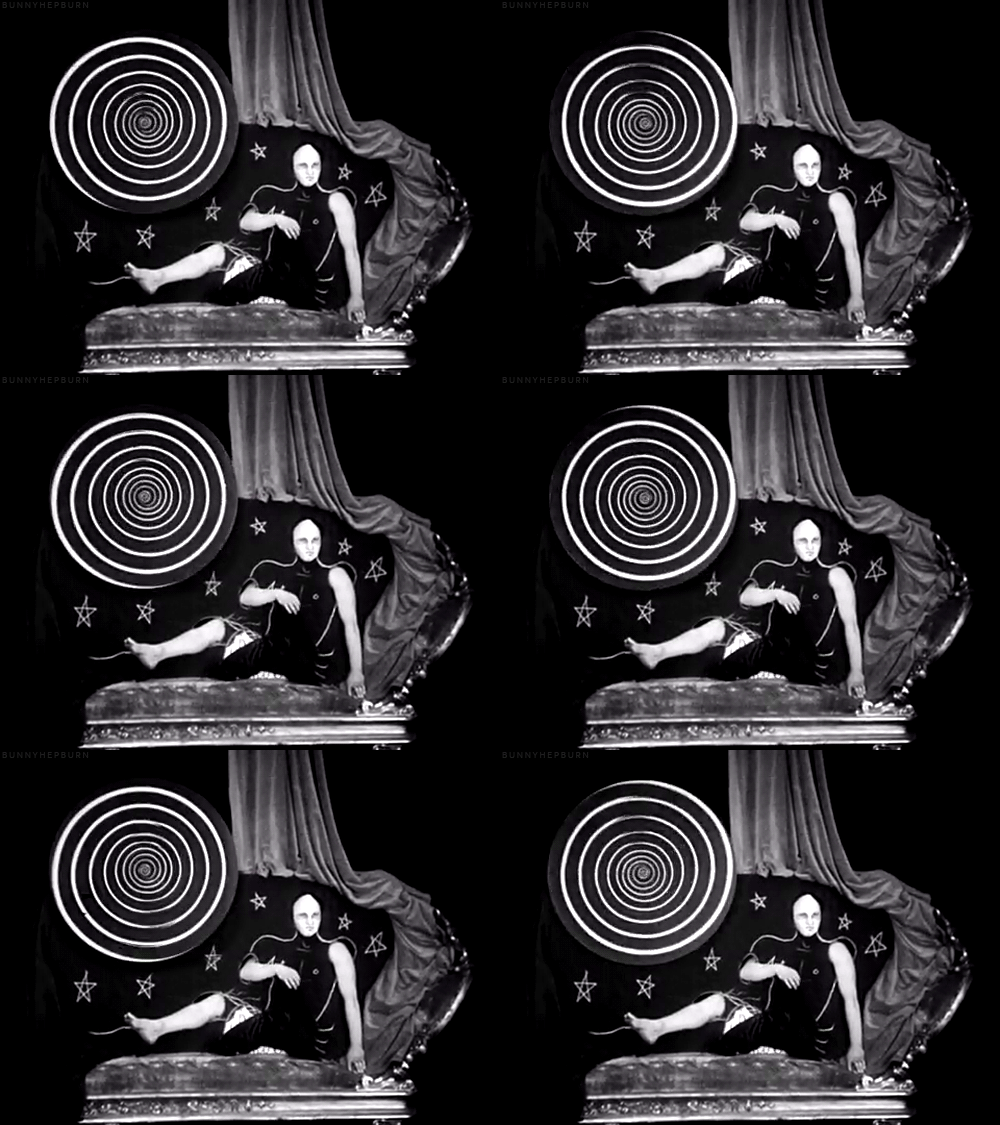
Cocteau’s approach shaped later filmmakers such as François Truffaut and Jean‑Luc Godard, who saw in his work a model for personal, dreamlike cinema. Even choreographers like Maurice Béjart borrowed his sense of ritual and stylized gesture. Cocteau, like David Lynch, was able to dive deep into his imagination to create utterly unique worlds. And he continues to stimulate our subconscious today.
"I love cats because I enjoy my home; and little by little, they become its visible soul."