This Preview brought to you by the Friends of Chamber Music.
There’s nothing like going on a road trip with friends, stopping at diners, having conversations both witty and profound, and exploring new landscapes along the way.
That’s what Friends Of Chamber Music have planned for its 2026-2027 season. Landscapes is going to be the ultimate musical road trip. You’ll explore wondrous vistas like Bach’s complete Musical Offering, early music that sounds brand new, keyboard music performed by piano superstars and chamber music galore.
A Season Built as a Journey
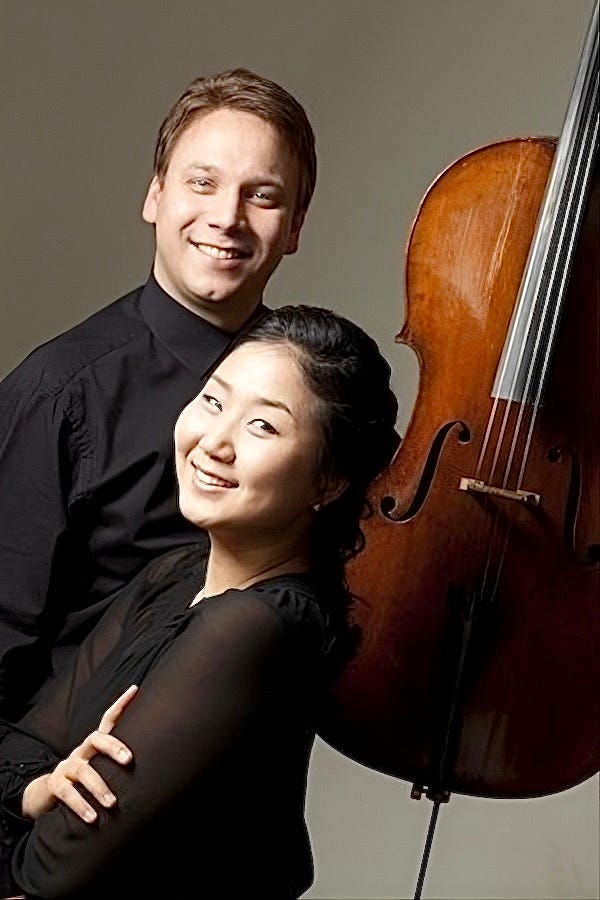
Cellist Dmitri Atapine and his wife, pianist Hyeyeon Park, the co-artistic directors of the Friends Of Chamber Music, never simply assemble a list of concerts. Each season is shaped as a narrative, with each concert connecting to the other. This year’s theme, Landscapes, explores the emotional, cultural, and geographic vistas that chamber music can evoke.
“Every concert is like a chapter of a beautiful book,” Atapine says. “We want the audience to feel compelled to explore things they’ve never heard before alongside familiar repertoire. And we want a sense of progression from the beginning of the season to the end.”
The road trip starts with American Landscapes, a celebration of the nation’s 250th anniversary. It features Samuel Barber’s youthful Opus 1 Serenade for String Quartet, Amy Beach’s sweeping Piano Quintet, and Dvořák’s beloved American String Quintet. Atapine and Park will join a roster of distinguished artists including violists Scott Lee, Chad Hoopes and Masumi Rostad, and violinist Danbi Um for the season opener.
Beach’s quintet, in particular, is a work Atapine champions. “It’s an absolute romantic masterpiece,” he says. “More profound than some of the deepest Fauré you could hear. There are resonances with Brahms, but also this incredibly unique voice she developed against enormous odds.”
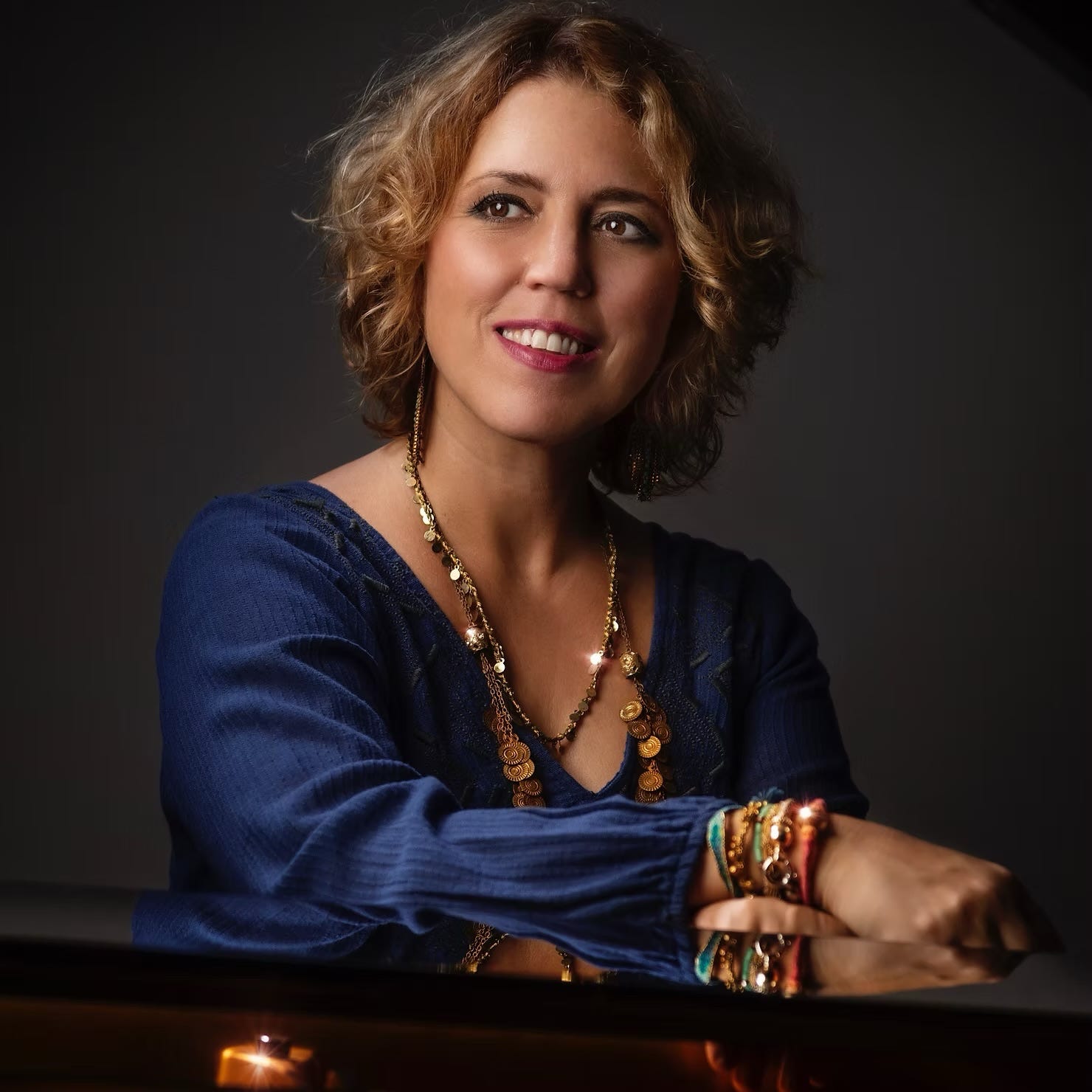
From there, the season travels widely. On Oct. 21, Venezuelan pianist Gabriela Montero brings a program of Spanish and Latin American works to the Folly. The concert will include composers from Soler and Scarlatti to Albéniz and Alicia de Larrocha. Montero is celebrated for her electrifying artistry and her rare gift for spontaneous classical improvisation. Trained in Caracas and London, she’s become a major voice on the world stage, known for performances that fuse virtuosity with emotional immediacy. Piano recitals too often focus on the standard repertoire. This concert will give audiences a chance to experience the rich literature of Spanish music for the keyboard.
“The vastness of piano repertoire is astonishing,” Atapine says. “No wonder it’s the king of instruments.”
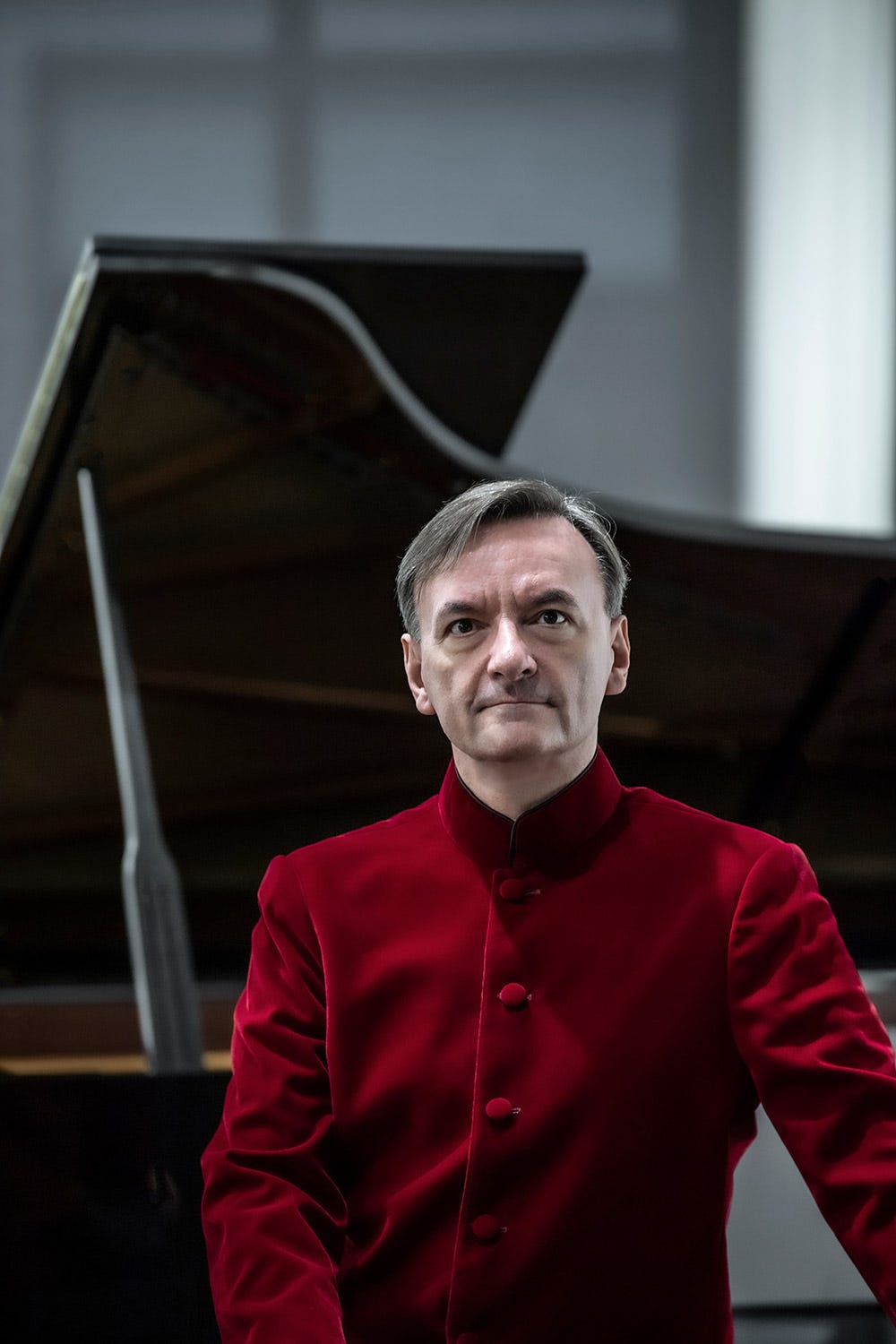
Speaking of pianists, the acclaimed Sir Stephen Hough arrives from London on Jan. 30 with a satchel full of miniatures, ranging from Schubert and Brahms to Stockhausen and Beethoven’s bagatelles. Atapine is especially excited for Hough’s own arrangement of the Mary Poppins Suite. “This is a bold and traveling program,” he says with a grin.
Hough is a true Renaissance man: a pianist of staggering refinement, a composer of crystalline imagination, and a writer whose essays move with the same elegance as his phrasing at the keyboard. He’s one of the few classical musicians ever awarded a MacArthur Fellowship, a nod to the rare combination of intellect, curiosity, and artistic daring that defines his work.
Early Music, New Music, and Everything Between
Early music has long been one of the Friends’ defining strengths, and this season offers a particularly rich array. The great a cappella ensemble Voces8 returns Oct. 3 with Towards Paradise, a program of Croce, Purcell, Mendelssohn, Casals, Lotti, and Gibbons. “We want to transport our audience into this beautiful landscape of paradise,” Atapine says. “And we want them to remain there for the rest of the season.”
The Jupiter Ensemble’s program Nov. 20 draws from Baroque operas and instrumental works inspired by the legendary women warriors of the Amazon. Based on the ensemble’s acclaimed Amazone project, it blends sinuous arias, storm‑tossed sinfonias — complete with wind machine and thunder sheet — and tender laments sung by the exquisite mezzo soprano Lea Desandre. It’s exactly the kind of bold storytelling the Jupiter Ensemble brings to early music with such flair.
The Jupiter Ensemble performs Nov. 20 at Atonement Lutheran Church.
Cappella Pratensis and Piffaro perform together on March 5 at the Cathedral of the Immaculate Conception. The two groups have a beautiful complementary partnership, each ensemble illuminating a different facet of early music. Cappella Pratensis specializes in Renaissance polyphony sung directly from historical facsimiles, giving their performances the feeling of attending a liturgy in a fifteenth‑century chapel. The Piffaro ensemble brings the vibrant colors of shawms, dulcians, sackbuts, recorders, and bagpipes, the very instruments which once surrounded and supported sacred vocal music. Together, they create a richly textured soundscape, offering audiences a rare chance to hear Renaissance repertoire in something close to its original sonic environment.
They’ll perform a true rarity, the Mass for Manila, a luminous reconstruction of music written for the Manila Cathedral by the Spanish Renaissance composer Francisco Guerrero. It’s a fascinating work shaped by migration, empire, and the meeting of European sacred practice and the devotional life of early colonial Philippines.
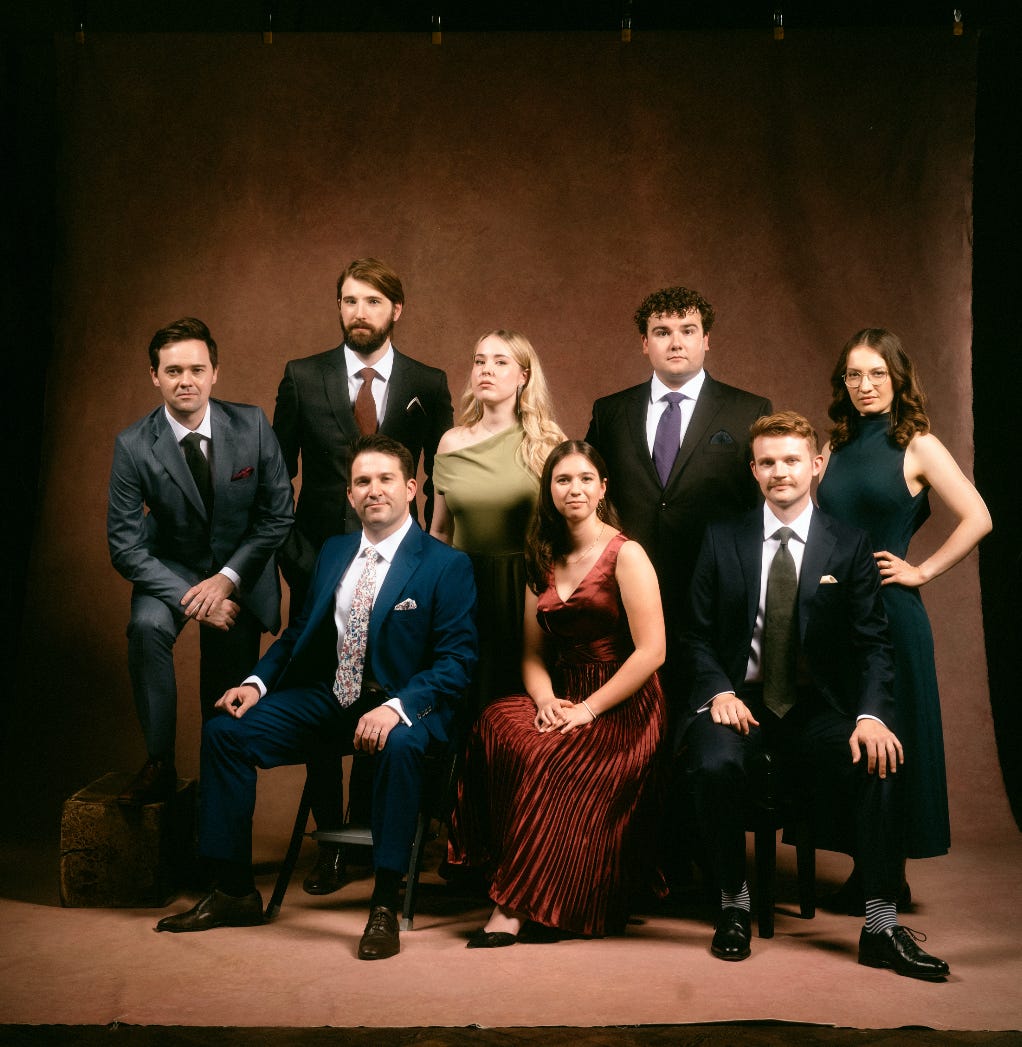
Another highlight is Bach’s Musical Offering, performed by seven artists including harpsichordist Kenneth Weiss. It’s a brilliant labyrinth of canons and fugues spun from a single theme, a work that reveals Bach’s contrapuntal imagination at its most daring. Conceived after Frederick the Great challenged him with an intricate melody, it unfolds as a kind of sonic puzzle where each movement deepens the sense of intellectual play.
“It’s one of the most profound and intellectually revealing works Bach ever composed,” Atapine says. “A compendium of invention.”
The program will also include works by Bach’s sons, Johann Christoph, Carl Philipp Emanuel and Wilhelm Friedemann. The concert on Dec. 15 at the Folly Theater is the perfect early Christmas present for Bach fans and a festive holiday treat for any music lover.
A more intimate early music concert will take place March 19th at Grace and Holy Trinity Cathedral when violinist Théotime Langlois de Swarte and lutenist Thomas Dunford (Artistic Director of the Jupiter Ensemble) turn seventeenth‑century English melancholy into something strangely seductive. Their program, “Mad Lover,” reimagines that titular figure as a member of Charles II’s court, his emotional turbulence unfolding through music by John Eccles, Henry and Daniel Purcell, Henry Eccles, and Nicola Matteis. Infused with the exuberance and freedom Italian musicians brought to Restoration England, melancholy never felt so good.
The season also champions new music. On Oct. 16, the Modigliani Quartet will perform Debussy and Schumann alongside the United States premiere of Kryštof Mařatka’s AMEDEA—visage de jeune fille, a haunting, psychologically charged portrait of a young girl. On February 6 at the Folly, the Espressivo Piano Quintet presents Joy Steppin’, a new work by Nokuthula Ngwenyama. An American composer born in Los Angeles to Zimbabwean and Japanese parents, Ngwenyama’s music blends spiritual inquiry, ecological awareness, and a vivid sense of sonic color. That concert will also include works by Mozart and Brahms.
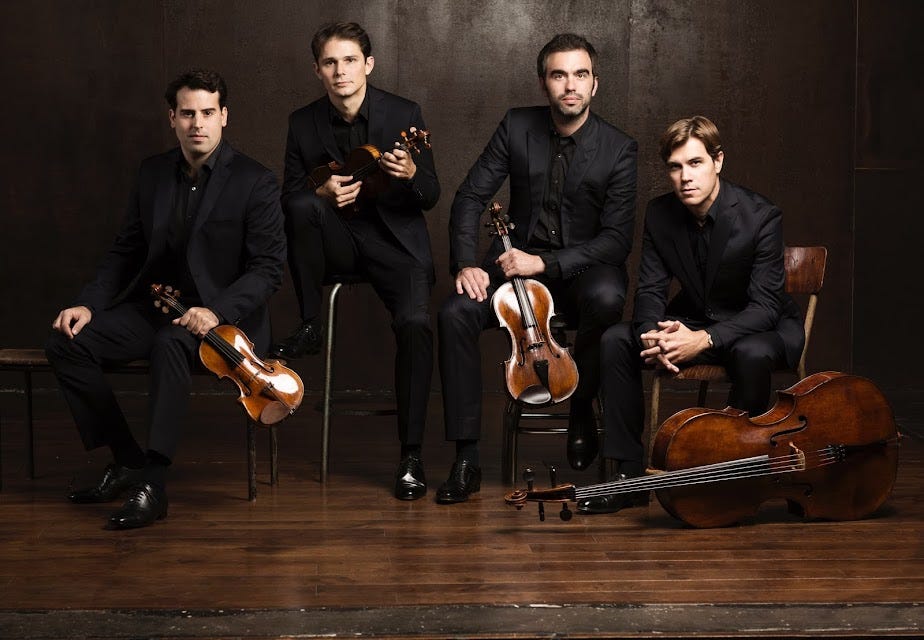
The Balourdet Quartet concert on Feb. 24 is part of the New Horizons series at the 1900 Building. Atapine described their appearance as an invitation into “a bold, new vision of chamber music as an art form that’s alive and well,” a program built around repertoire that is both challenging and deeply rewarding. He emphasized that New Horizons is designed for listeners who relish adventurous music, noting that “some people have that incredibly spicy taste in music and we are already gaining more devotees.”
He placed the Balourdet within the season’s larger arc, where tradition and innovation meet: “What’s important to us is presenting the full array. You understand the roots of chamber music in Beethoven and Brahms and Mozart, Haydn, and then you connect to the voices of present day young composers who are actively exploring new terrain but always rooted in tradition. That conversation between centuries is essential.”
This extraordinary season will conclude with works by two meat and potatoes composers but it’s repertoire rarely heard live: the Mozart and Brahms Clarinet Quintets. There is something about the sweet combination of clarinet and strings that can just make you melt. Clarinetist Sebastian Manz will perform along with musicians from the Chamber Music Society of Lincoln Center, an organization with which Atapine and Park have a long and warm relationship.
Why Chamber Music Matters
Kansas City’s artistic life is unusually rich, and Atapine sees chamber music as a vital part of its cultural health. “To have a chamber music organization like the Friends entering our fifty‑first season is truly a jewel in the crown of this city,” he says. “Not every community has access to world‑class chamber music, and yet it’s one of the most transformative art forms I know.”
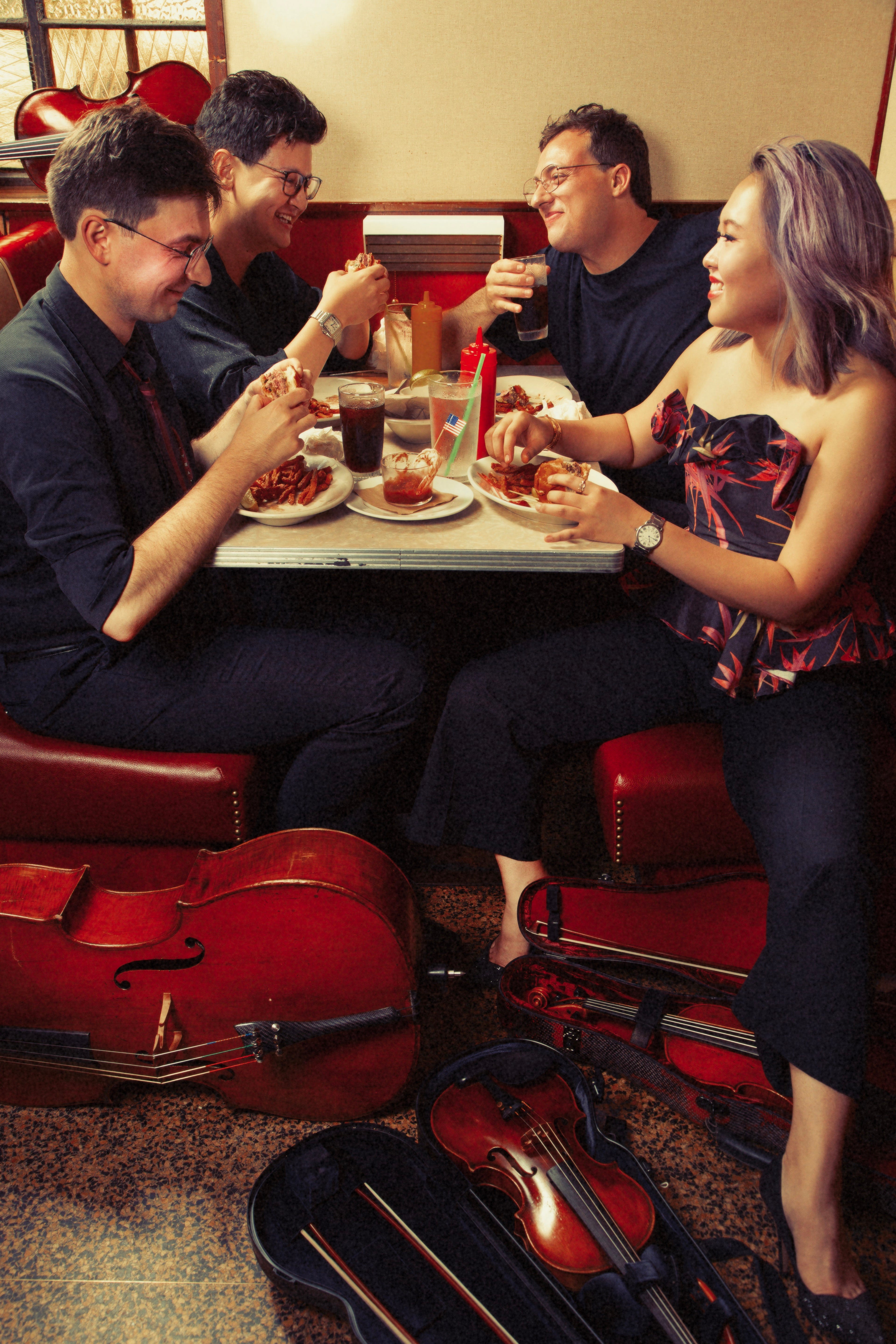
He’s especially passionate about its impact on young musicians. The Friends’ Young Artists Project nurtures emerging ensembles, including the Tesura String Quartet, which recently participated in the Juilliard String Quartet Seminar. “When young players discover their ability to influence each other, to cooperate, to synthesize ideas, it brings them to a level of understanding of what human community can do,” Atapine says. “It’s not just chamber music. It’s knowing how to be a better member of society.”
Atapine’s enthusiasm is infectious, and he knows it. “The news of chamber music not being the greatest art form has been greatly exaggerated,” he says with a laugh. “One of our missions is to make people realize how much fun, how much beauty, and how much communion this music can bring into their lives.”
He hopes audiences will not only attend concerts but share their experiences. “Post about how much you love chamber music,” he says. “Help us stay true to our mission, which is to make more friends of chamber music.”