

This preview brought to you by the Choral Foundation
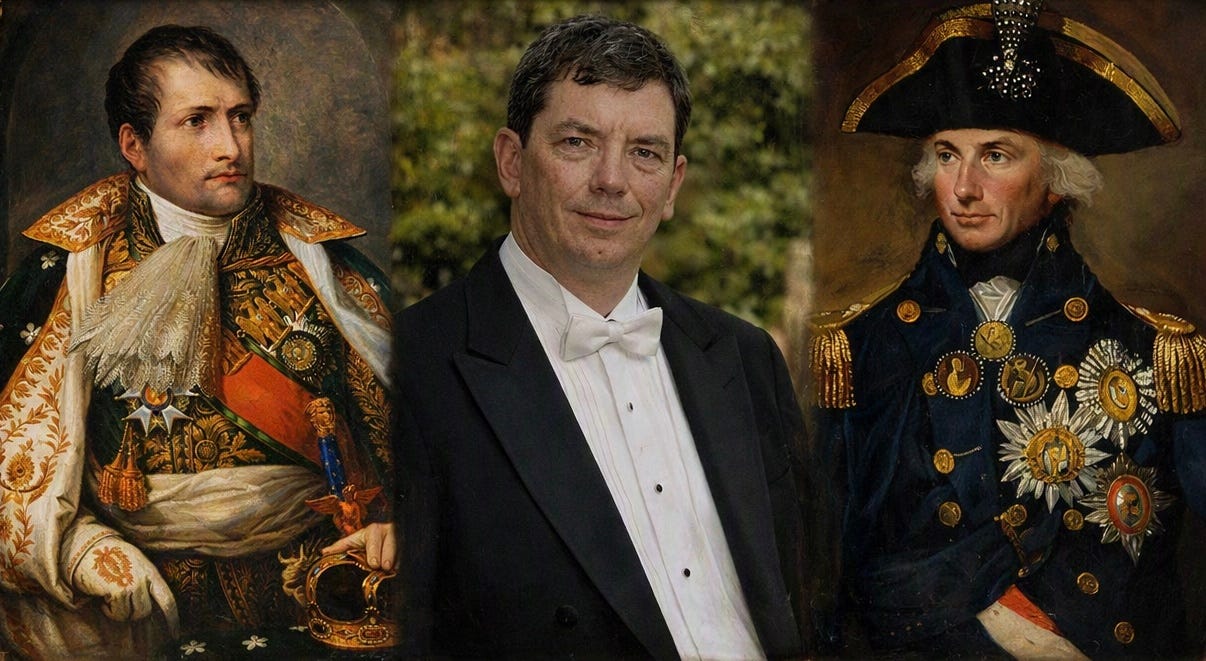
Summer in Kansas City has its own tempo. The air slows, the calendar thins, and many ensembles take their seasonal rest. But for William Baker and his Choral Foundation, July and August are not a lull. They are a second season, built on openness, community and the simple pleasure of gathering people to sing.
“Summertime is a time of relaxation and sitting back and chilling,” Baker said, “but not for us.”
The Choral Foundation’s Summer Singers now span multiple states, but Kansas City remains its most concentrated hub, with four concerts unfolding over three weeks: three Summer Singers ensembles and the Summer Ringers Academy.
These groups are non‑audition, but the musicianship is anything but casual. Many singers are teachers or professors who can only perform in the summer; others are seasoned choral veterans keeping their voices active; still others are stepping into ensemble singing for the first time. The blend gives the concerts a particular energy, a sense of shared purpose that is both relaxed and serious, rooted in the idea that good music belongs to everyone willing to show up and work.
Baker shared a story from a past season that captures this spirit. It happened during a performance of Haydn’s Creation, as the ensemble surged into “Sing to God, ye hosts unnumbered.”
“There was a 16-year-old girl singing in the group, and I caught her face during that moment when there’s so much excitement, and tears are going down her face,” Baker said. “That was 15 years ago. She wrote me a letter and said that that music and that moment changed her life and put her on a new course. And now she’s a high-school choral director.”
Baker was obviously moved, recalling this teenager’s epiphany. For the Choral Foundation, the kind of transformation she experienced is the quiet engine behind the work.
Summer Singers of Lee’s Summit: Gospel That Moves the Room
The season opens Sunday, July 26 at 4 p.m. at St. Paul’s Episcopal Church in Lee’s Summit, where the 45‑voice Summer Singers of Lee’s Summit will present an all‑gospel program centered on Robert Ray’s Gospel Mass. Ray (1946–2022) was an American pianist, composer, and educator who taught at the University of Illinois and later at the University of Missouri–St. Louis, where he also founded and directed the St. Louis Symphony’s IN UNISON Chorus.
Ray’s Gospel Mass began as a one‑off experiment after Vatican II, written for a single vigil service. Ray “didn’t think anything would become of it,” Baker said. But the response was immediate and overwhelming. The piece was repeated, then published and it has since become one of the most beloved sacred works in the African American gospel tradition.
Baker speaks about gospel music with love and respect. “It is as powerful, and as beautiful and as worthy of scholarship as anything from the Western European masters,” he said. “And… it’s an awful lot of fun.”
The program also includes Richard Smallwood’s Total Praise and Keith Hampton’s Praise His Holy Name, pieces that carry their own unmistakable lift. Baker told the ensemble he wants people driving past the church to see the building “swaying while we’re singing.” It’s not hard to imagine.
Summer Ringers Academy: First Notes, First Discoveries
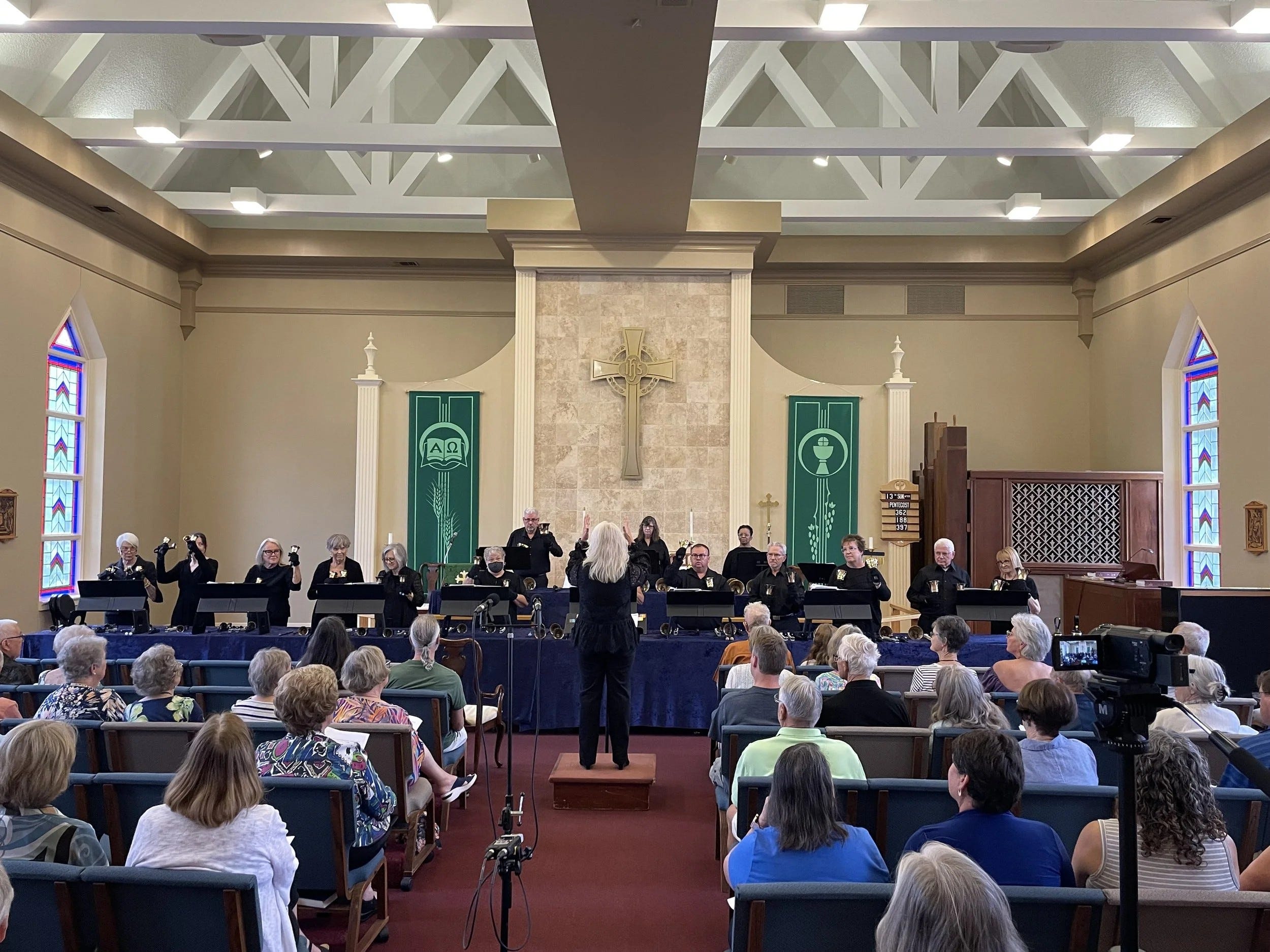
There is something bracing and clarifying about the sound of bells. Negative energy seems to dissipate in the presence of their beautiful sound. On Wednesday, July 29 at 7:30 p.m., also at St. Paul’s, the Summer Ringers Academy offers something different: a handbell concert by musicians who, in many cases, have never rung a bell before. Directed by Amy Chinnery Valmassei with associate director Robbert Abbott, the Academy functions as both workshop and ensemble.
“Most of the people in the Summer Ringers Academy are musicians,” Baker explained. “They’re pianists, or singers, or instrumentalists, but they haven’t done handbells.” The result is a kind of musical first contact — the moment when someone accustomed to melody or harmony suddenly becomes responsible for a single pitch, waiting for its exact entrance.
The enthusiasm “is off the chart,” Baker said. The concert has the feel of a shared experiment, open and welcoming, with the pleasure of discovery built into the sound.
Northland Summer Singers: Schubert in Early Bloom
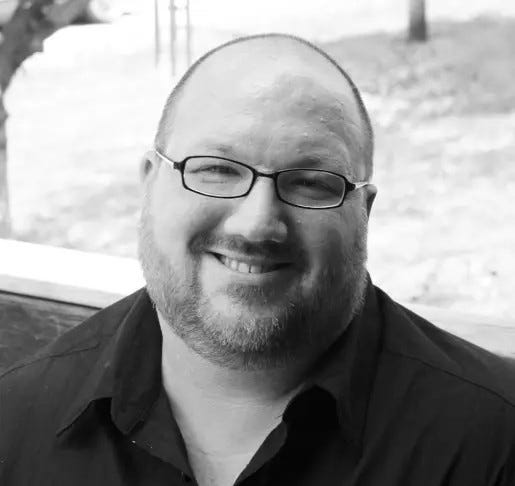
On Sunday, August 2 at 2 p.m., the Northland Summer Singers bring an all‑Schubert program to Second Baptist Church in Liberty. Directed by Daniel Baker — “not related to me, but I wish he were,” William Baker said — the ensemble was founded in 2025 and has quickly grown into a confident 50‑voice chorus.
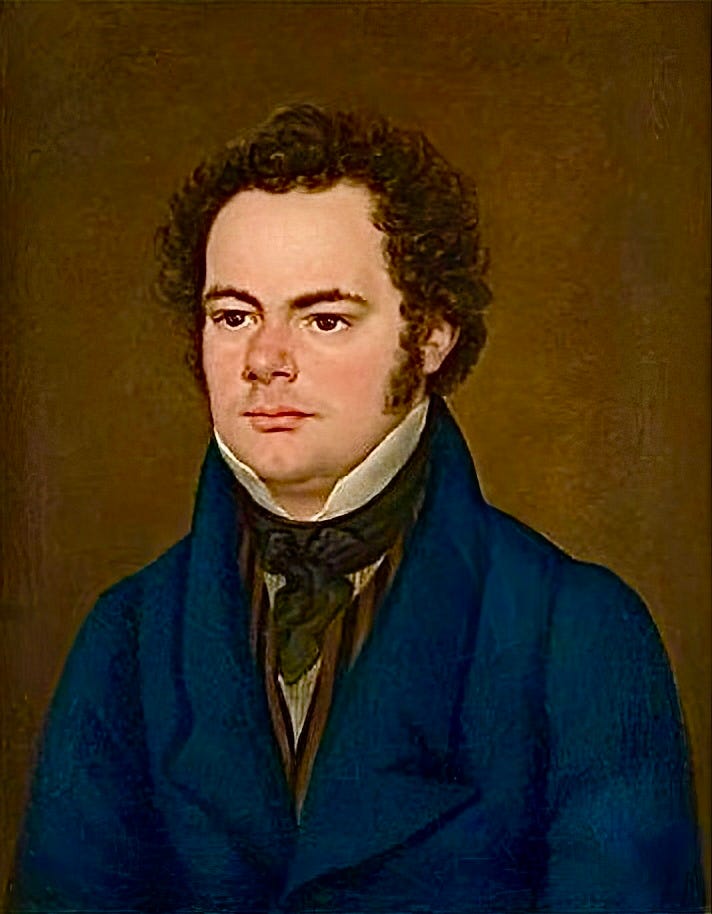
The centerpiece is Schubert’s Mass in G, written when the composer was just fifteen. The piece carries the clarity and directness of youth, but also the unmistakable lyricism that is the hallmark of Schubert‘s style.
“For my money,” Baker said, “Schubert is probably the greatest songwriter in the history of music.” The Agnus Dei is especially moving, he added, while the Gloria “explodes with joy.” Schubert’s Masses are not often performed live, so this is a rare opportunity to hear this music sung by a full chorus in a resonant sanctuary.
Summer Singers of Kansas City: Haydn’s Fire and Light
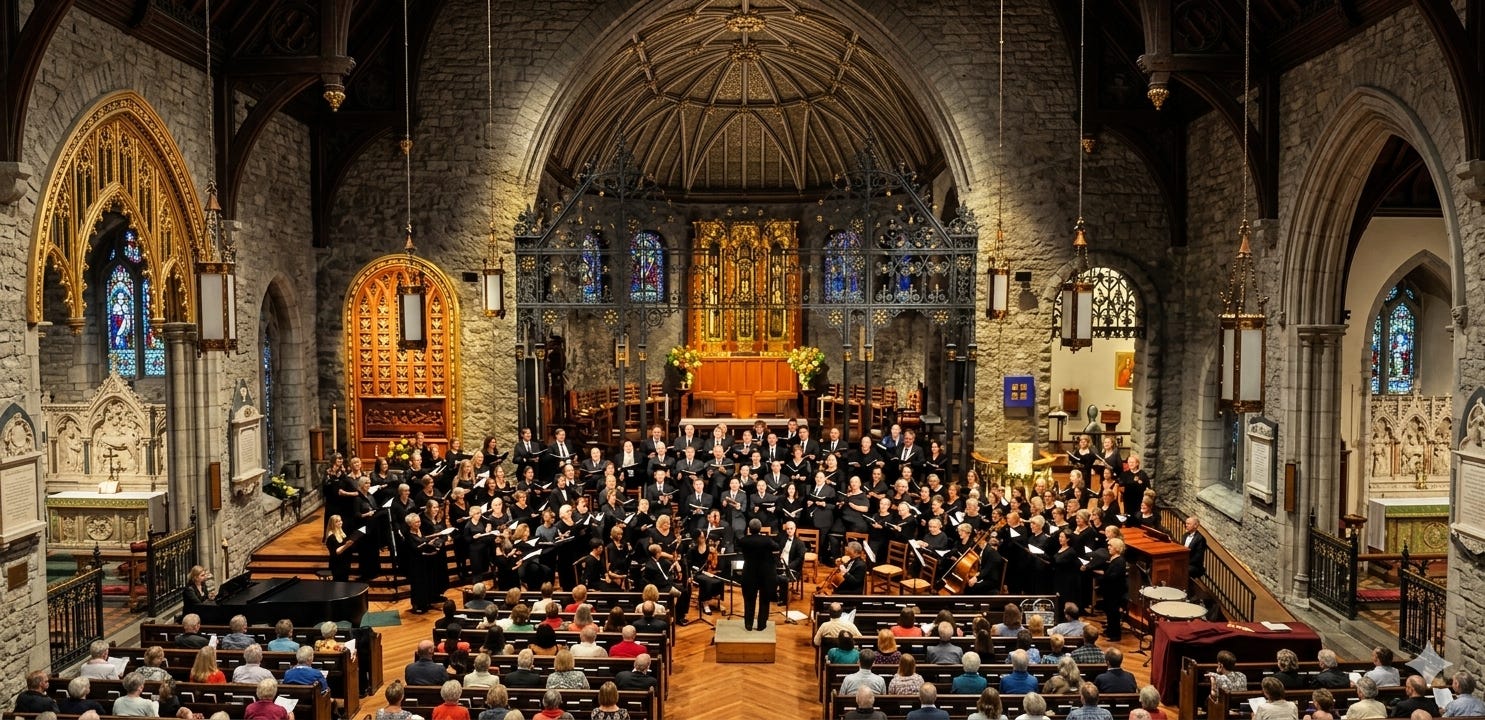
The season concludes Saturday, August 15 at 6 p.m. at Grace and Holy Trinity Cathedral, where the 125‑voice Summer Singers of Kansas City, full symphony orchestra and soloists including Victoria Botero will perform Haydn’s Lord Nelson Mass and the exuberant Te Deum in C. Baker will also conduct Haydn’s Symphony No. 88.
The Te Deum is, in Baker’s words, “a blowtorch of joy.” The Lord Nelson Mass — originally titled Missa in Angustiis (“Mass in Troubled Times”) — was written during the upheavals of the 1790s, when Napoleon’s campaigns were reshaping Europe. Its nickname emerged only later, after Admiral Nelson’s victory and after Nelson himself attended a performance in 1800.
Baker speaks of Haydn with deep admiration. “There’s not one note that is not for great purpose,” he said. “Every single note of the piece is beautiful and glorious.”
Symphony No. 88, written during Haydn’s mature middle period, shares instrumentation with the Mass and radiates the same inventive clarity. It opens with a dignified slow introduction before moving into an Allegro built almost entirely from a single melodic idea. The slow movement, a set of variations featuring oboe and solo cello, was so beautifully crafted that Brahms reportedly said, “I want my Ninth Symphony to sound like this.”
Hearing the symphony and the choral works together offers a rare glimpse into Haydn’s creative world — bright, balanced, and full of life.
Why These Concerts Matter
Summer Singers keeps music alive when the city’s concert halls go quiet. It gives singers a place to gather, whether they are seasoned professionals or first‑timers. And it creates the possibility — always present, always unpredictable — that someone in the room will hear something that stays with them.
For families, these concerts are an invitation. Bring children. Let them hear voices rising together. Let them feel the shift in the room when a chord locks into place. You never know which moment will be the one that opens a door.
“I’ve had two good ideas in my life,” Baker said. “One was asking my wife, Laura, to marry me, and the other was Summer Singers.”
My goodness Patrick. This is an outstanding and informative article