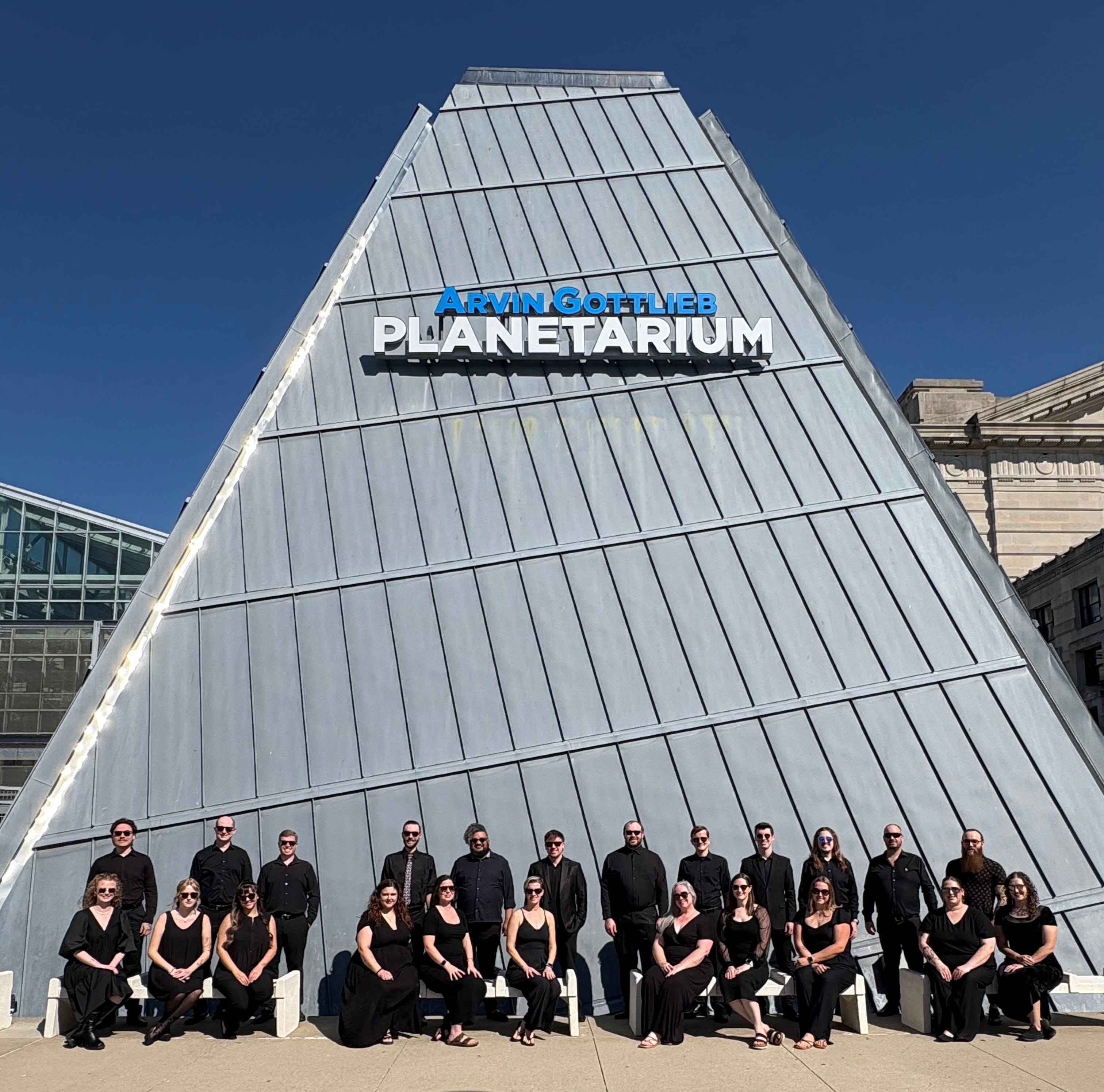
This Preview brought you by KC VITAs.
KC VITAs has never been shy about pushing the boundaries of choral performance, but its newest project—In One Mind: A Multisensory Exploration of Neuroarts and Human Connection—ventures into territory few ensembles ever attempt. This fall, audiences will step inside the Arvin Gottlieb Planetarium at Union Station and enter a 360‑degree world where choral music, neuroscience, and immersive visual art converge into a single living system. It is an experiment in perception, emotion, and collective experience.
Performances take place September 25 and 27 and October 2 and 4.
A Collaboration Across Disciplines
The project is the brainchild of KC VITAs artistic director Jackson Thomas, neuroscientist and musician Dr. Rebecca Lepping, and visual artist Evan Tedlock—a trio whose combined expertise allowed this unique project to take shape.
Thomas explains that the team wanted to illuminate how music and visual art shape identity, soothe the nervous system, spark memory, and bind communities. “We’re tapping into something inherent,” Thomas says. “Music and art bring us together. They’re fundamental to our well‑being.”
The planetarium’s dome becomes the ideal setting for this exploration. With no corners, no distractions, and no visual escape routes, the audience is enveloped in a sensory bubble. “It shuts out the rest of the world,” Lepping says. “It gives people space to explore how the visual art and the music are impacting them on a personal level.”



The Science of Feeling
Lepping’s research at the University of Kansas Medical Center focuses on how the arts influence emotion, health, and physiological response. Her work helped shape the narrative arc of the program—an emotional journey through identity, memory, regulation, and connection. “Themes we often explore in the arts,” she says, “have measurable responses in the body. Heart rate, breathing, skin conductance—they all shift with emotional experience.”
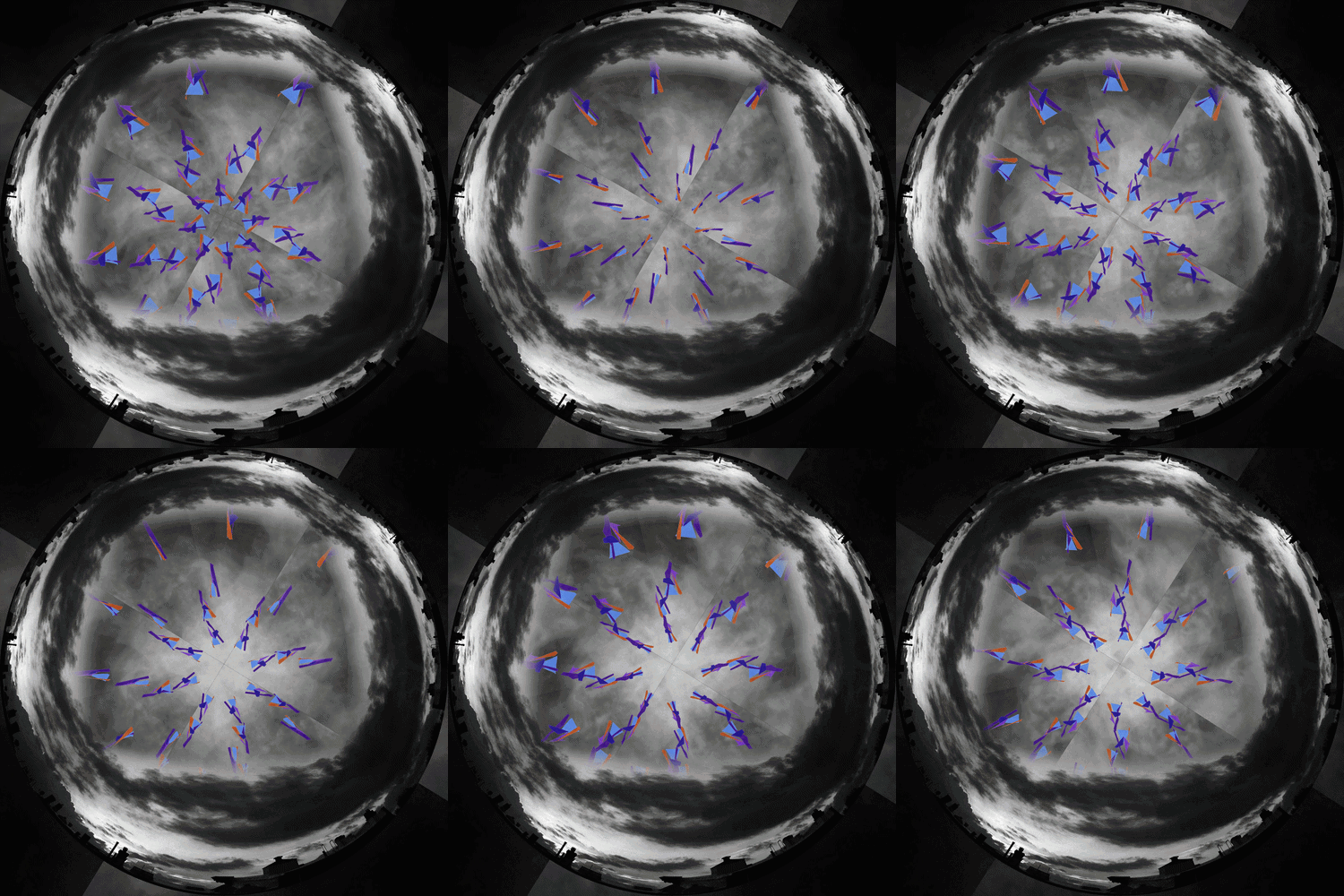
For this performance, those measurements aren’t just theoretical. Tedlock’s stunning visuals will incorporate real‑time heart‑rate data from select audience members. Their physiological responses will directly influence the imagery projected across the dome. “It’s a living system,” Tedlock says. “I’ll be performing the visuals like a musical instrument, and the audience members connected to the sensors will be playing that instrument with me.”
The result is a feedback loop: the choir affects the audience, the audience affects the visuals, and the visuals affect the choir’s environment. It is collective, dynamic, and unpredictable—an ensemble built from bodies, voices, and data.
Crafting an Emotional Arc
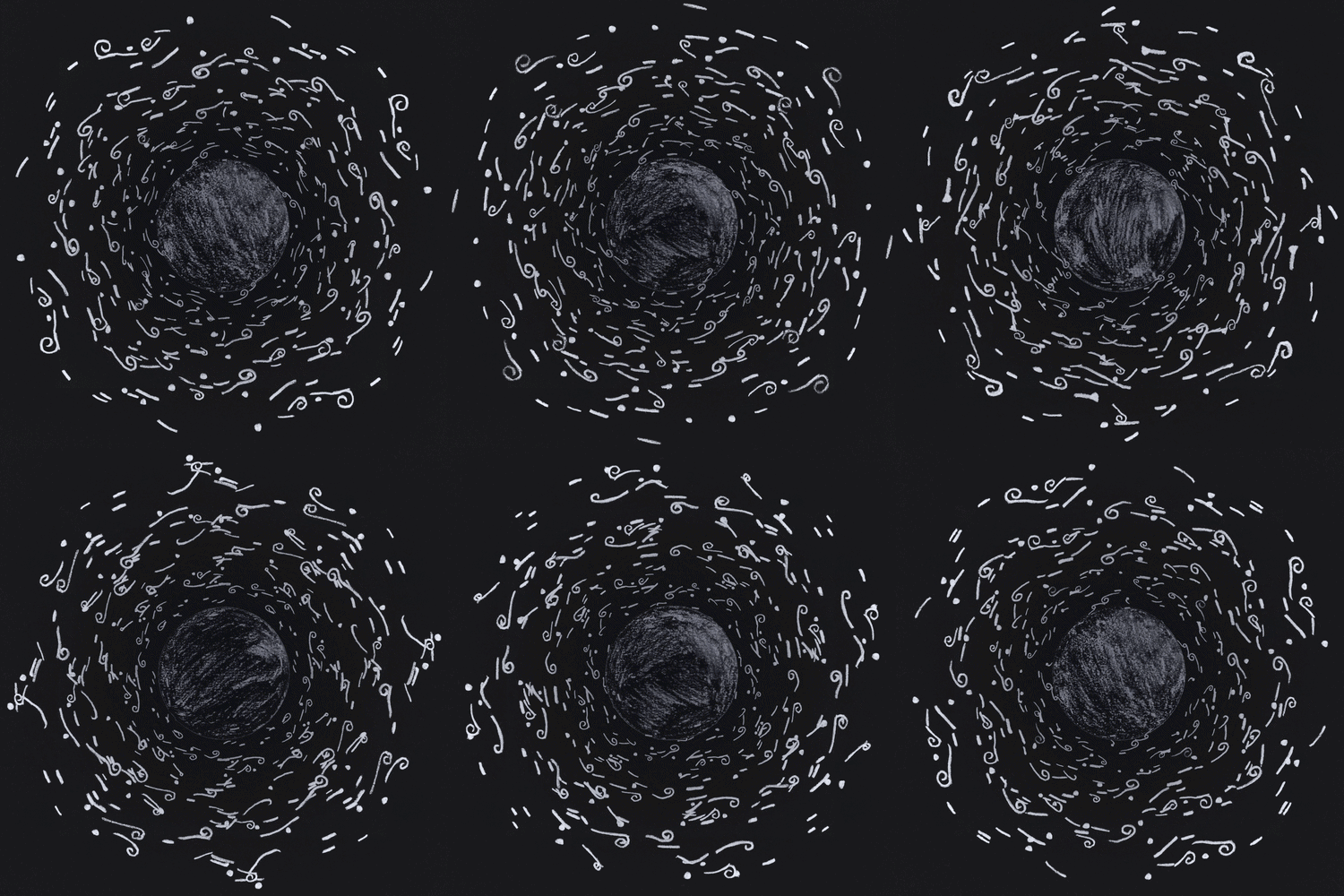
Thomas has curated a program of new music—KC VITAs’ hallmark—drawing from composers across styles and continents. The ensemble’s most recent call for scores yielded more than 800 submissions, and several works from that trove appear here, including a world premiere.
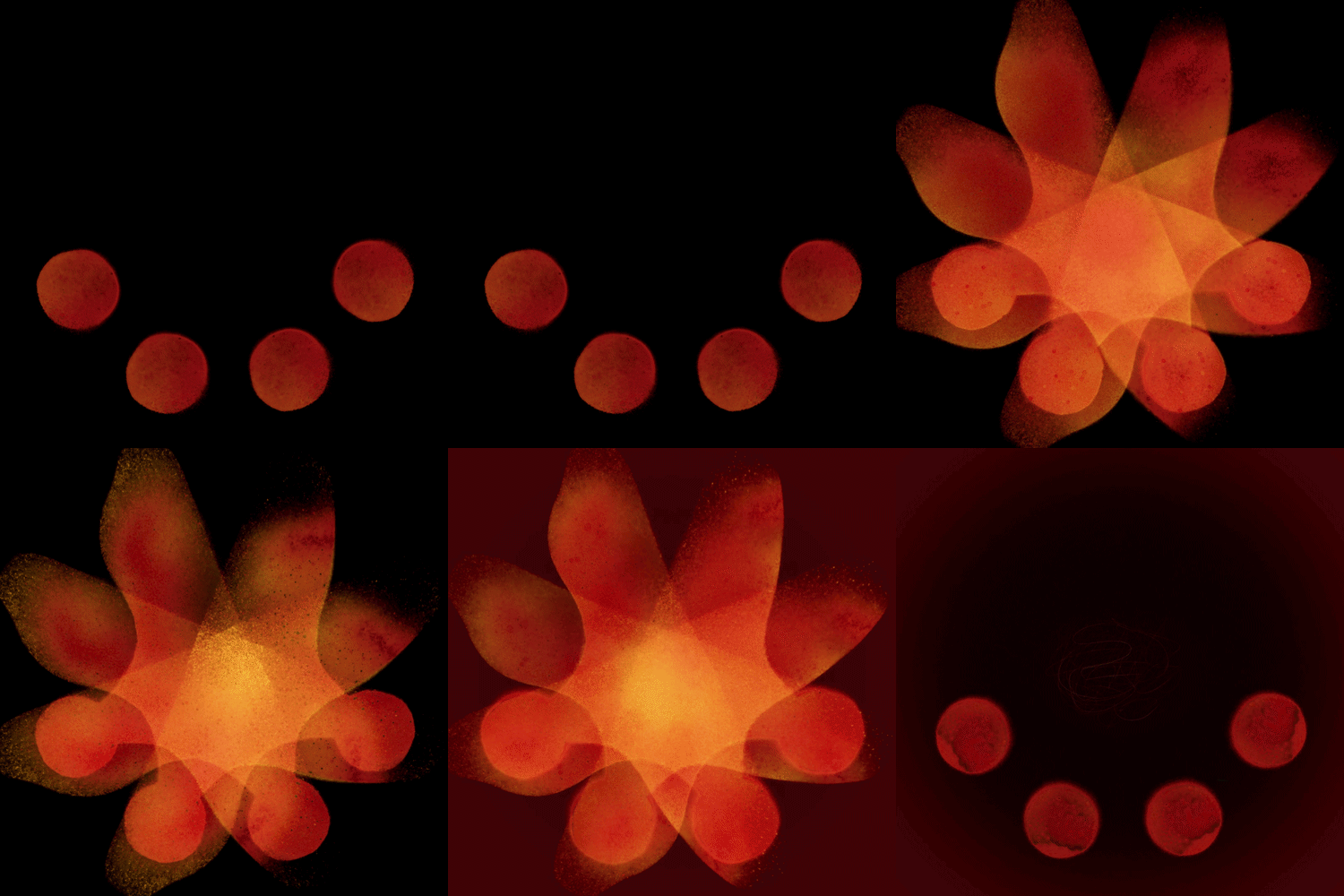
One highlight is Fire Flowers by New York composer Cole Reyes, a setting of Emily Dickinson’s poem that explores resilience amid crisis. Tight harmonies, glissandos, and circular musical gestures evoke what Thomas calls a “ring of fire” surrounding the poem’s speaker. The piece ends in a place of calm acceptance, though the memory of struggle remains. “It’s fragments like these,” Thomas says, “that create a cohesive and meaningful project.”
At the emotional peak of the program sits I’m so mad I could spit nails by Shara Nova, part of her larger work Titration. The piece blends operatic flair, gospel fire, and shape‑note grit into a visceral portrait of anger. Tedlock describes its visual counterpart simply as “pure red.” The music erupts with brash interjections before landing in a place of confidence—an assertion of self after turmoil.
Another standout is Closer Now by Ayanna Woods, originally written for Chanticleer it will be performed by KC VITAs in its mixed voice version. Emerging from the pandemic, the piece uses post‑minimalist textures to explore regulation, reconstruction, and the slow work of piecing oneself back together. Its meditative pulse mirrors the emotional recalibration many listeners will recognize.
The program also includes Butterfly, a folk‑inflected work written for the Finnish pop group Rajaton and arranged for choir. Light, airy, and jazz‑tinged, it represents innocence, renewal, and the turning of a new leaf, an essential counterbalance to the program’s darker emotional terrain.
Across the evening, audiences will encounter vocal jazz, avant‑garde extended techniques, pop influences, shape‑note singing, and gospel fire. “People will find something for everybody,” Thomas says. “Visceral anger is not the only thing on the program.”
The Visual Language of Emotion
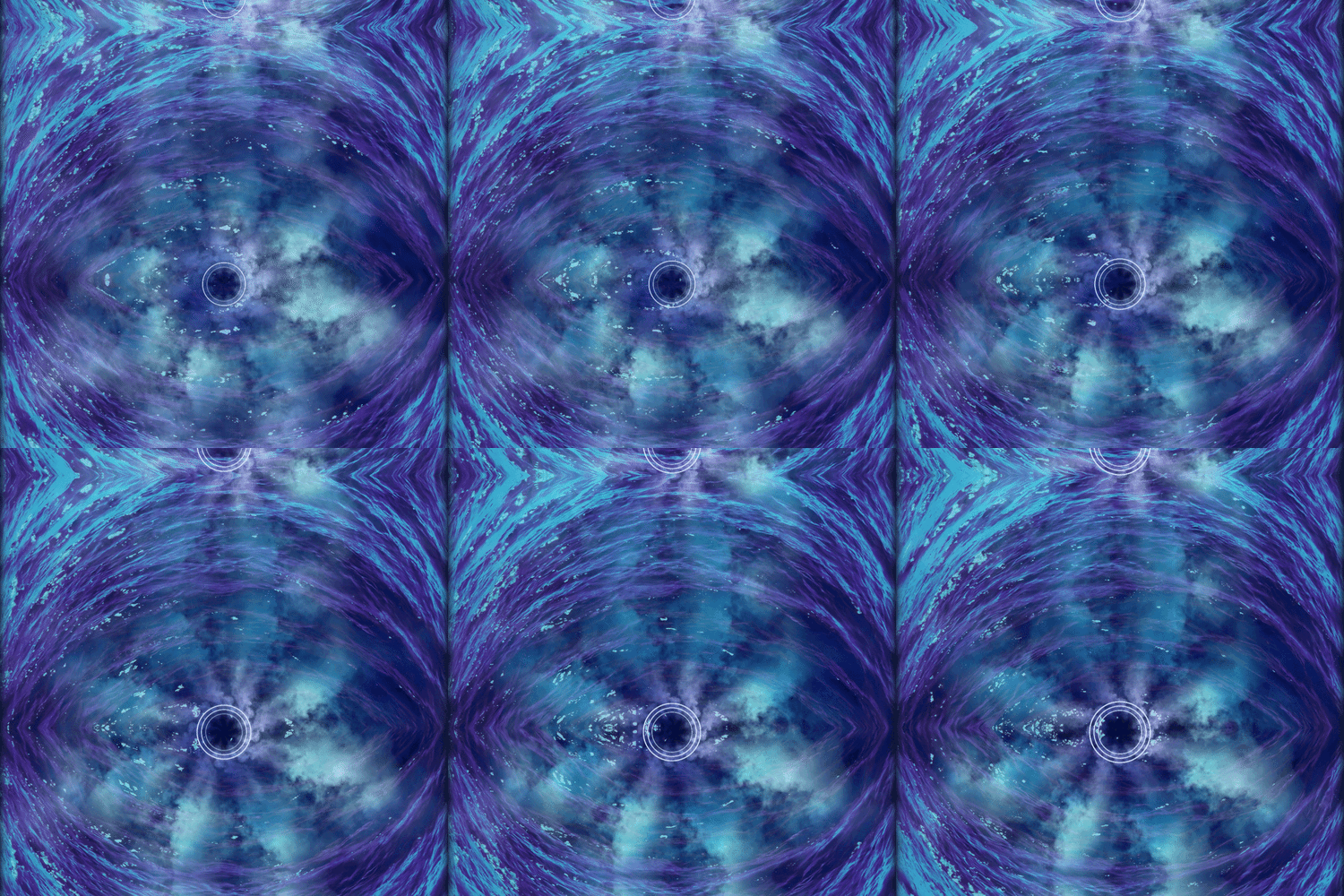
Tedlock’s visuals follow a carefully crafted color script, moving from muted tones to vibrant saturation as the emotional arc intensifies. Color, he notes, carries physiological weight. Research shows that hues can alter heart rate, breathing, and skin conductance, findings Lepping confirms. But color is also contextual. Red can signal anger, passion, warmth, or danger depending on the surrounding cues.
The show’s final piece, In the Dusk, moves from golden sunset to deep indigo night, mirroring natural cycles and guiding the audience toward a place of rest. “It’s lush,” Tedlock says. “We want a lot of color toward the end, but the progression matters. It helps people understand where they are emotionally.”
A Once‑in‑a‑Lifetime Experience
KC VITAs has presented two previous planetarium programs, but Thomas believes this one is the most ambitious. “How do you describe something people have never experienced before?” he says. “You really can’t. You just have to come.”