This preview brought to you by the Harriman-Jewell Series.
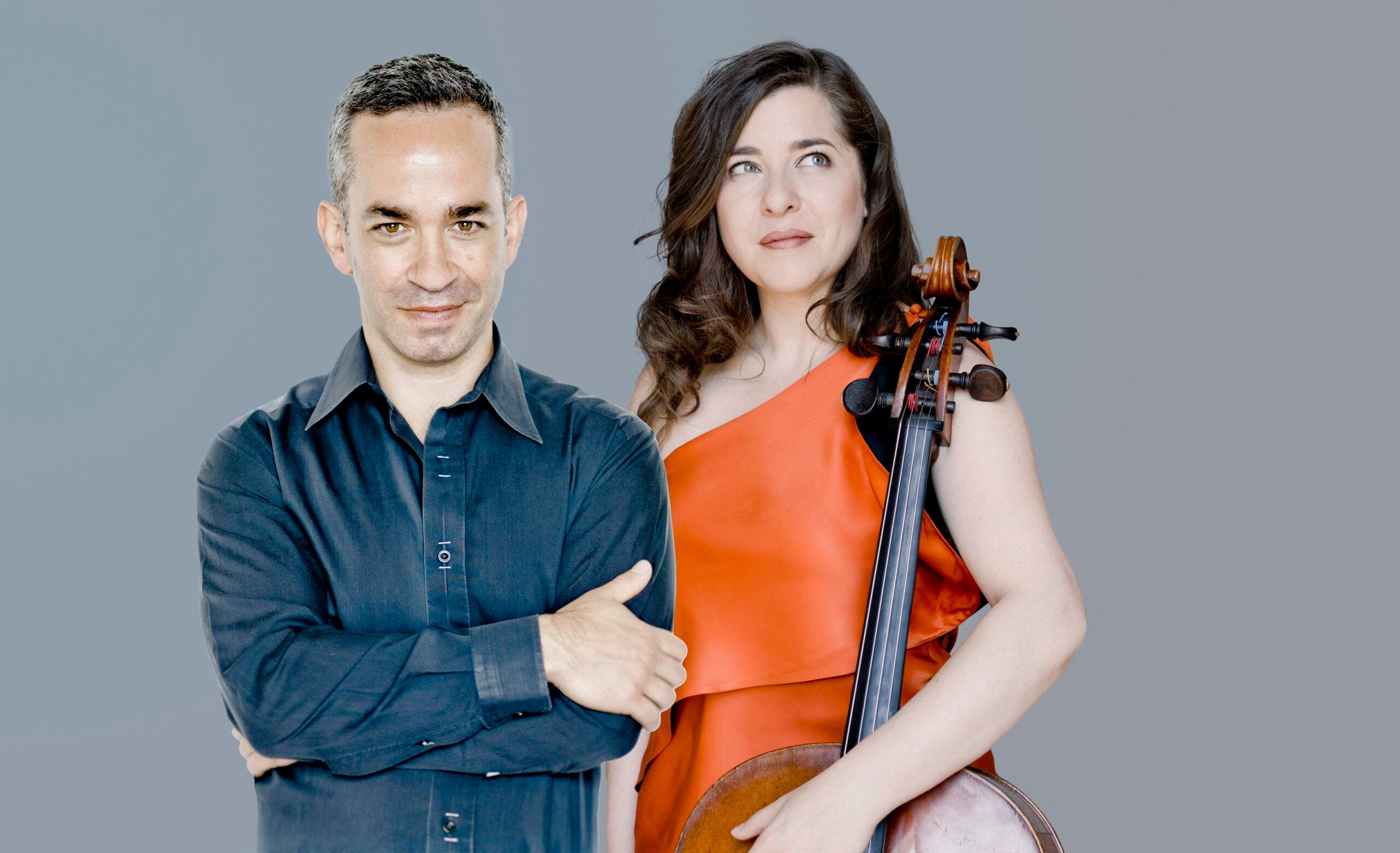
Alisa Weilerstein has spent nearly her entire life with the cello. When the internationally acclaimed musician appears at the Folly Theater on Oct. 9 to open the Harriman-Jewell Series season, she will bring not only her renowned artistry but also a long-standing musical partnership with pianist Inon Barnatan, a collaboration that has now spanned nearly two decades.
The recital promises an enticing blend of Romantic masterworks and imaginative transcriptions, featuring sonatas by Chopin and Rachmaninoff alongside music by Manuel de Falla and Dmitri Shostakovich. For Weilerstein, the program reflects both the depth of her artistic relationship with Barnatan and their shared love of variety.
“Inon Barnatan, fantastic pianist, a wonderful artist and human being, is playing with me,” Weilerstein said. “We’ve been playing together since 2008, actually. So we kind of, in a way, grew up together.”
That long collaboration has resulted in what she describes as a “musical symbiosis.” Although both artists maintain busy international solo careers, they still make a point of touring together each season.
“It’s great to play together,” she said. “We do maybe one or two tours a year together.”
For audiences who admire Weilerstein’s expressive style, the cello itself remains central to her artistic identity. Remarkably, she knew what instrument she wanted to play at an age when most children are still learning their alphabet.
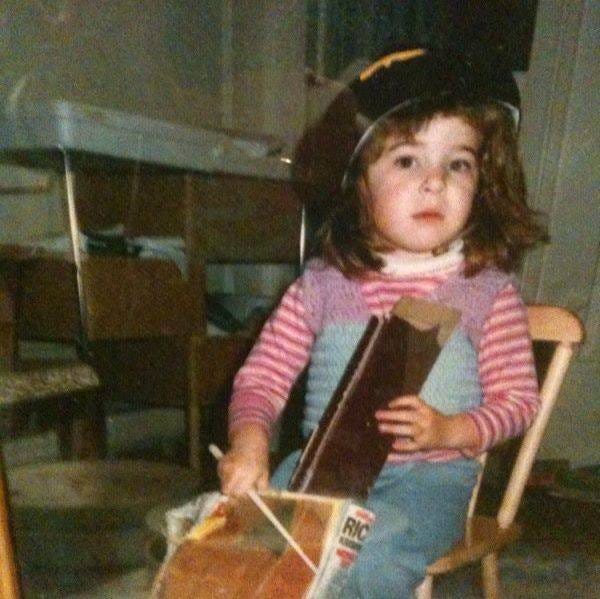
“I started when I was four, and honestly, it was just something that was very instinctive,” she recalled. “I asked my parents for a cello and a cello teacher.”
Today, she believes the instrument’s enduring appeal lies in its unique expressive quality.
“The range of the cello is the closest to the human voice, and also its capacity for expression, and a really kind of chameleon-like quality,” she said. “It can really be anything.”
As a young musician, Weilerstein looked to some of the most legendary cellists of the 20th century for inspiration. She cites Jacqueline du Pré, Mstislav Rostropovich, Gregor Piatigorsky, and Pablo Casals as her “North Stars,” while also admiring Yo-Yo Ma, whom she was fortunate enough to hear and perform for during her childhood.
Yet she is quick to note that these artists were more than simply great interpreters. They expanded the possibilities of the instrument itself.
“They all had such incredible range and were also very much pioneers for repertoire in their own way,” she said.
Weilerstein pointed especially to Casals’ role in elevating the cello’s status as a solo instrument and to Rostropovich’s extraordinary influence on 20th-century music. Composers including Shostakovich, Prokofiev, Penderecki, Lutosławski, and Britten created significant works for the cello in large part because of Rostropovich’s musicianship and advocacy.
“Rostropovich was the muse for several of the greatest 20th-century composers,” she said. “All of these incredible cello concertos ... it’s hard to imagine that they would have had the same kind of output for cello if Rostropovich hadn’t been such an iconic figure.”
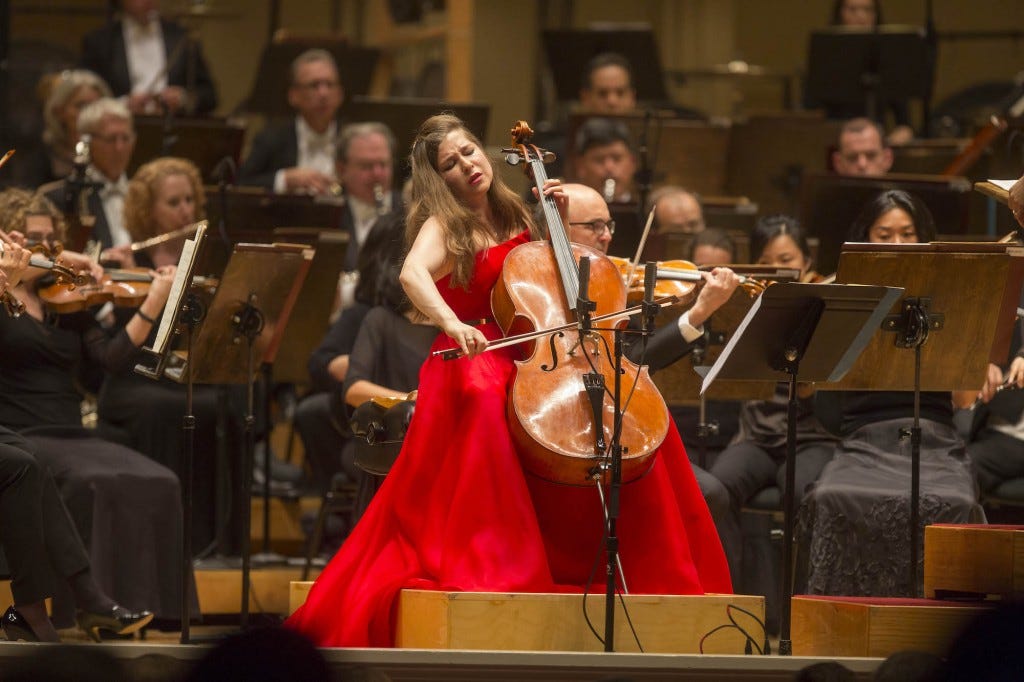
The upcoming Kansas City recital reflects Weilerstein and Barnatan’s desire to showcase the breadth of chamber music literature. The centerpiece of the program consists of the sonatas by Chopin and Rachmaninoff, works that emerged naturally as the duo approached a significant milestone.
“We’re kind of approaching our 20th anniversary of playing together,” she said. “We wanted to celebrate playing those together and by kind of resurrecting them back into our programs.”
Although both composers are remembered primarily for their piano music, Weilerstein regards the two sonatas as among their finest achievements.
Chopin’s Sonata for Cello and Piano occupies a special place in the composer’s output, as it was the last major work published during his lifetime. Written for his close friend, the celebrated French cellist Auguste Franchomme, the sonata reveals an unusually intimate and equal partnership between cello and piano. While the music is unmistakably Chopin in its lyrical elegance and expressive depth, it also explores darker, more introspective emotional territory than many of his better-known piano works.
Rachmaninoff’s Sonata for Cello and Piano is one of the great chamber works of the late Romantic era. It was written in 1901 shortly after the composer’s recovery from a period of severe creative and emotional crisis. Although Rachmaninoff was a pianist, he gives the cello an equal voice, creating a rich dialogue between the two instruments rather than a simple accompaniment relationship. Sweeping melodies, lush harmonies, and moments of profound introspection alternate with passages of virtuoso brilliance, revealing many of the qualities listeners cherish in the composer’s concertos and symphonies.
Alisa Weilerstein and Inon Barnatan perform Rachmaninoff’s Sonata for Cello and Piano in G Minor
The program also reveals another shared passion of the duo: transcriptions. Audiences will hear Falla’s beloved Siete Canciones Populares Españolas alongside seven of Shostakovich’s piano preludes in a transcription by composer Lera Auerbach.
The Falla songs, originally written for voice, showcase qualities that resonate naturally with the cello’s vocal character. Asked whether Spanish music — which has so many masterworks written for guitar — should be associated with cello, Weilerstein offered a response that was both humorous and sincere.
“You should associate cello with everything, that’s the moral of the story.”
Beyond the joke, she finds the work rich in atmosphere and storytelling.
“You get to kind of inhabit these six vignettes, these six sort of songs, stories,” she said. “It’s just wonderful to inhabit that kind of special, local color.”
The Shostakovich preludes provide a different perspective, revealing the voice of a composer still early in his creative development. While listeners can already hear the unmistakable musical fingerprint that would define his later masterpieces, Weilerstein notes that these miniatures display a youthful freshness and variety.
“His voice is already incredibly distinctive,” she said. “It’s quite a young Shostakovich, and so there’s a little bit more nostalgia.”
She points to one prelude that sounds almost like Rachmaninoff, albeit with an unexpected twist, while others range from biting sarcasm to heartfelt lyricism. Collectively, they offer a fascinating glimpse into the developing imagination of one of the 20th century’s greatest composers.
For Kansas City audiences, the evening promises a rare opportunity to hear two world-class musicians exploring a wide range of musical styles united by the cello’s expressive voice. Weilerstein hopes listeners will come ready for discovery.
“We hope to see all of you there and to celebrate this incredible music with us,” she said. “You’re in for a really fun and varied ride.”