“… Is an insane person only a person whose brain is more active than it should be? Is he using that nine-tenths of his brain that science says is just dormant and waiting for his future evolution into a higher type of creature. Just what is insanity, after all?”
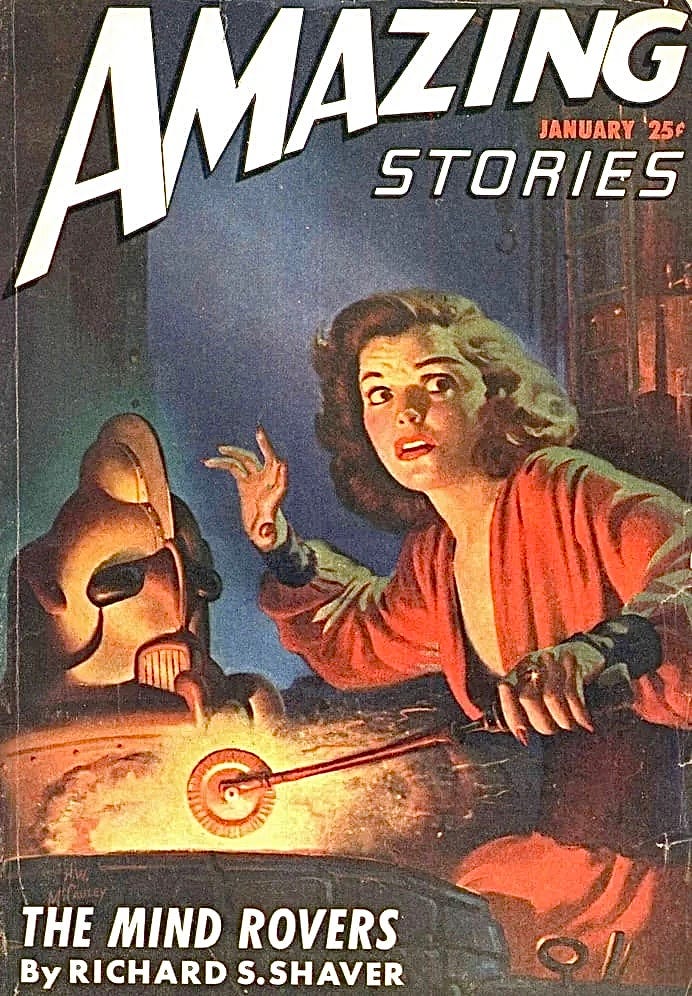
Treated for paranoid schizophrenia in the 1970s, Richard Shaver became known for a body of science fiction that drew on what he claimed were his own experiences with a malevolent ancient subterranean civilization possessing extraordinary technology. Controversy followed when Shaver, along with his editor and publisher, Ray Palmer, insisted that these stories were not merely fiction but accounts rooted in reality. Palmer promoted the phenomenon in the pages of Amazing Stories as “The Shaver Mystery.”
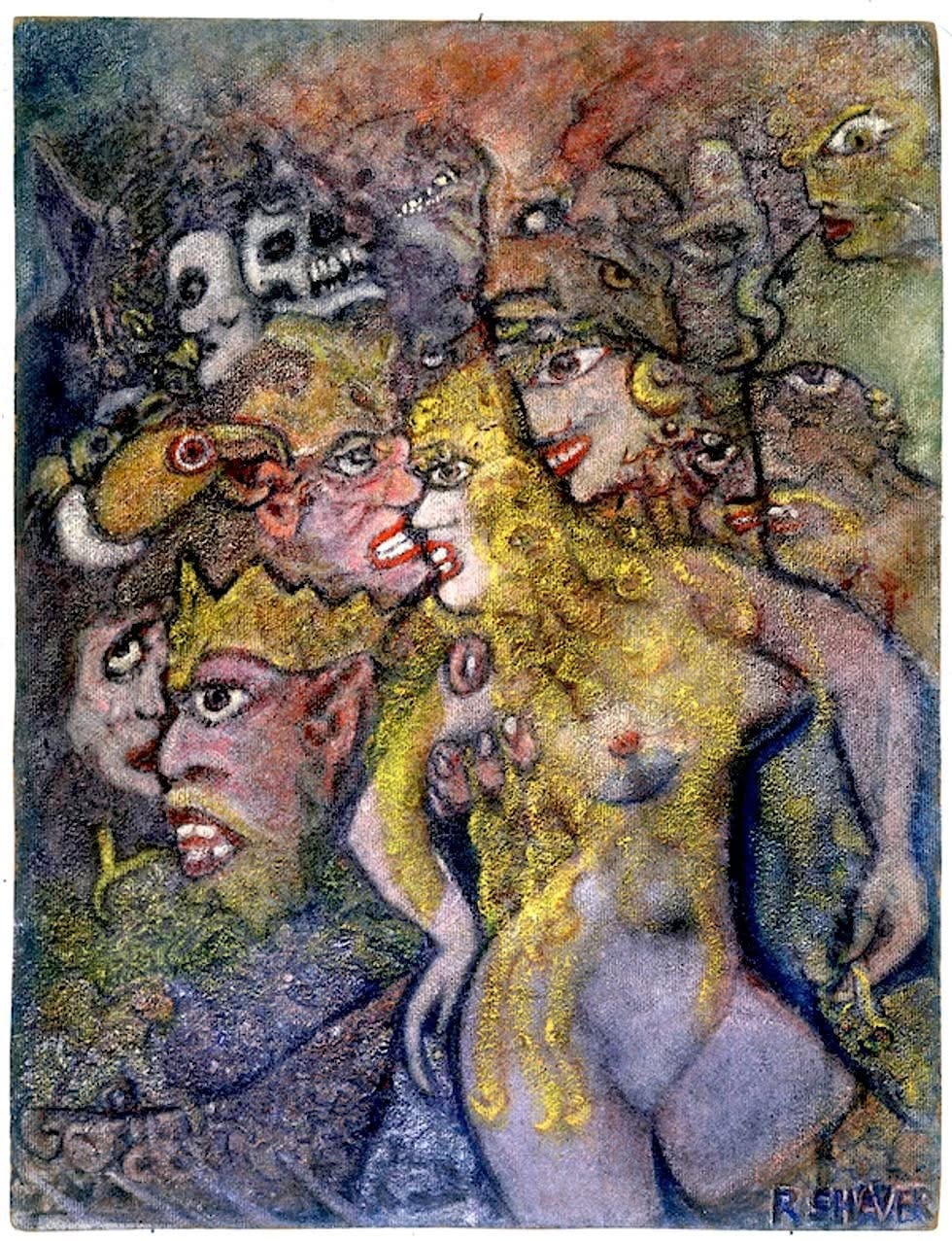
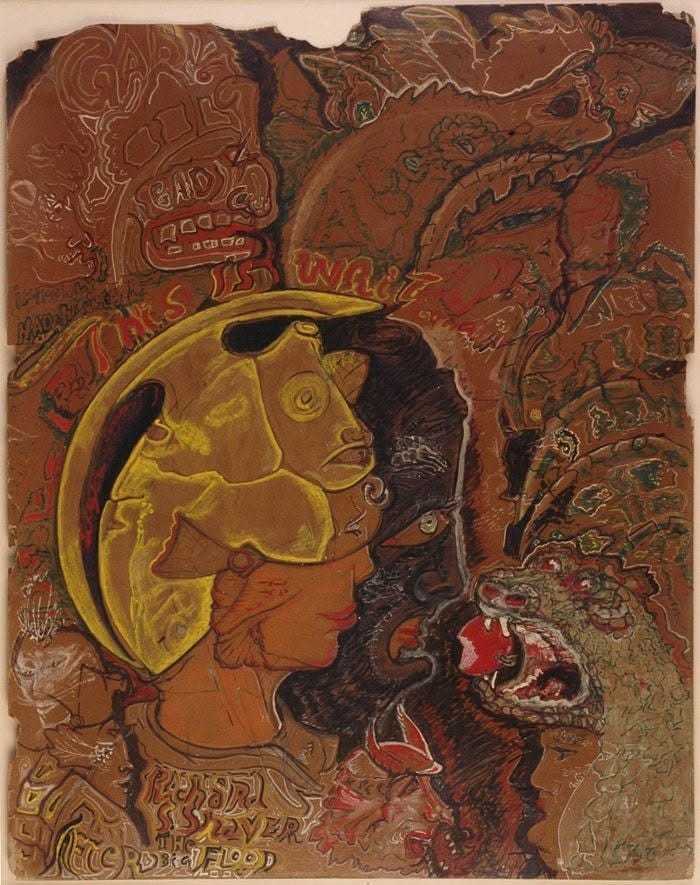
In the final decades of his life, Shaver turned his attention to what he called “rock books”—stones he believed had been created by these advanced ancient races and embedded with images and texts that could still be deciphered. He painted interpretations of the images he found in the rocks, photographed the stones extensively, and wrote about their significance. Since his death, Shaver has attracted growing attention as an outsider artist, with exhibitions of his paintings and photographs appearing in Los Angeles, New York, and other cities.
Here are two examples of Shaver’s “rokfogo” technique where he would magnify images of stone slices onto wet canvas, sift wax and dry glue onto the surface to catch the light rays, and then trace and paint over the revealed textures to expose the supposed hidden prehistoric illustrations.