

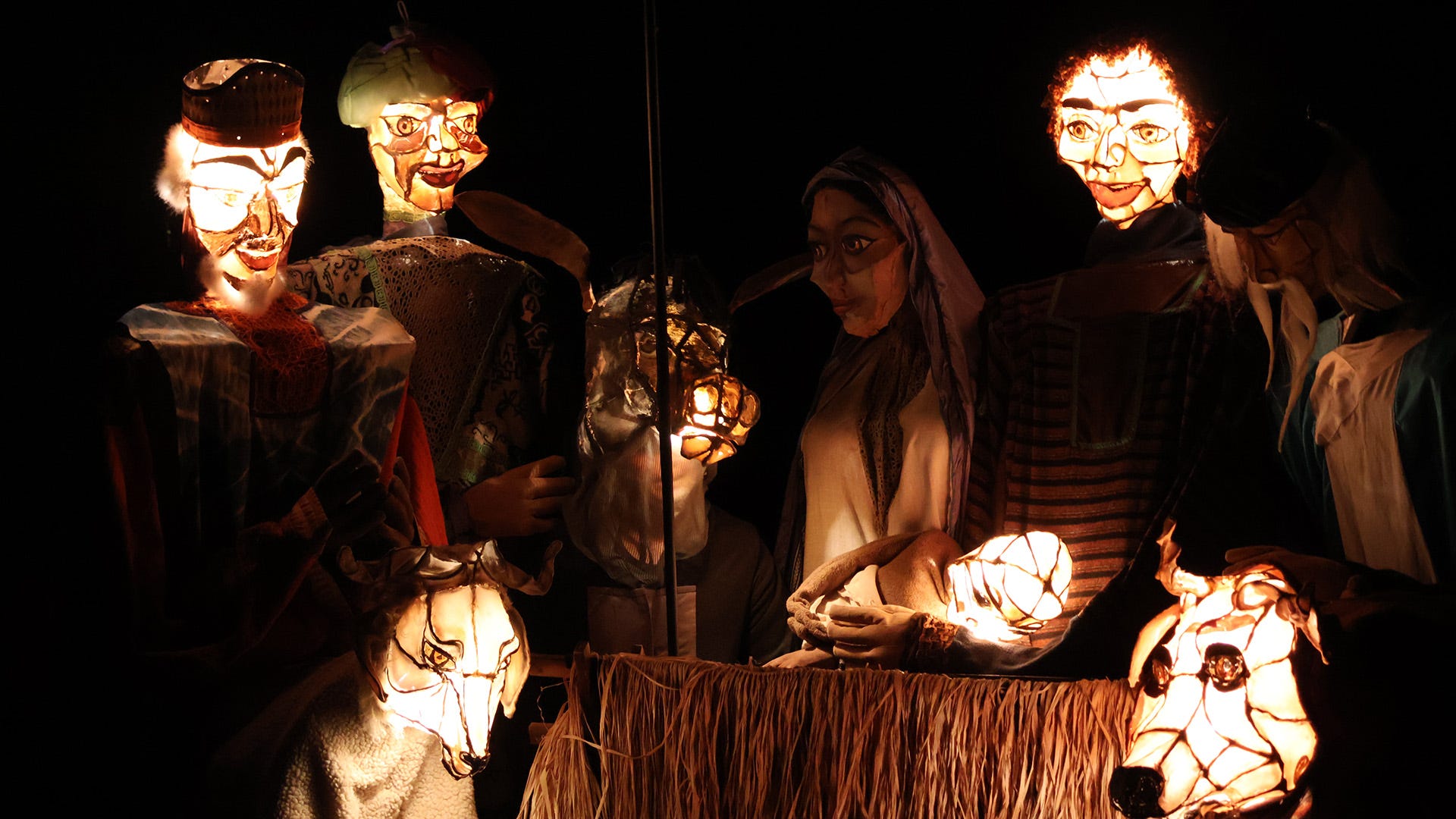
For nearly three decades, one of Kansas City’s most distinctive holiday traditions has transformed Grace and Holy Trinity Cathedral into something that feels closer to a medieval mystery play than a modern theatrical production. With towering puppets, live musicians, singers, and a setting that seems perfectly suited to the ancient story it tells, Nativity Puppets returns once again to present the birth of Jesus through a uniquely Kansas City lens.
Created in 1998 by renowned puppeteer Paul Mesner, the production has become a cherished annual event for generations of local families. This year’s performances continue a tradition that combines theater, music, craftsmanship, and spiritual storytelling in a way few holiday productions can match.
“It’s always been a real labor of love with the cathedral directly in partnership with them,” said director Jesse Schaaf. “When Paul was creating the show and creating the script, he had that specific space in mind.”
Schaaf knows the production’s history better than most. She has been part of Nativity Puppets since its very first performance.
“I was one of three sheep in the very first production,” she said with a laugh.
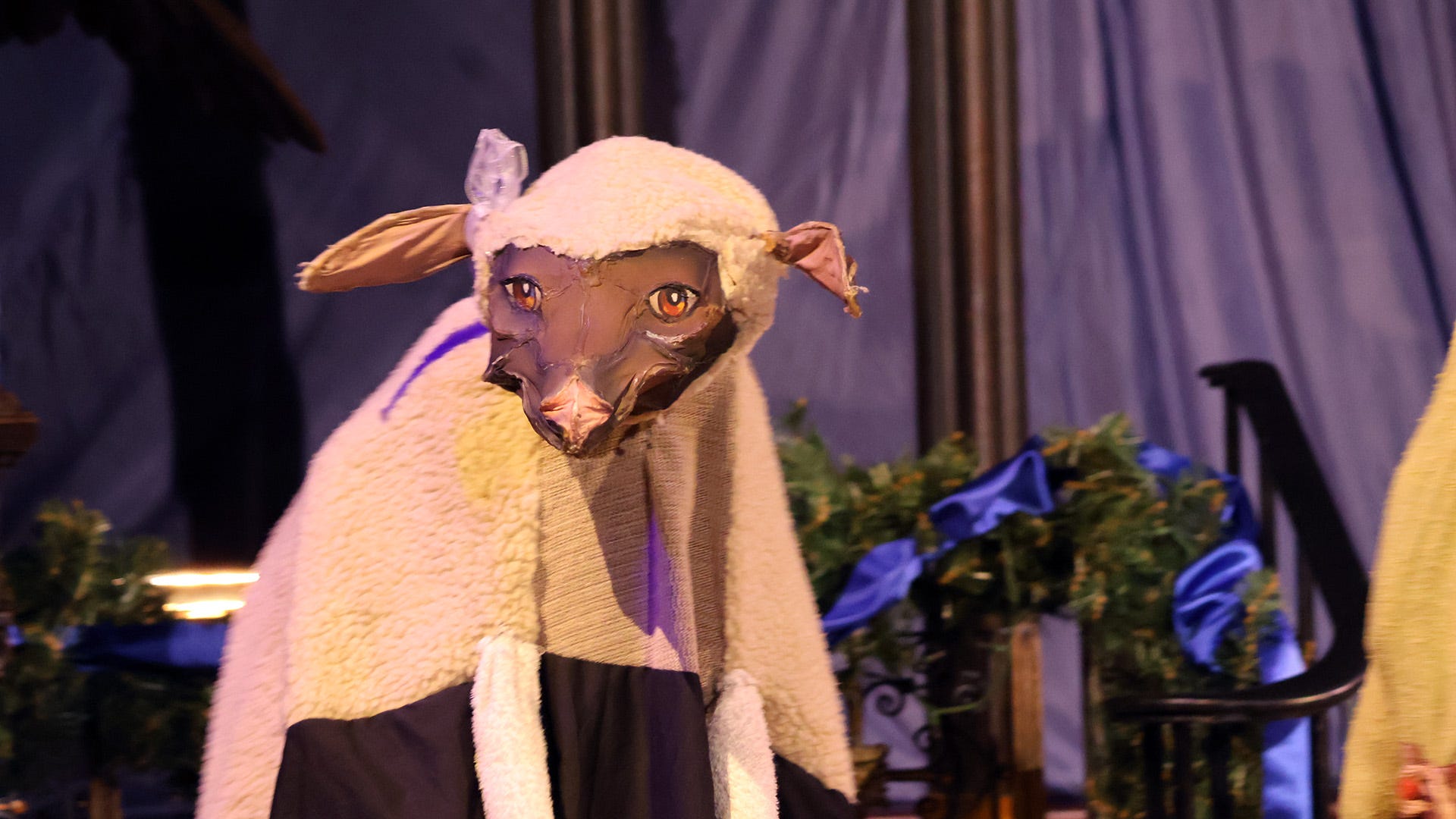
From those humble beginnings, Schaaf’s journey mirrors the growth of the production itself. After performing as a sheep, she later portrayed Melchior, one of the Three Wise Men, served as assistant director, and has now directed the show for the past several seasons.
The production began in a very different form than audiences see today. In the original staging, puppeteers provided the voices themselves from inside the giant figures using wireless microphones.
“It started back with Mesner Puppet Theater, first created by Paul Mesner himself,” Schaaf said. “Several of the puppeteers did voices from inside the puppets on wireless microphones. It was an interesting time.”
Over the years, the production evolved. Today, professional singers and voice actors provide the dialogue and music while an ensemble of volunteers operates the elaborate puppets.
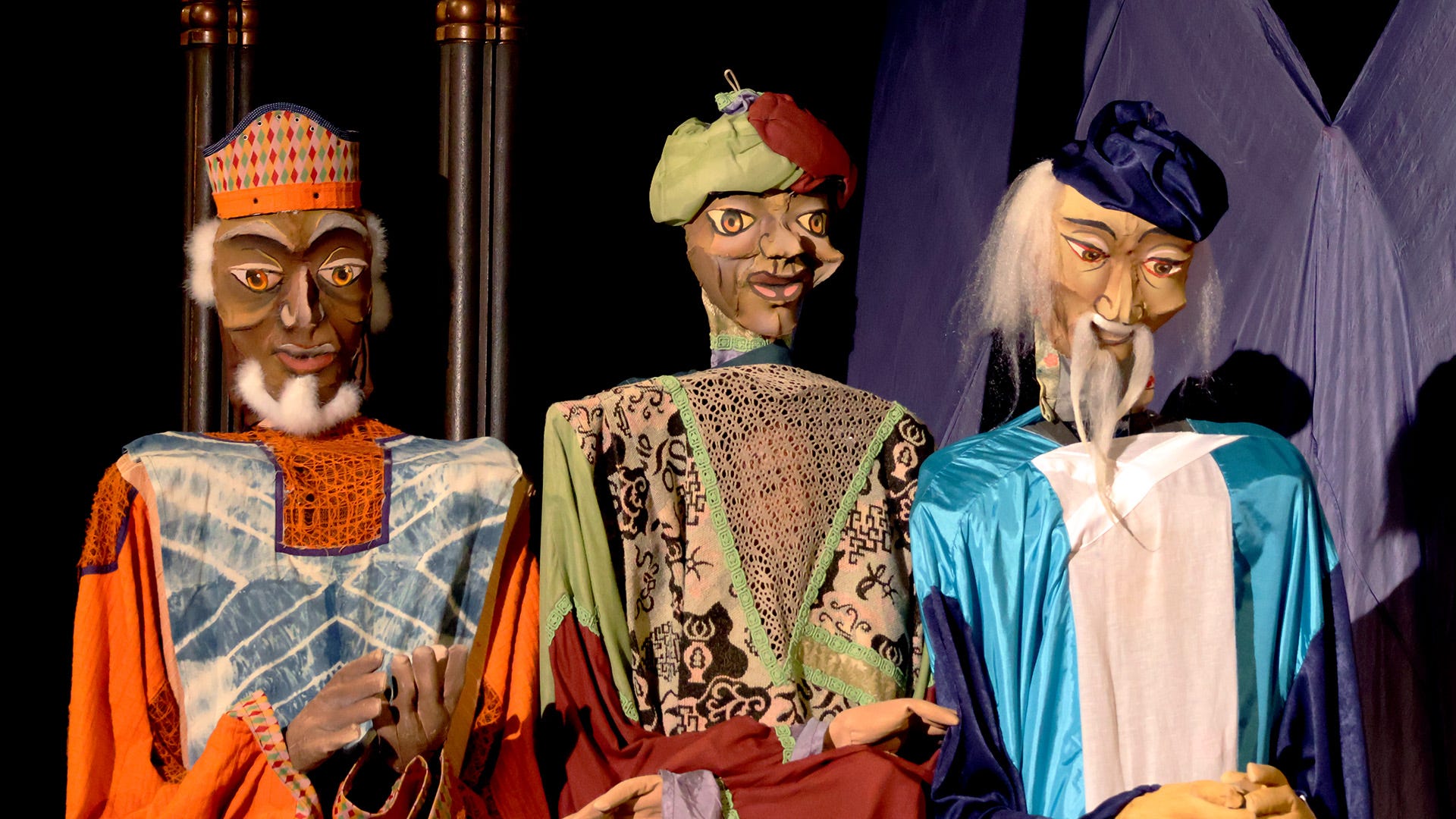
Those puppets are among the show’s most memorable features.
“These are large body puppets,” Schaaf said. “Some of the angels can be as much as eight or nine feet tall.”
The angel Gabriel and other heavenly figures soar above the action on long rods, while shepherds, wise men, animals, and townspeople move through the cathedral with a larger-than-life presence that seems particularly suited to the building’s soaring Gothic architecture.
Yet despite their imposing appearance, the puppets are remarkably delicate.
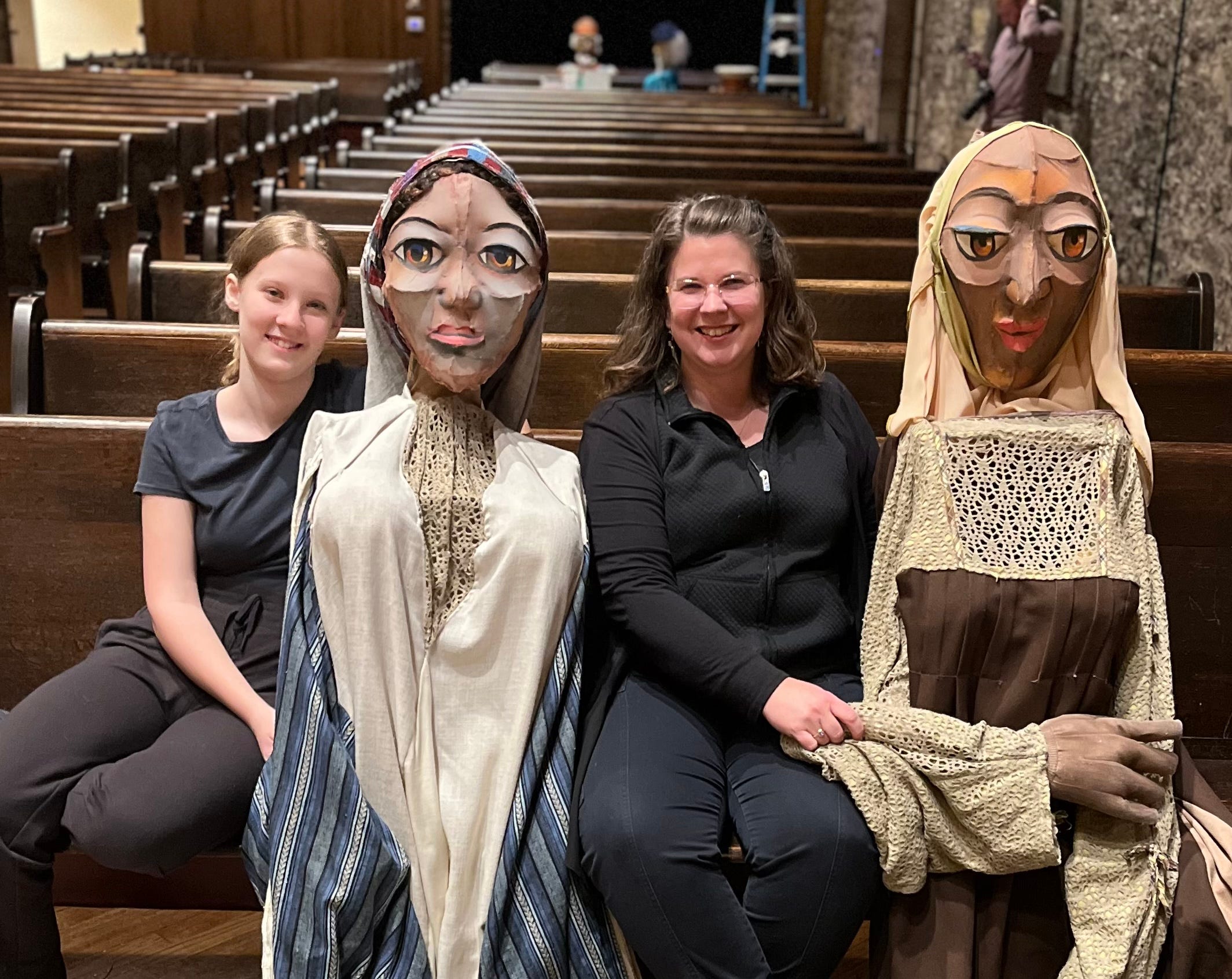
“The faces are sculpted out of nylon, out of kind of stocking material,” Schaaf explained. “All of the features are done with wires inside to make those features come to life.”
Maintaining the puppets has become an ongoing project. Many are years old, and some date back to earlier incarnations of the production.
“We’ve had several that we’ve had to restore,” Schaaf said. “Last year, we had to kind of completely redo a camel because it sort of had its insides crumble.”
The company works with local puppeteer Zachary Garner on repairs and restoration, helping preserve these unique theatrical creations for future audiences.
Because of their fragility, volunteers receive careful instruction before handling them.
“One of the biggest things when we’re getting our volunteers started is instructing them, ‘Here’s how we have to treat these puppets. Here’s how delicate they are,’” Schaaf said.
While the puppets draw immediate attention, the music is equally central to the production’s atmosphere. The score features live musicians and singers performing throughout the show, creating a rich soundscape that fills the cathedral’s resonant interior.
“The music is gorgeous,” Schaaf said. “We have professional musicians that come in and have been doing it since the beginning.”
She notes that the ensemble includes flute, oboe, organ, and vocal performers who help shape each scene through instrumental interludes, hymns, and underscoring.
The superb organist John Schaefer is the Music Director for the production and will be playing the portative organ at the front of the Cathedral nave. All the musicians will be in close proximity.
“They create really gorgeous music that goes so well with changing the scenes or underscoring the songs that are throughout it,” she said.
The combination of music, architecture, and puppetry reflects an important part of Mesner’s original vision. Rather than simply staging a Christmas pageant, he drew inspiration from medieval religious drama, the theatrical traditions that once flourished within churches and monasteries.
“Paul designed the show to be like one of those productions that happened way back when,” Schaaf said.
That historical influence remains visible throughout the performance. Volunteers who are not actively operating puppets wear monks’ robes, reinforcing the idea that the audience is witnessing a community of medieval storytellers presenting the Nativity.
“All of our volunteers who aren’t only in puppets, they all get monks’ robes,” Schaaf said. “It’s meant to be a showing of a group of monks doing the story of the Nativity.”
The setting could hardly be more appropriate. Grace and Holy Trinity Cathedral’s stone interior, stained glass, and atmospheric lighting create an environment that already feels somewhat removed from the modern world.
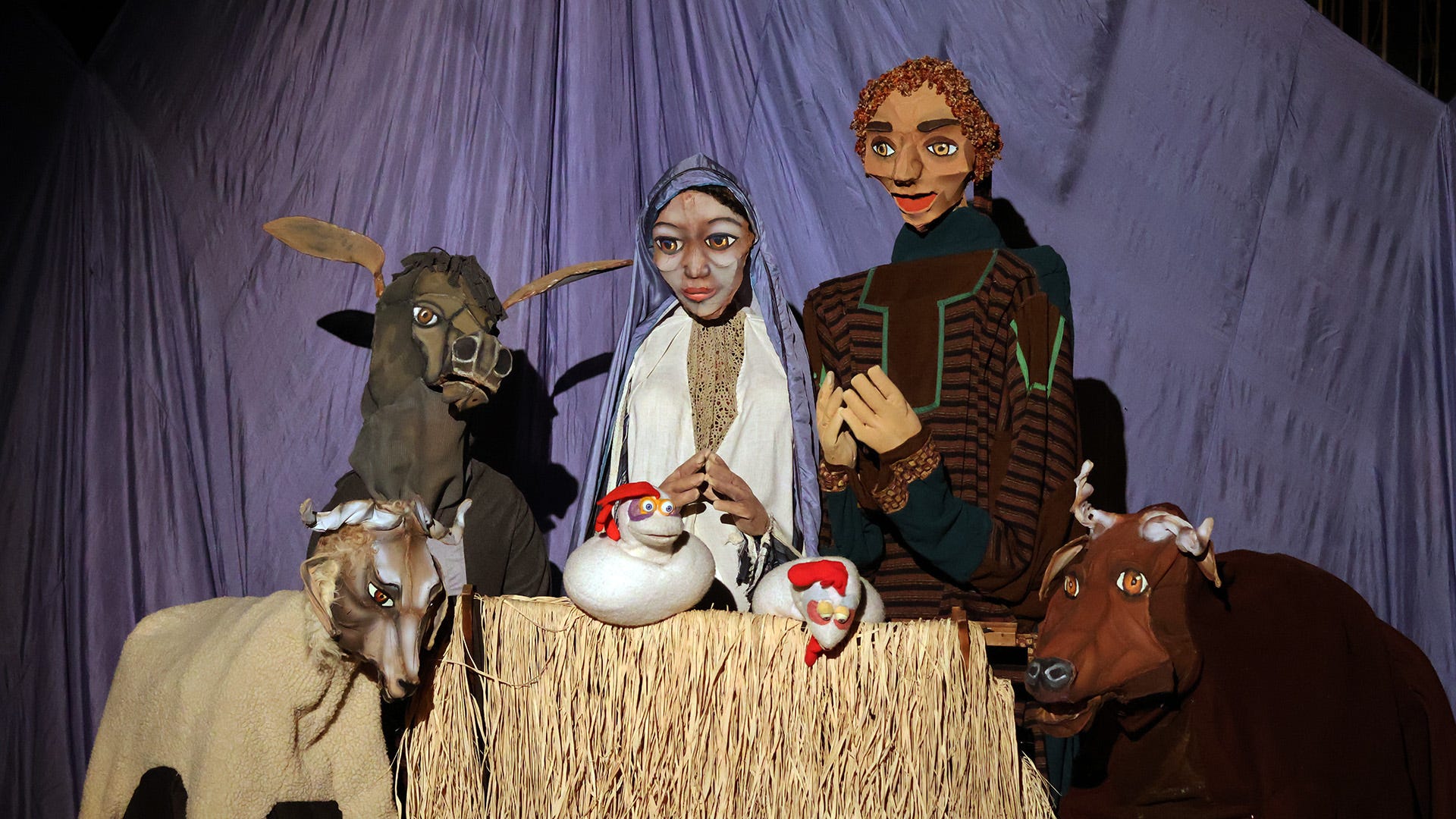
Audiences often remark that entering the cathedral during Nativity Puppets feels less like attending a performance and more like stepping into a Christmas memory or a centuries-old tradition.
That sense of tradition helps explain why so many families return year after year.
“What’s always so cool to hear is when we have audience members who went to it when they were little, and now they’re bringing their children,” Schaaf said. “We have a pretty decent population of folks who come year after year and have it as an annual family event.”
In an era when holiday entertainment options seem endless, the continued popularity of Nativity Puppets speaks to its unusual blend of craftsmanship, history, and community involvement. It is not a touring production or a commercial spectacle. It belongs to Kansas City, built and sustained by artists, volunteers, musicians, and audiences who have embraced it for generations.
For Schaaf, who began her own journey as a sheep in the very first production, that continuity remains one of the show’s most meaningful aspects.
“It’s definitely such a cool experience,” she said.
As the cathedral once again fills with angels, shepherds, camels, wise men, and music, Kansas City audiences will have another opportunity to experience one of the region’s most distinctive holiday traditions. For longtime attendees, it marks the return of a beloved ritual. For newcomers, it offers the chance to discover a Christmas story told in a way they are unlikely to find anywhere else.
For many Kansas City families, Nativity Puppets has become an annual holiday tradition. Judging from the enthusiasm of the artists and volunteers who continue to sustain it, that tradition seems likely to endure for many Christmases to come.