

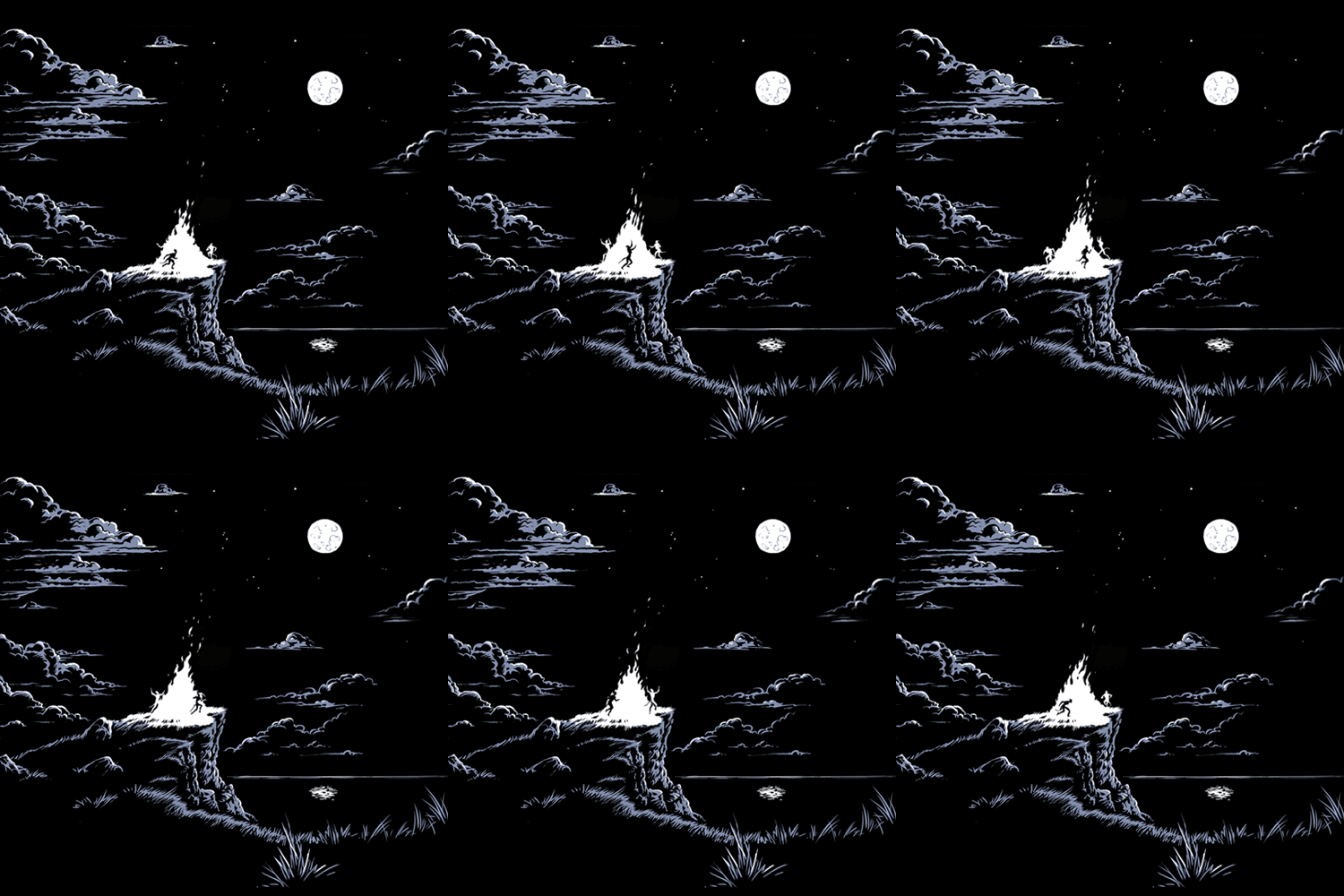
Walpurgisnacht is the hinge between winter’s last shadow and the first real breath of spring. In much of Europe, it’s the night when people light bonfires to clear out whatever the cold months left behind. The older stories add a bit of atmosphere—witches in flight, spirits on the move—but you don’t need to buy into the folklore to sense the shift. It’s a night with a long memory, carrying traces of how people once marked the change of seasons.
What gives the evening its particular charge is the layering of traditions. The feast of Saint Walpurga on May 1 sits right on top of older spring rites, so the night ends up holding both blessing and mischief at the same time. Saint Walpurga was an 8th‑century Anglo‑Saxon nun, missionary, and abbess whose learning, administrative skill, and later reputation for healing made her one of the most venerated early medieval women in the Frankish world. Her healing abilities, especially protection against witchcraft and harmful magic, contributed to her widespread cult in Germany and beyond.
Walpurgisnacht and Samhain (October 31) sit as mirror‑points on the old European year, almost exactly six months apart, each marking a threshold where the season seems to turn and the veil between the spiritual and material worlds feels briefly permeable. Samhain, in the increasing darkness of late October, was the Celtic new year—a descent into winter, a night of ancestors and endings. Walpurgisnacht, while celebrating the release of winter and the ignition of summer, was also a night when the boundary between worlds loosened and dangerous forces moved freely, and communities responded with fire, noise, and ritual to keep them at bay.
In Mendelssohn’s Die erste Walpurgisnacht, the Druids want to greet the new season in their own way, but the Christian authorities have outlawed the ceremony, so the solution is simple and a little mischievous: disguise the rite as a night of demons and let the authorities frighten themselves away.
Mendelssohn’s Walpurgisnacht is built on crisp, deliberate contrasts—winter against spring, darkness against renewal, unyielding force against quickening life. The opening storms are tight and dramatic, then give way to bright, agile writing as the season turns. The Christians get stiff, pompous lines; the Druids get warmer, more fluid music; and the “demonic” disguise scenes spark with sly rhythmic energy.
Nikolaus Harnoncourt’s recording of Die erste Walpurgisnacht has lean textures and a theatrical sense of pacing. The winter‑storm music bites and the spring‑arrival music bursts forth with clear light. The choral writing is shaped with that unmistakable Harnoncourt precision with clean lines and crisp attacks. His treatment of Mendelssohn’s oppositions—winter against spring, rigidity against renewal—gives the whole performance a focused, elemental charge.

As an Amazon Associate, I earn from qualifying purchases
If you want to get into the spirit of Walpurgisnacht, you might consider making a big pot of Hexensuppe, or Witches’ Soup. It’s a rustic, warming soup made from onions, garlic, carrots, potatoes, parsnips, leeks, herbs, broth, and white beans. It’s meant to be simple, nourishing and suited to a chilly spring night around a fire.