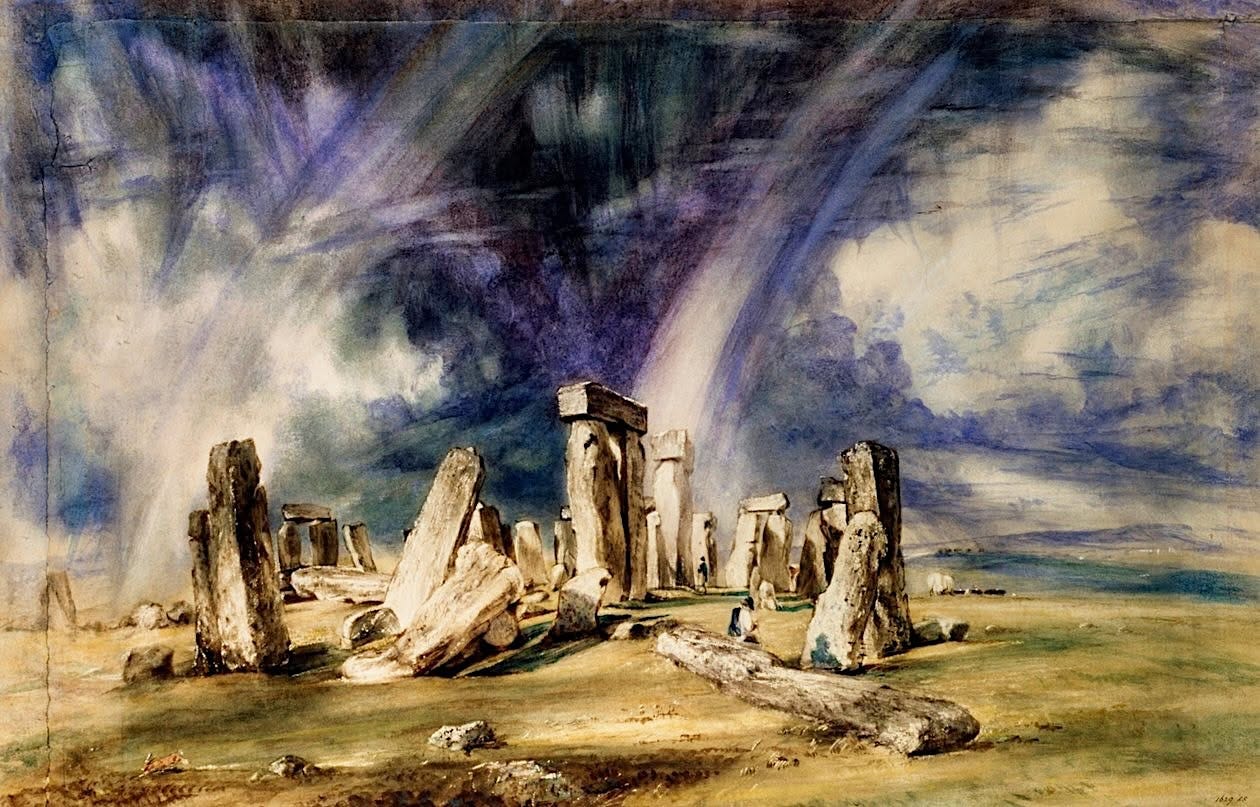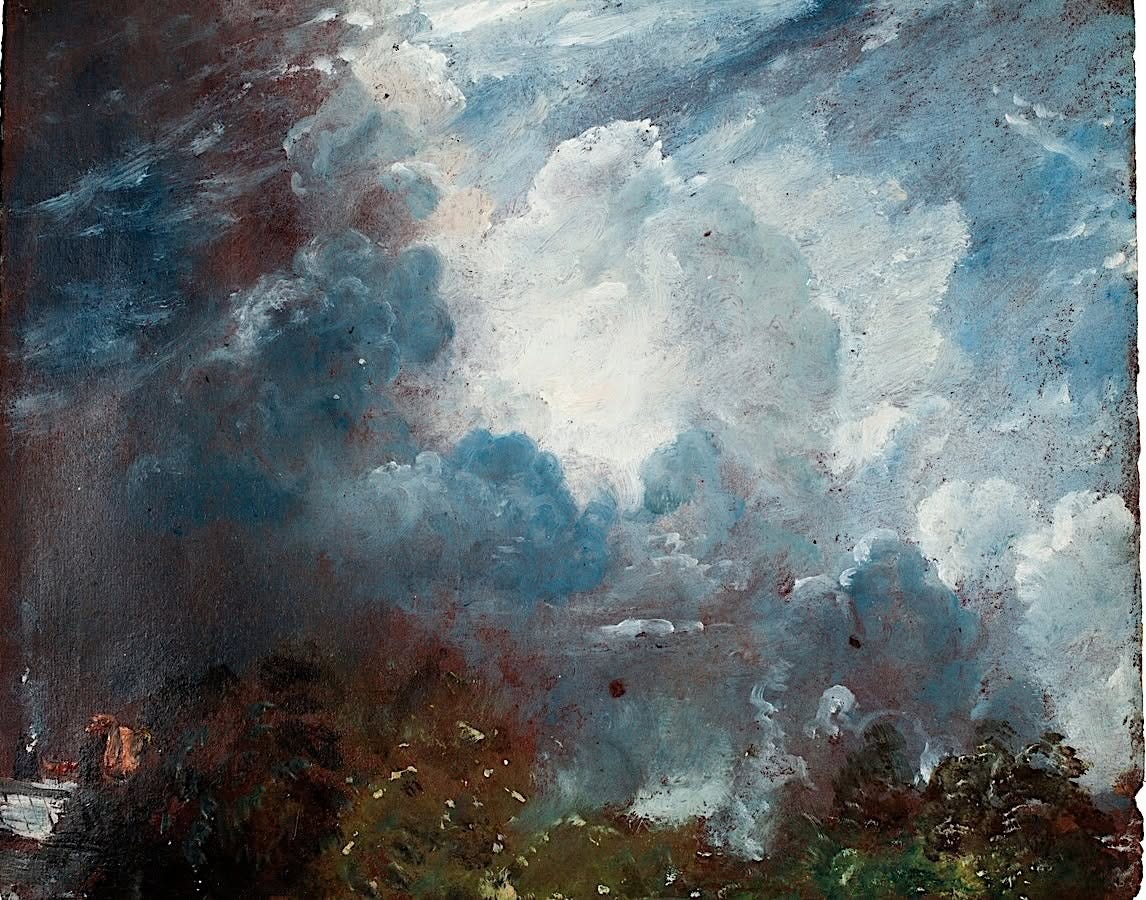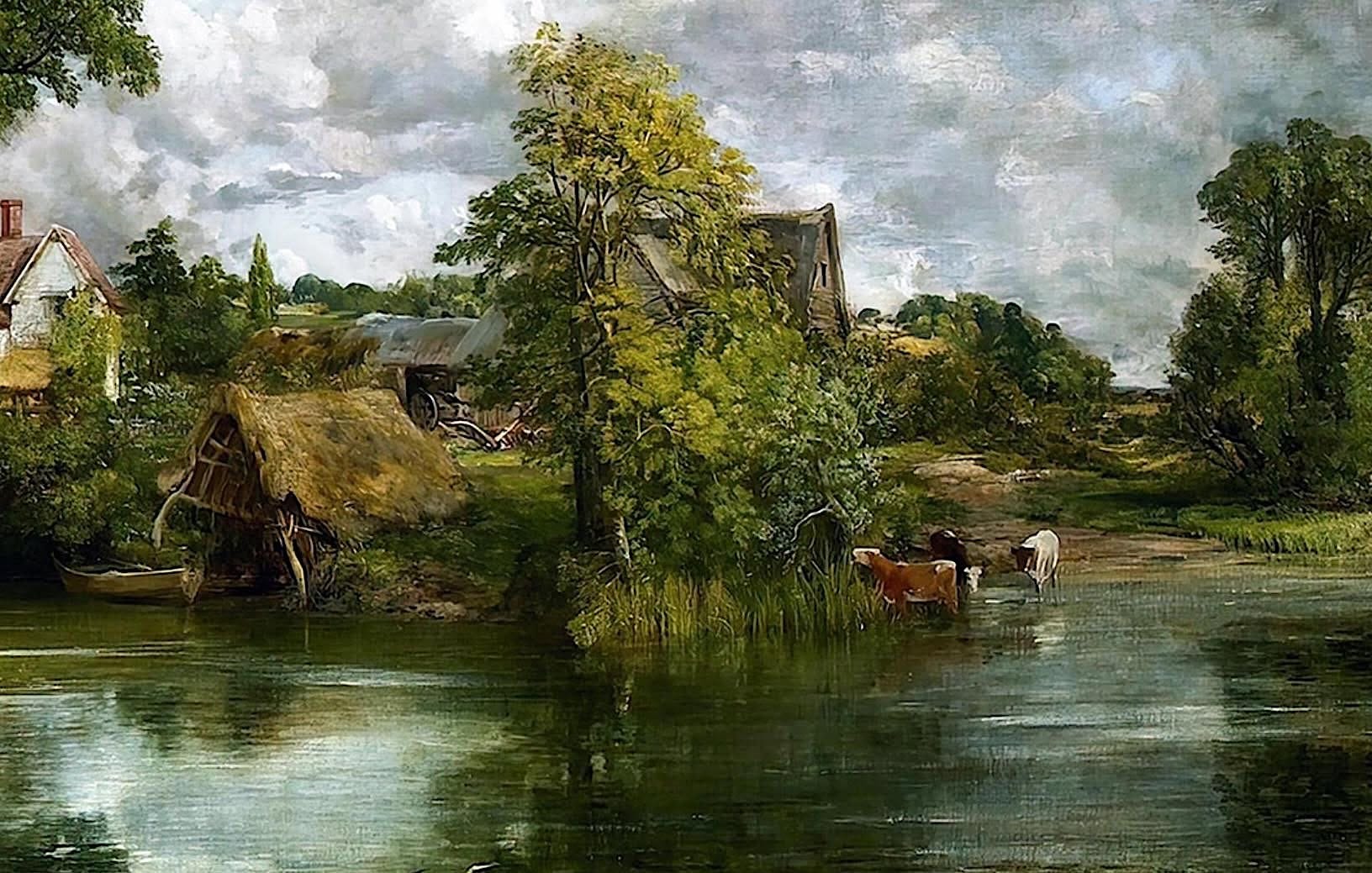
The first time I saw a painting by John Constable, it was love at first sight. His landscapes seemed to vibrate with spirituality, like no other landscapes I had ever seen. They seemed “charged with the grandeur of God,” to borrow from Gerard Manley Hopkins. It was only later that I discovered he was indeed a very spiritual person.
Constable was a conservative, traditional Anglican, who found comfort in the structure and liturgy of the Church of England. This institutional loyalty was bolstered by his deep, lifelong friendships with high-ranking clergy, most notably John Fisher, the Bishop of Salisbury, and his nephew, Archdeacon John Fisher. He even painted a few traditional religious commissions early in his career, including three church altarpieces.
While his landscapes are not overtly Christian, they still reflect his religious beliefs.Constable did not see nature as an abstract concept or an untamed wilderness. For him, the physical world was an expression of divine creation, and studying it closely was an act of devotion. He famously remarked that layout and landscape were:
“...endowed with minds capable of comprehending the ‘beauty and sublimity of the material world’ only as the means of leading us to religious sentiment.”
Ultimately, Constable’s spirituality was neither detached intellectualism nor secular pantheism. His orthodox Christian faith found its sanctuary in the fields of England. He believed that the closest one could get to the divine was to look deeply, honestly, and lovingly at the world right in front of them. And that’s a spirituality that transcends creeds.