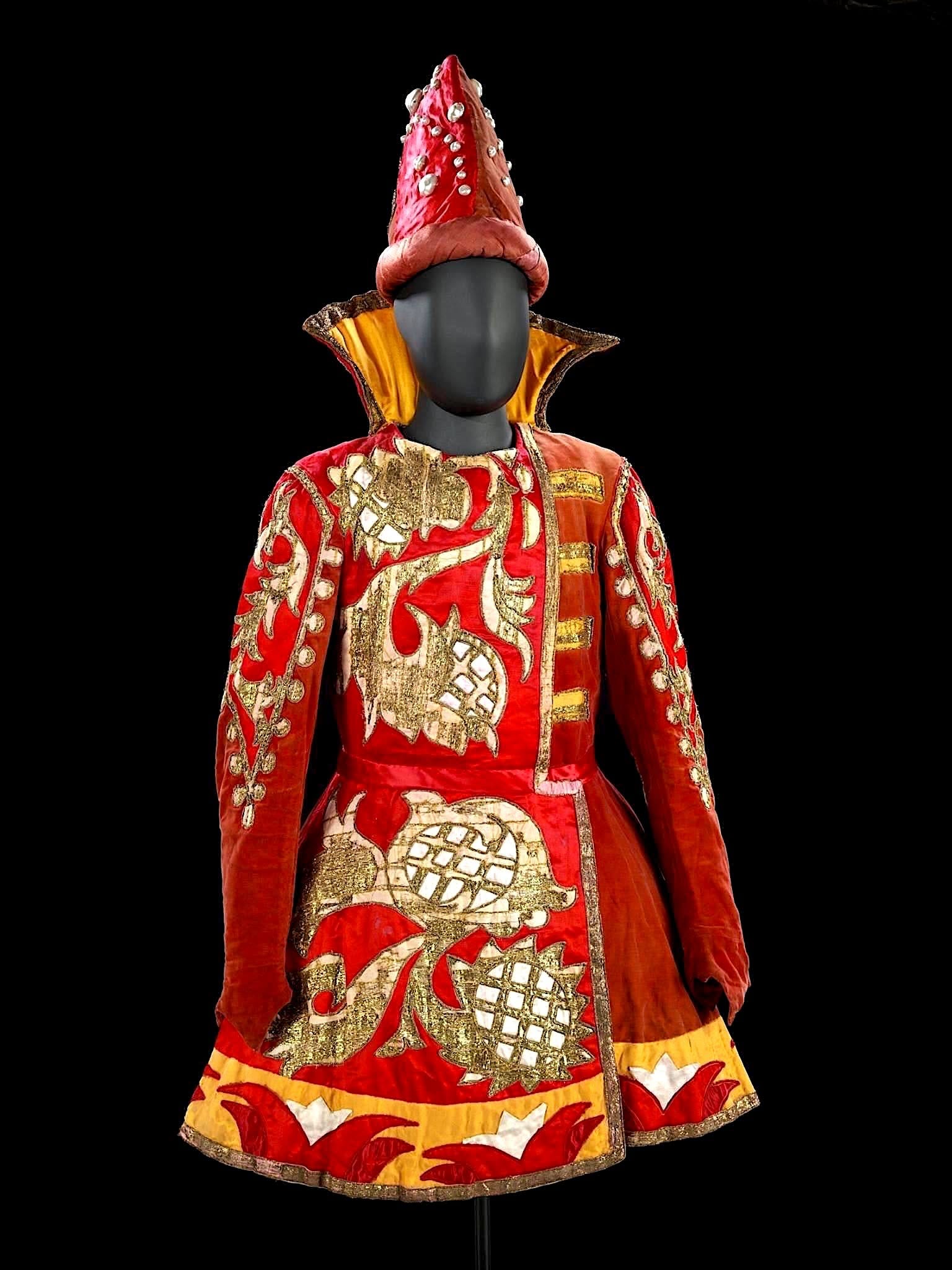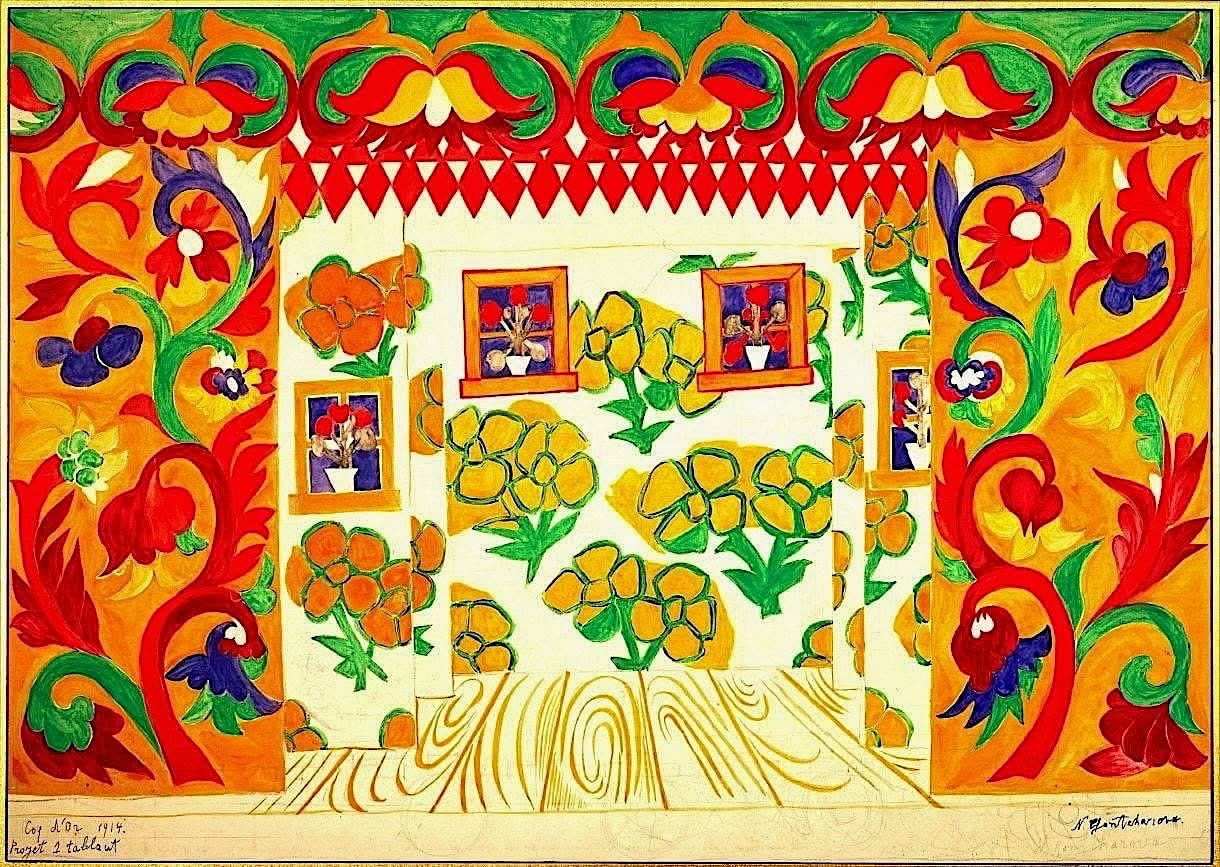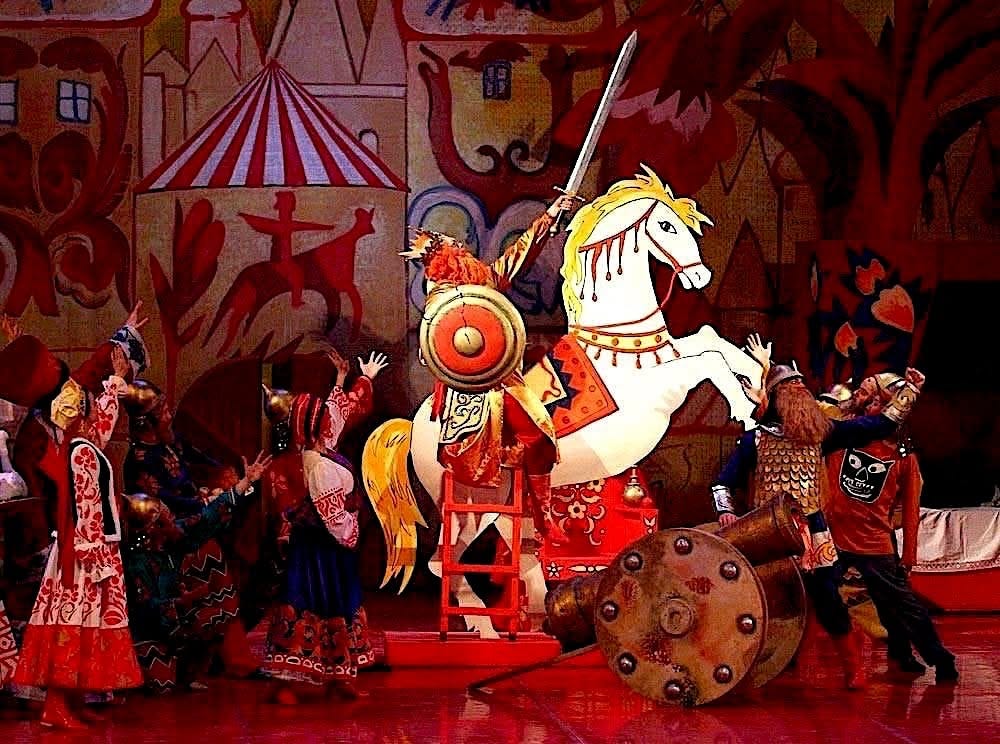
Natalia Goncharova emerged as one of the defining figures of the Russian avant‑garde, moving through several of its most radical circles before establishing herself in Paris. She first gained attention in Moscow as a founding member of the Jack of Diamonds group, the city’s earliest independent avant‑garde exhibition society, known for its embrace of Cubism and Neo‑Primitivism. When its most uncompromising members broke away, she joined the even more provocative Donkey’s Tail, which pushed for a distinctly Russian modernism rooted in folk art, lubok prints, and icon traditions. Her paintings from this period draw heavily on those sources — bold outlines, flattened forms, and the visual language of Byzantine mosaics — while also absorbing the fractured energy of European modernism.
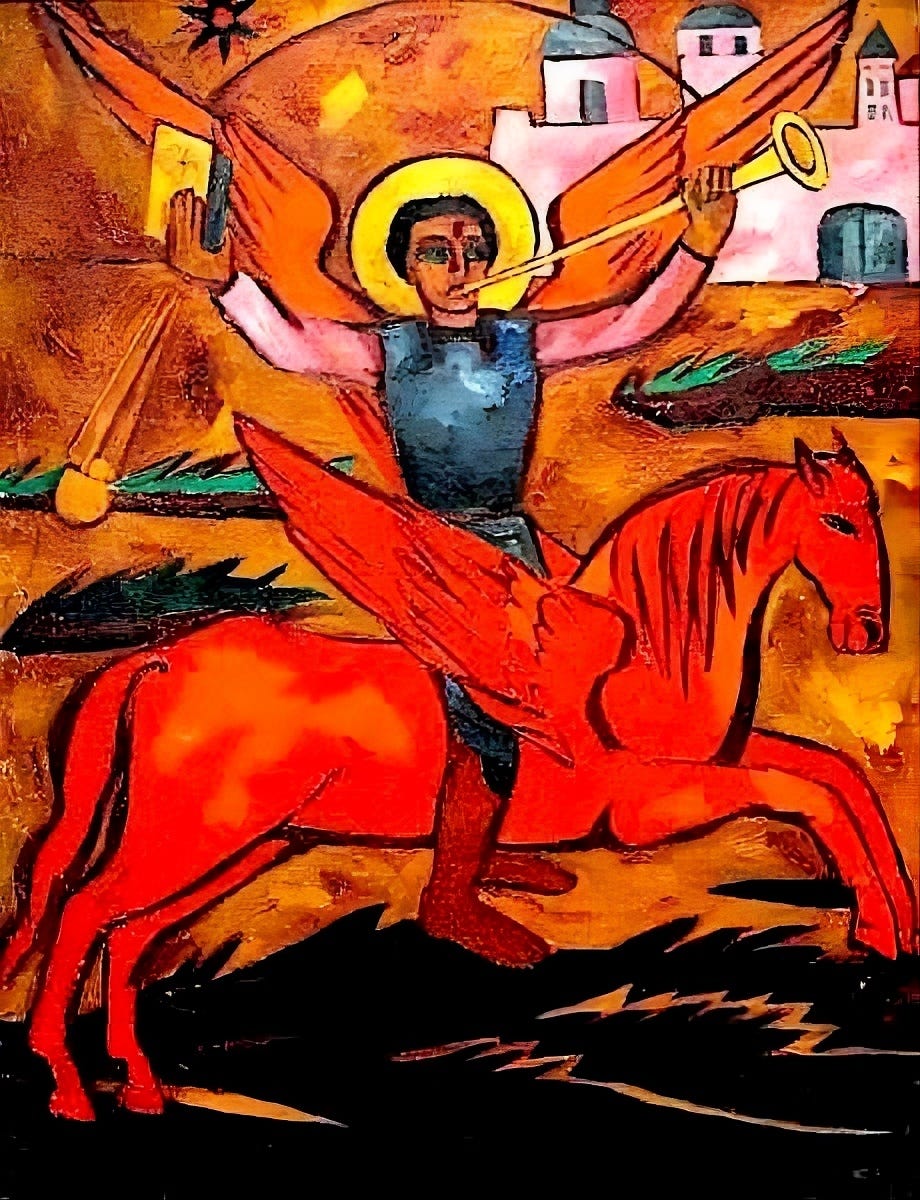
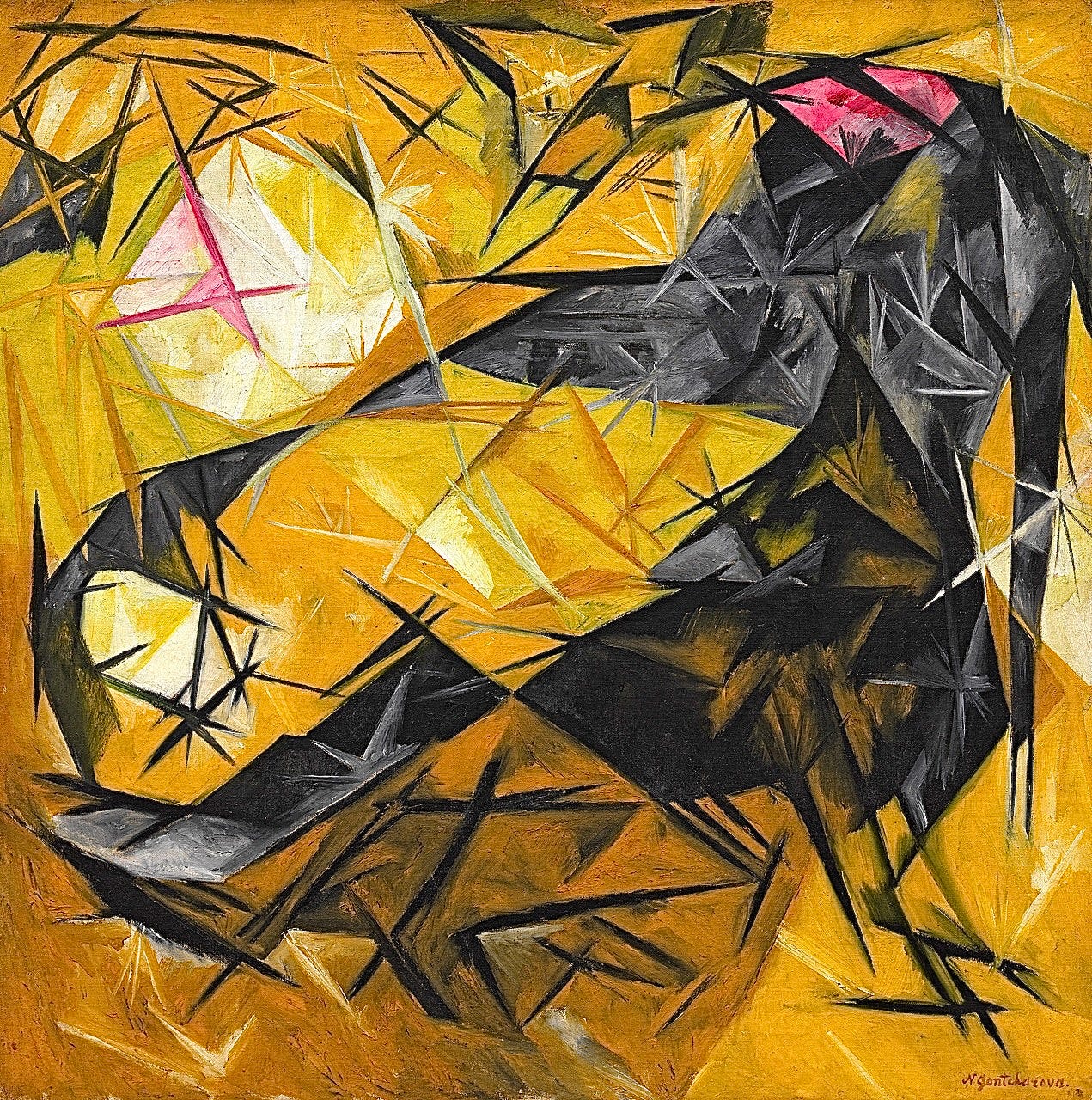
By 1913, Goncharova and Mikhail Larionov had taken another step into abstraction with Rayonism, a short‑lived but influential movement that treated intersecting rays of light as the true subject of painting. Rather than depicting objects, Rayonist works map the spatial collisions of light itself — a conceptual leap that placed her among the earliest abstract painters in Russia.
After these years of intense experimentation, Goncharova moved to Paris, where she became a key designer for Serge Diaghilev’s Ballets Russes. Her sets and costumes — especially for productions like The Golden Cockerel and The Firebird — carried her Russian folk influences into a new theatrical context, using vivid color, pattern, and stylized forms to reshape the visual language of modern ballet. She remained in France for the rest of her life, continuing to paint and design while maintaining her position as one of the avant‑garde’s most versatile and forward‑looking artists.