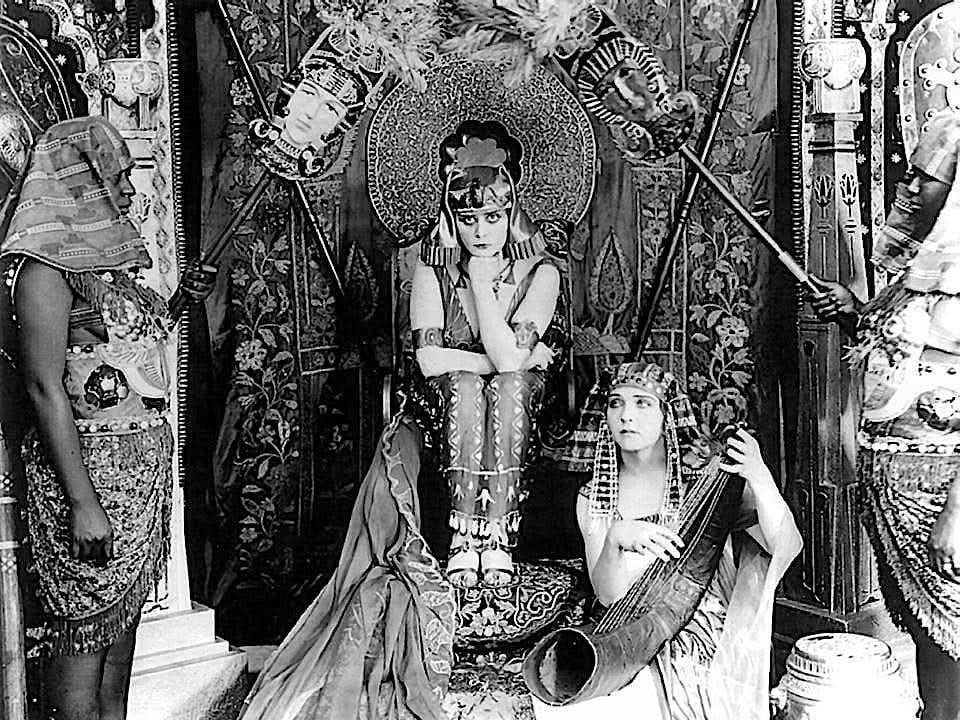
Studios of the 1910s loved nothing more than wrapping an actress in mystery, and Theda Bara became their most elaborate invention. For Cleopatra (1917), publicists launched an enormous campaign claiming she was the Egyptian‑born child of a French actress and an Italian sculptor, raised in the Sahara beneath the Sphinx before blossoming into a Parisian stage star—none of which was true. They dubbed her the Serpent of the Nile, fed reporters tales of mysticism and the occult, and built an aura of exotic danger around her. Film historians often point to this moment as the dawn of two enduring Hollywood institutions: the studio publicity office and the professional press agent, precursors to today’s public relations machinery.
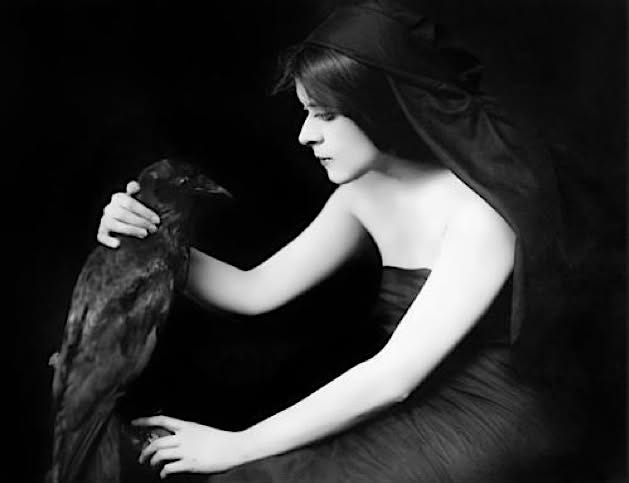
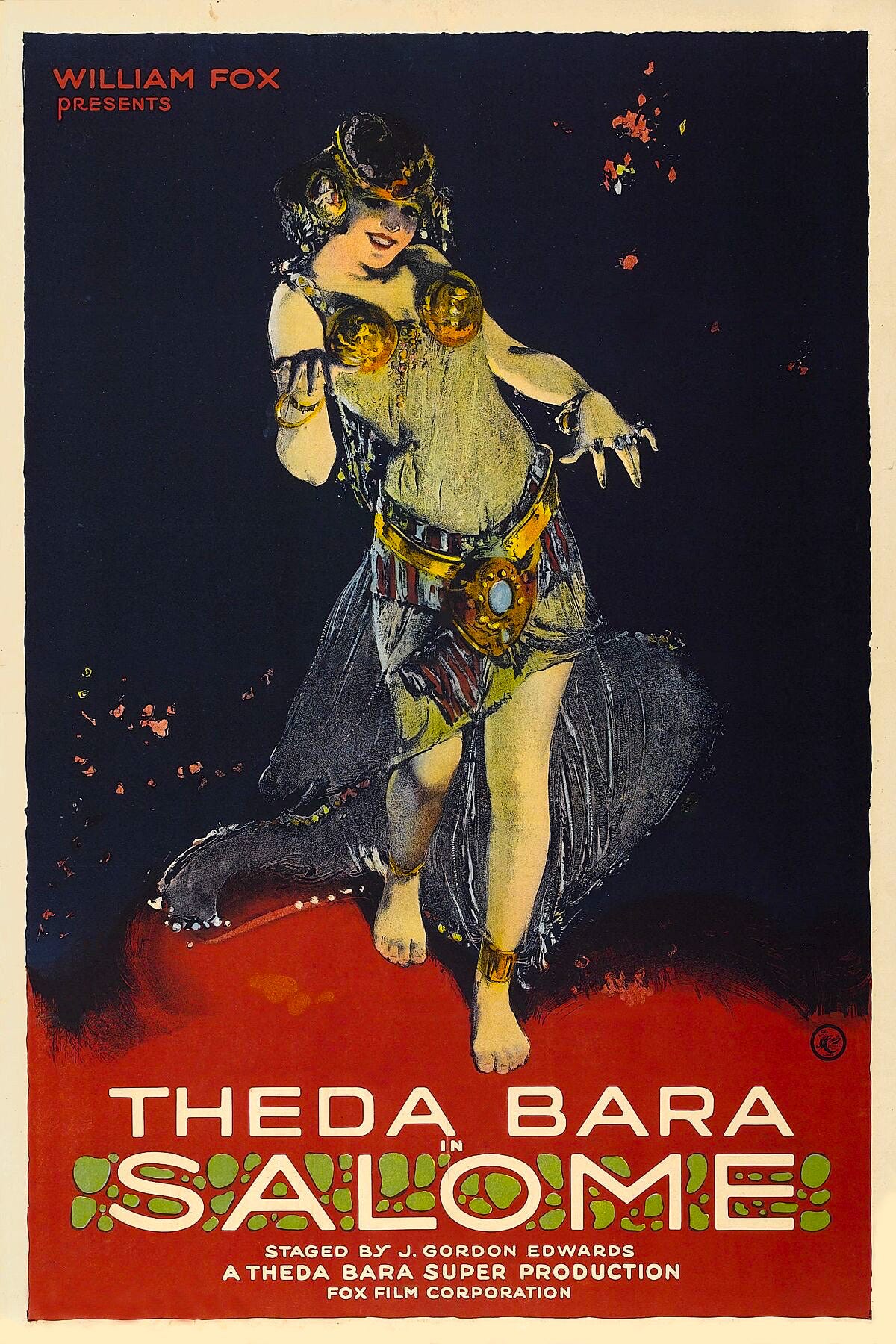
Theda Bara’s recently rediscovered Salomé is a feverish blend of biblical spectacle, orientalist fantasy, and Bara’s signature vamp persona. Long thought lost, the surviving footage reveals her sweeping, stylized gestures, jeweled costumes, and a performance pitched halfway between ritual and provocation, offering a rare glimpse of how Fox sought to build her into a figure of exotic danger. The film’s recovery restores a missing chapter of silent‑era iconography and deepens our sense of Bara’s craft, showing her command of movement, pose, and atmosphere.
In her final years, Theda Bara lived quietly with her husband in Los Angeles, far removed from the exotic persona studios once manufactured for her. She made no attempt to revive her screen career, instead spending her time reading, hosting friends, and enjoying a private domestic life. When she died in 1955 at age 69, she left behind only a handful of surviving films but an outsized legacy as one of early Hollywood’s first great mythic creations.