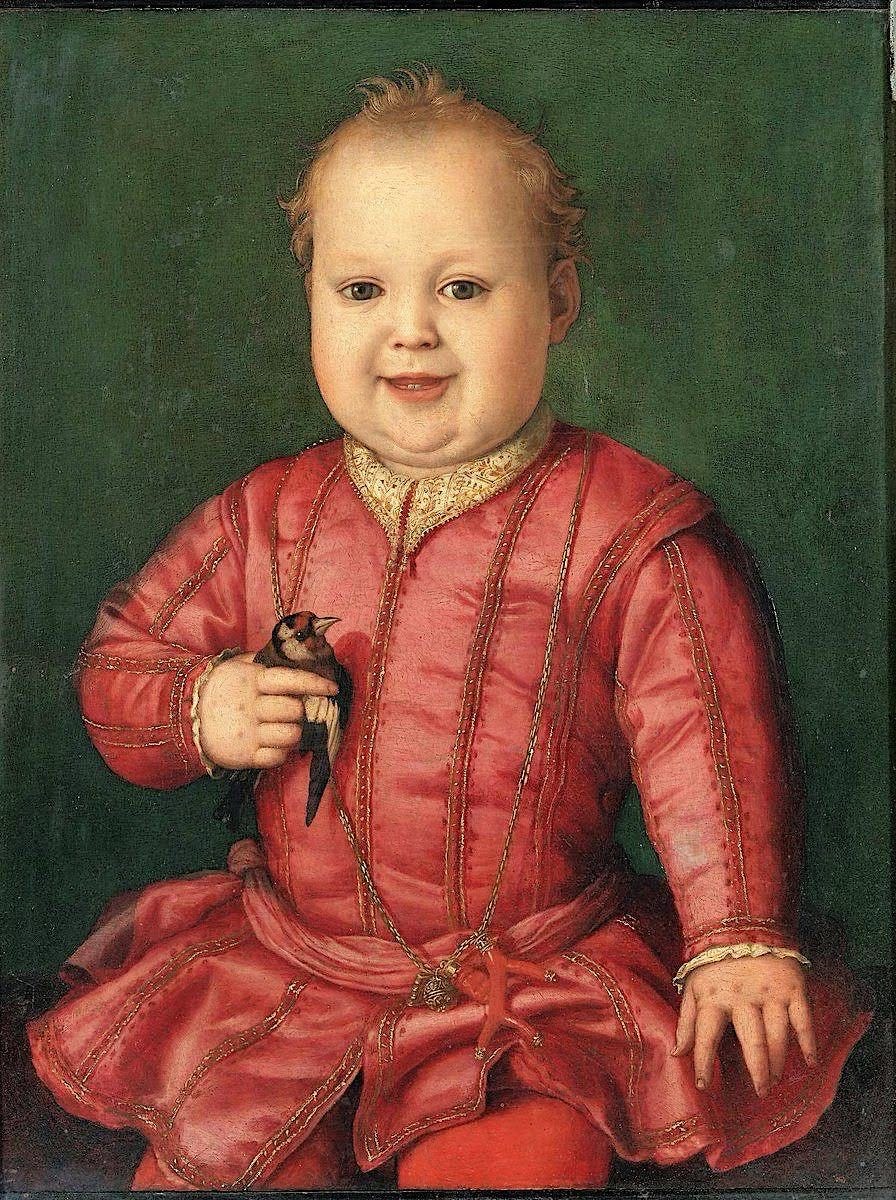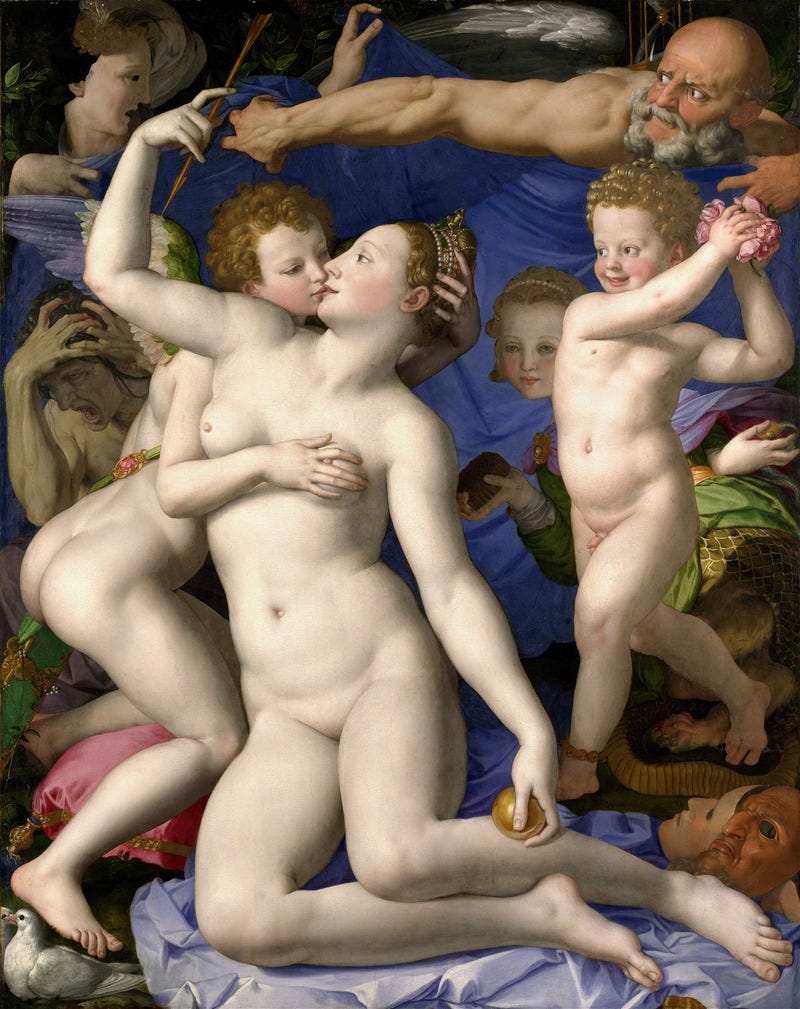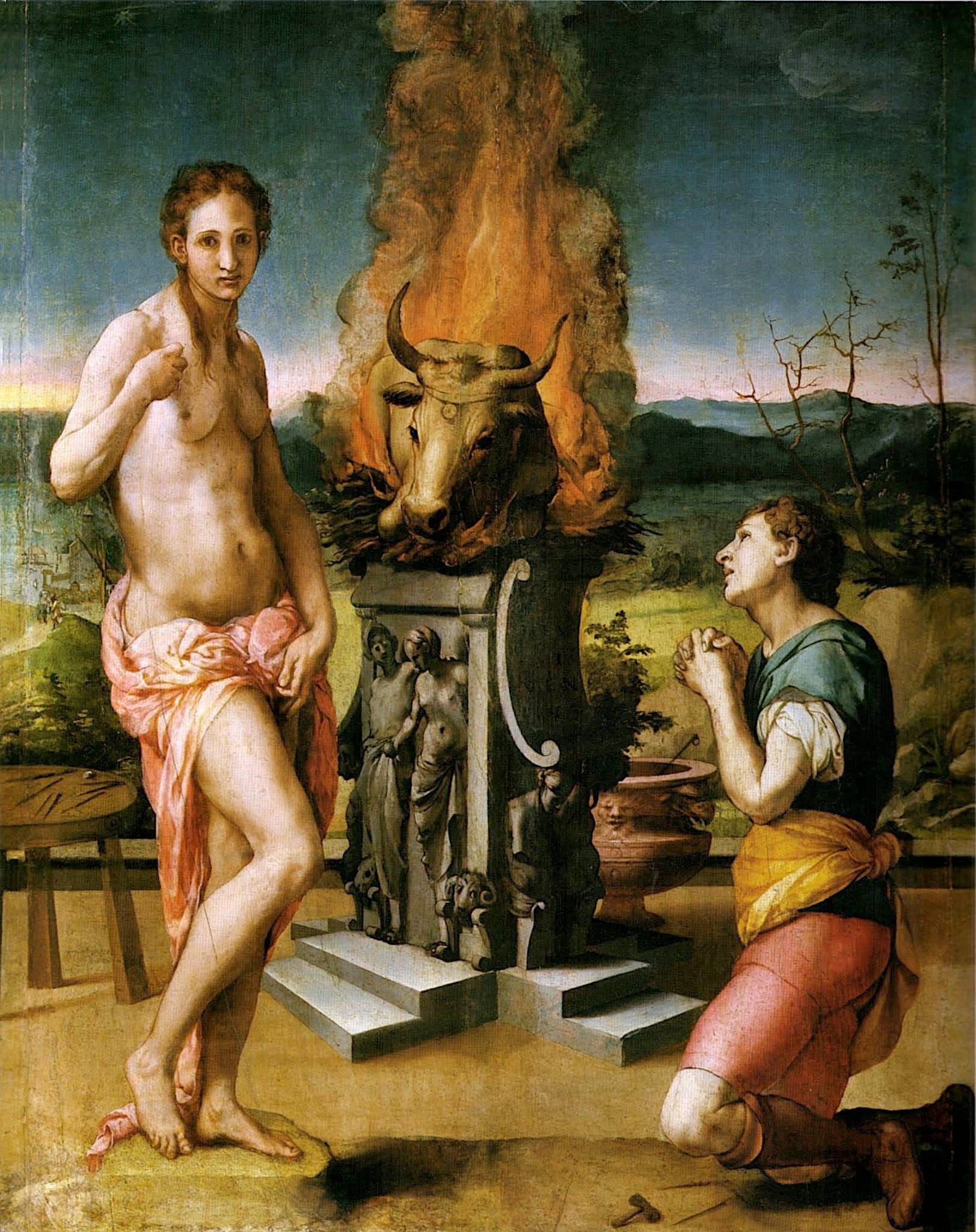
Bronzino spent his entire life in Florence and, beginning in his late thirties, served as the court painter to Cosimo I de’ Medici, Grand Duke of Tuscany. Best known as a portraitist, he also produced numerous religious paintings and a small number of allegorical works, including his most famous masterpiece, Venus, Cupid, Folly and Time (c. 1544-45), now housed in London. Because Cosimo was an early practitioner of sending painted likenesses as diplomatic gifts, multiple versions of Medici portraits survive, some executed wholly or partly by Bronzino and others produced with workshop assistance.
He trained under Pontormo, one of the leading figures of early Florentine Mannerism, whose influence remained evident throughout his career. Yet Bronzino developed a distinct artistic voice. While his figures share the elegant proportions and elongated forms characteristic of Mannerism, they are typically composed, self-possessed, and restrained, lacking the emotional intensity and restless energy often associated with his teacher’s work. Critics have frequently described his art as cool or highly artificial, and his reputation suffered during the nineteenth and early twentieth centuries, when Mannerism as a whole fell out of favor with scholars and collectors.