

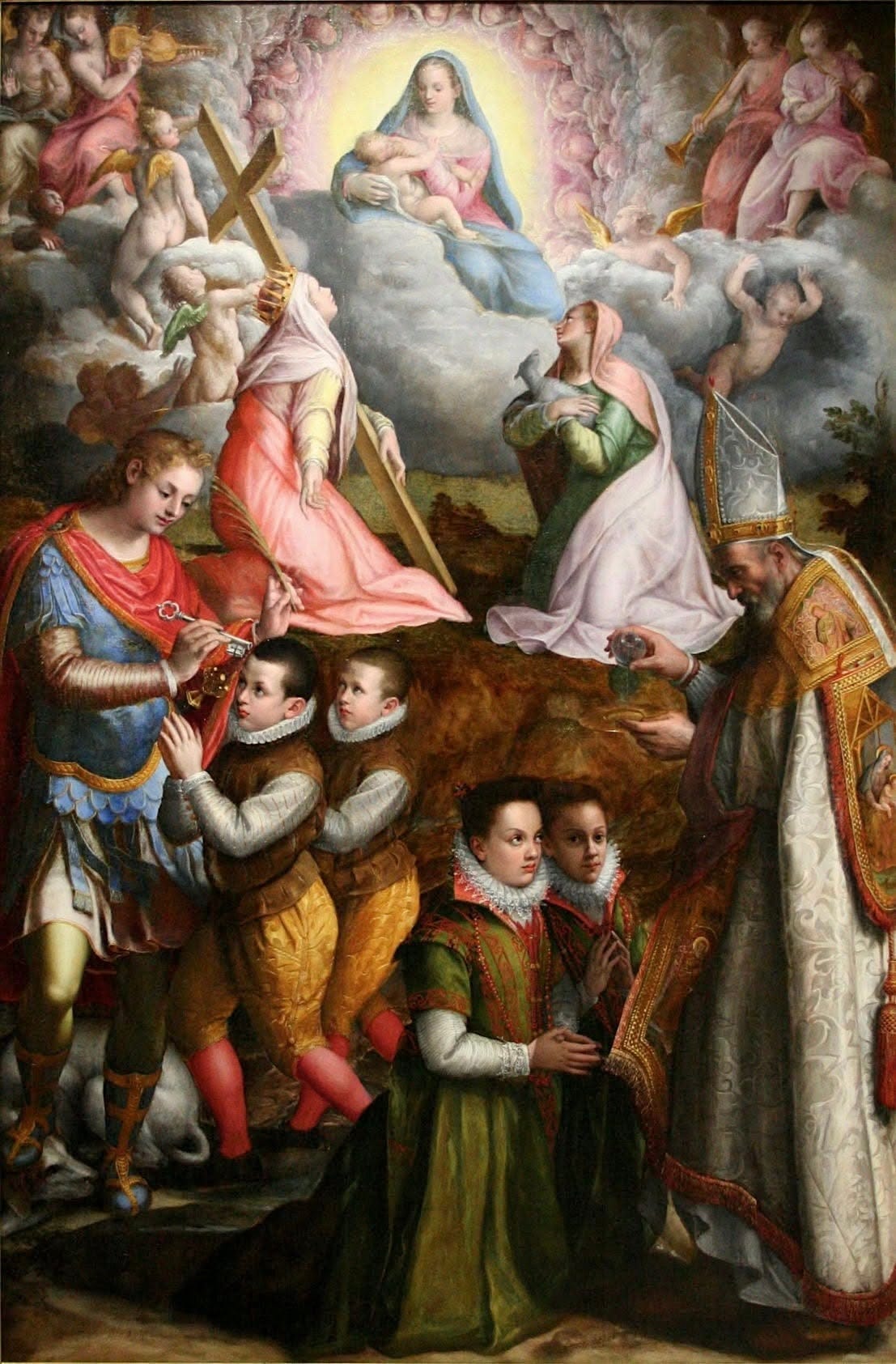
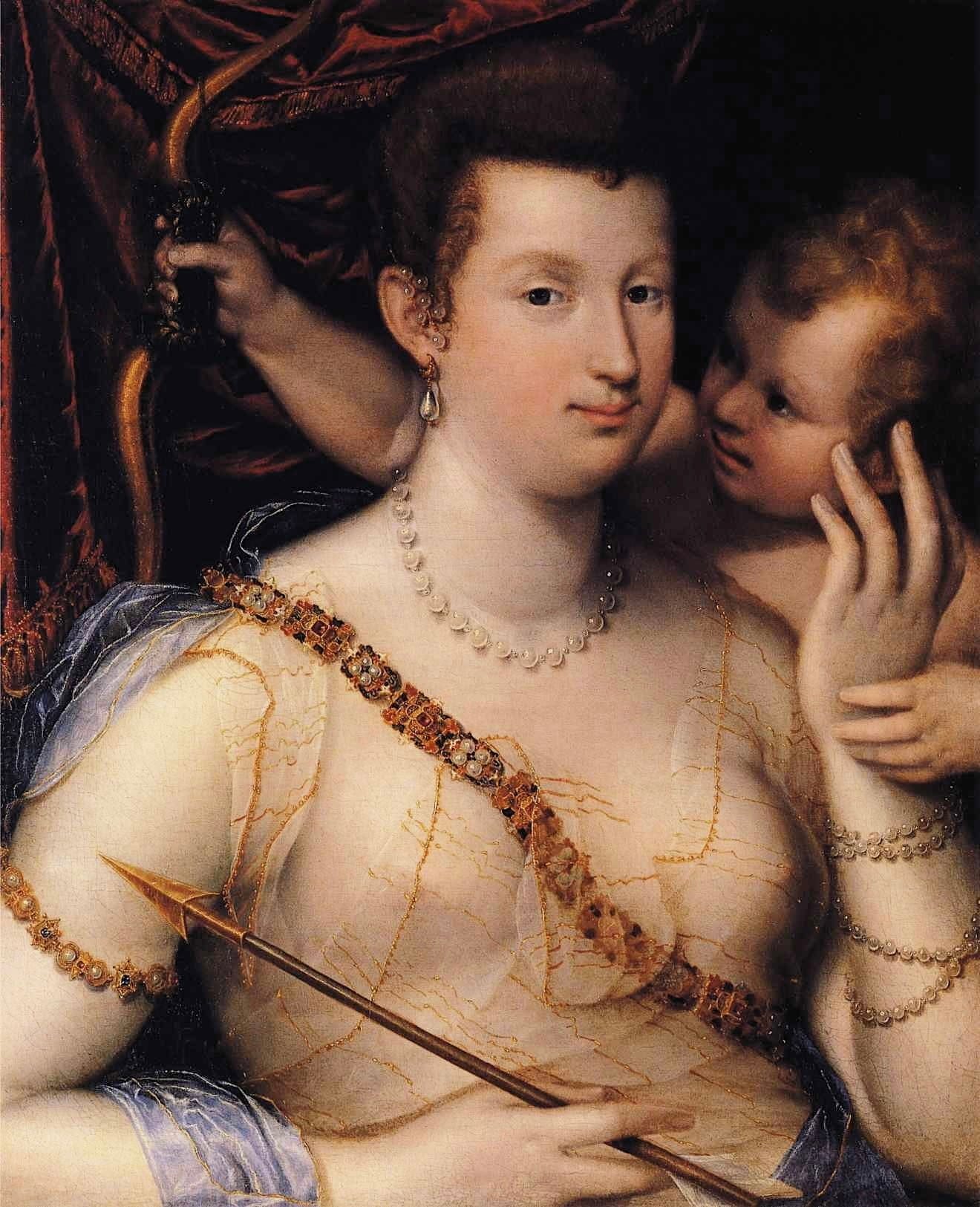
Lavinia Fontana (1552-1614) was one of the first women in Europe to build a successful career as a professional painter, working in Bologna and later in Rome. Trained by her father, Prospero, she became renowned for her portraits of noblewomen and scholars, as well as her religious altarpieces. Fontana’s ability to combine precise detail with a warm sense of character made her a sought‑after artist in courtly and intellectual circles, and she is often credited as the first woman to run her own workshop in Renaissance Italy.
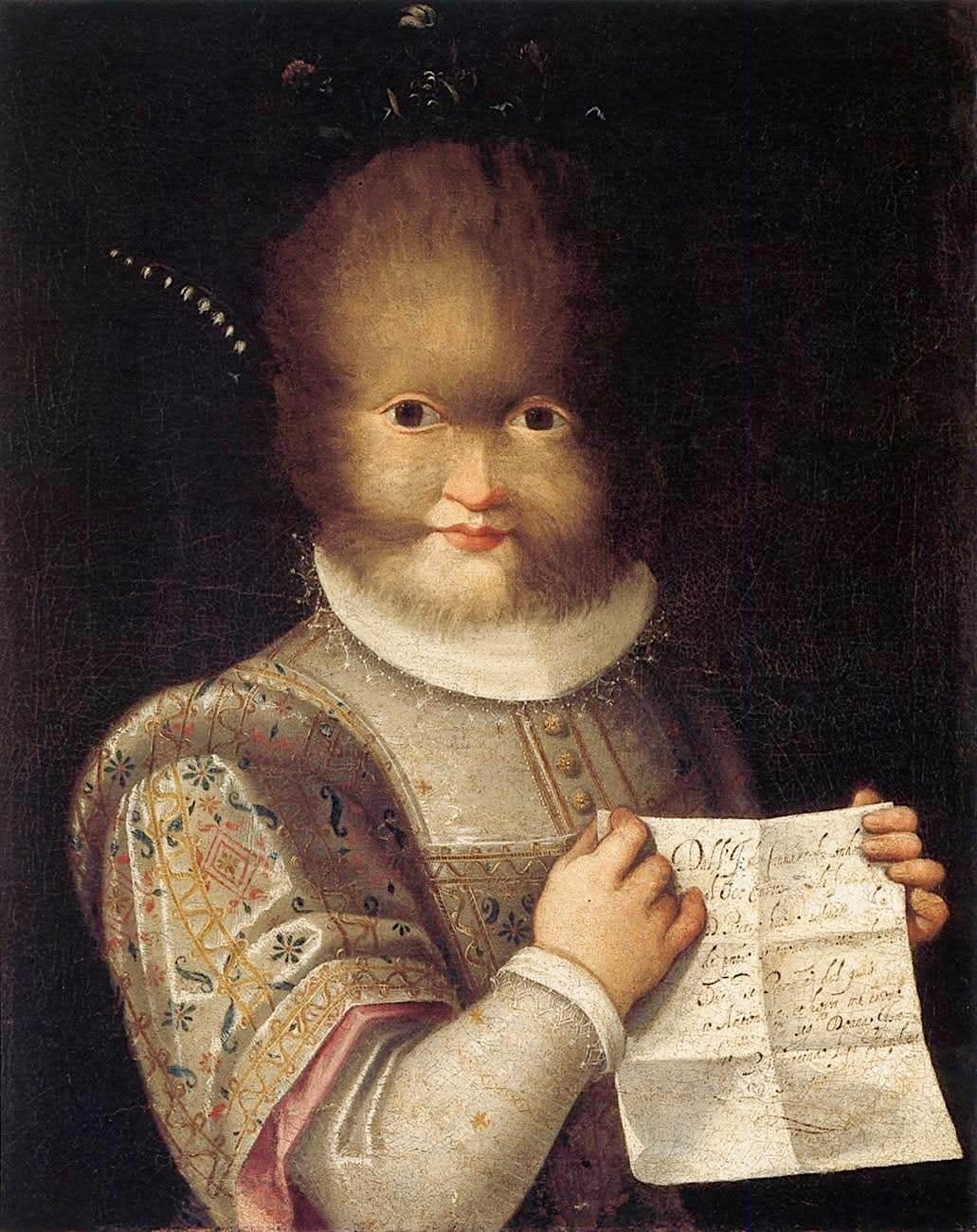
Among her most striking works is the portrait of Antonietta Gonzalez, painted around 1594. Antonietta, like her father (who was known as the “wolf man” of Tenerife) had congenital hypertrichosis (excess hair growth). Fontana depicts the young girl with dignity and calm, her face framed by the unusual hair condition, while her fine dress and composed posture emphasize her humanity and individuality. The portrait is both sympathetic and curious, reflecting Renaissance fascination with natural wonders while affirming Antonietta’s place in society.
Fascinating