When the tornado touches down at the Kauffman Center this October, audiences will enter a Technicolor, dazzling world where ballet, spectacle, flying effects, vivid costumes and a fresh musical score combine to create a distinctly Kansas City take on The Wizard of Oz.
Kansas City Ballet will revive its acclaimed production of The Wizard of Oz October 16 through 25 at the Muriel Kauffman Theatre. The ballet, choreographed by Septime Webre with an original score by Matthew Pierce, premiered in Kansas City in 2018 and quickly became one of the company’s biggest audience successes.
“This is our third shot at it,” said Kansas City Ballet Artistic Director Devon Carney. “We did it in 2018, then in 2022 after COVID, and here we are again in 2026.”
Carney said the idea for the ballet was on his mind almost immediately after he arrived in Kansas City. And now it’s become a hometown favorite.
“When I had the great opportunity to be chosen as artistic director for Kansas City Ballet, one of the first things I thought of was, ‘Has anybody done The Wizard of Oz around here?’” Carney said. “I thought, what a perfect place for it to be done.”
The connection between Kansas City and Dorothy’s journey has always resonated in this part of the country. Audiences have responded enthusiastically every time the production has appeared, and the ballet has gone on to enjoy a life well beyond its local premiere.
Kansas City Ballet was the first professional company to stage Webre’s full-length production, and since then it has been performed by organizations across the United States and internationally.
Part of the production’s appeal lies in Webre’s highly theatrical choreographic style.
Carney first collaborated with the choreographer through Alice in Wonderland and later brought additional Webre works to Kansas City, including The Great Gatsby. He describes Webre as a creator who embraces contemporary culture and isn’t afraid to mix popular references into classical ballet storytelling.
“The Wizard of Oz definitely does that,” Carney said. “There are some really fun scenes where you can see the Twist, you can see the Macarena in very brief moments.”
For Carney, however, the larger achievement is that Webre creates productions that are simply fun.
“I think it’s important for our audiences to just have fun,” he said. “They’re going to get a story, and they’re going to be transported on this incredible journey.”
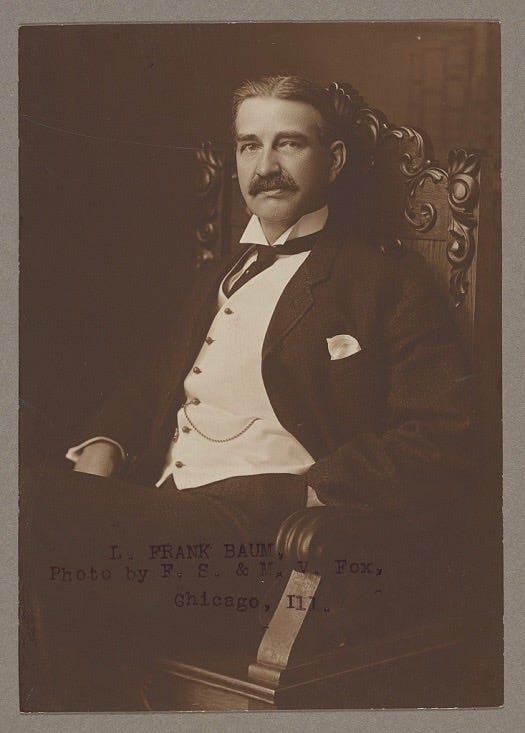
L. Frank Baum (1856-1919) was a journalist, playwright, and storyteller who gave the world The Wonderful Wizard of Oz in 1900. The story grew out of bedtime tales he told his children and became one of the most beloved works in American literature. Although Baum never lived in Kansas, he chose the state as Dorothy’s home, using its prairie landscape and reputation for tornados as the starting point for her journey into the fantastical Land of Oz. More than a century later, Dorothy’s adventure remains one of the strongest cultural links between Kansas and the American imagination.
Late in life, Baum became fascinated by the emerging motion picture industry and moved to Southern California, where he founded the Oz Film Manufacturing Company in Los Angeles in 1914 and produced several silent films based on his Oz stories, decades before MGM’s iconic 1939 film made Dorothy and her ruby slippers famous around the world.

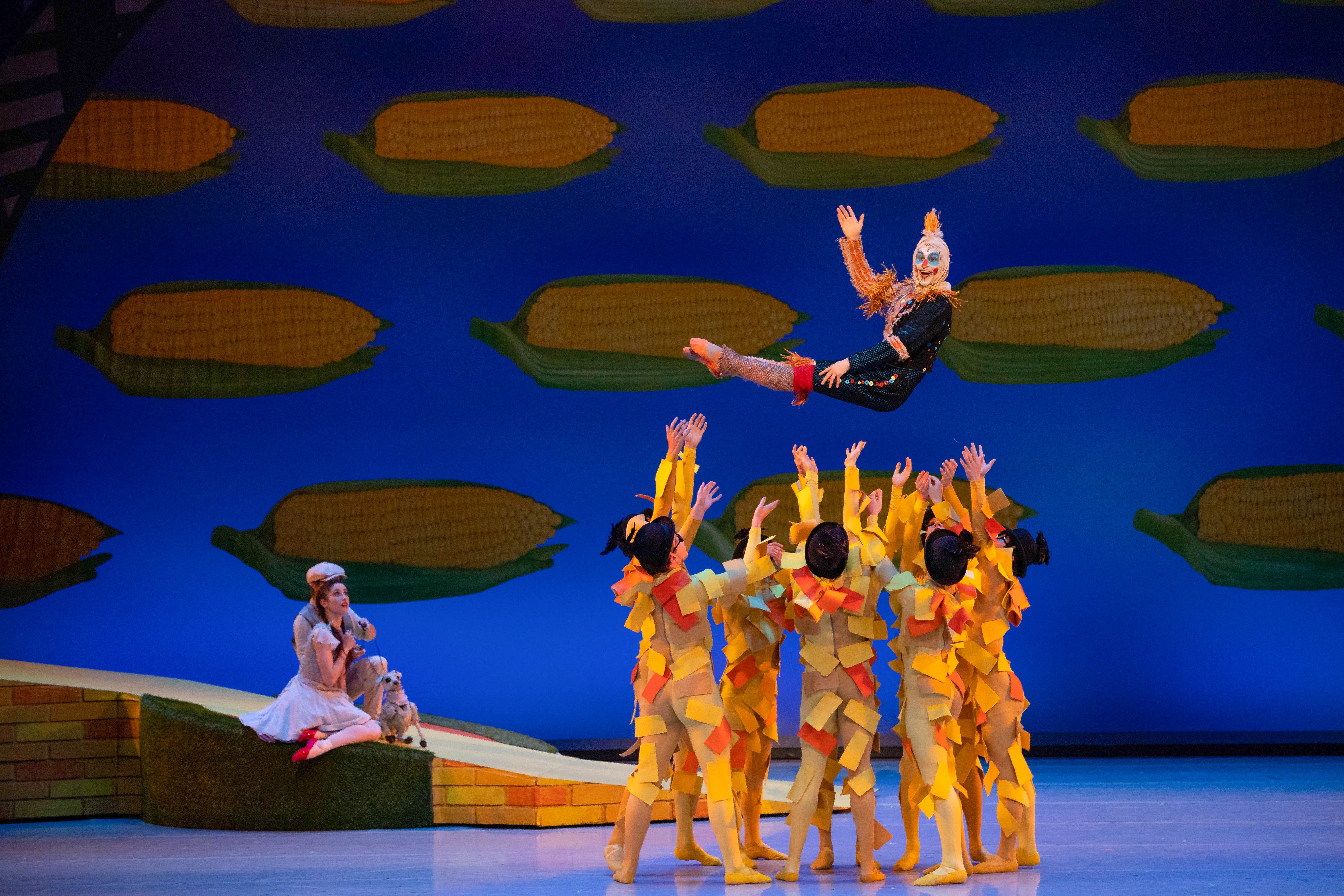
The ballet follows the familiar path established by Baum’s novel. Dorothy is swept away by a tornado, arrives in a fantastical land, meets the Scarecrow, Tin Man and Cowardly Lion, and sets off for Emerald City in search of the mysterious Wizard.
Yet one of the production’s most intriguing choices is what it avoids.
Audiences who grew up with MGM’s classic 1939 film might expect to hear “Over the Rainbow” or “We’re Off to See the Wizard.” Instead, the ballet uses an entirely original score by composer Matthew Pierce.
That was a deliberate decision made early in the production’s development.
“As soon as we start using music from the movie, we are compared up against something that has multi-generational history,” Carney said.
The creative team wanted audiences to experience Baum’s story without constantly comparing each scene to famous moments from the film. Pierce’s score allows the ballet to create its own identity while still honoring the spirit of the story.
The music captures the character of Kansas. Carney describes the opening sections as possessing an Americana character, evoking wide-open plains and prairie landscapes. Later, the score shifts dramatically as Dorothy reaches Emerald City.
In one of Webre’s most imaginative concepts, Emerald City resembles a glamorous nightclub populated by flamboyant and fashion-forward citizens. Disco influences appear throughout the choreography, and audiences may spot nods to dance crazes and pop culture icons.
The Lion, for example, is inspired by a 1970s rock star.
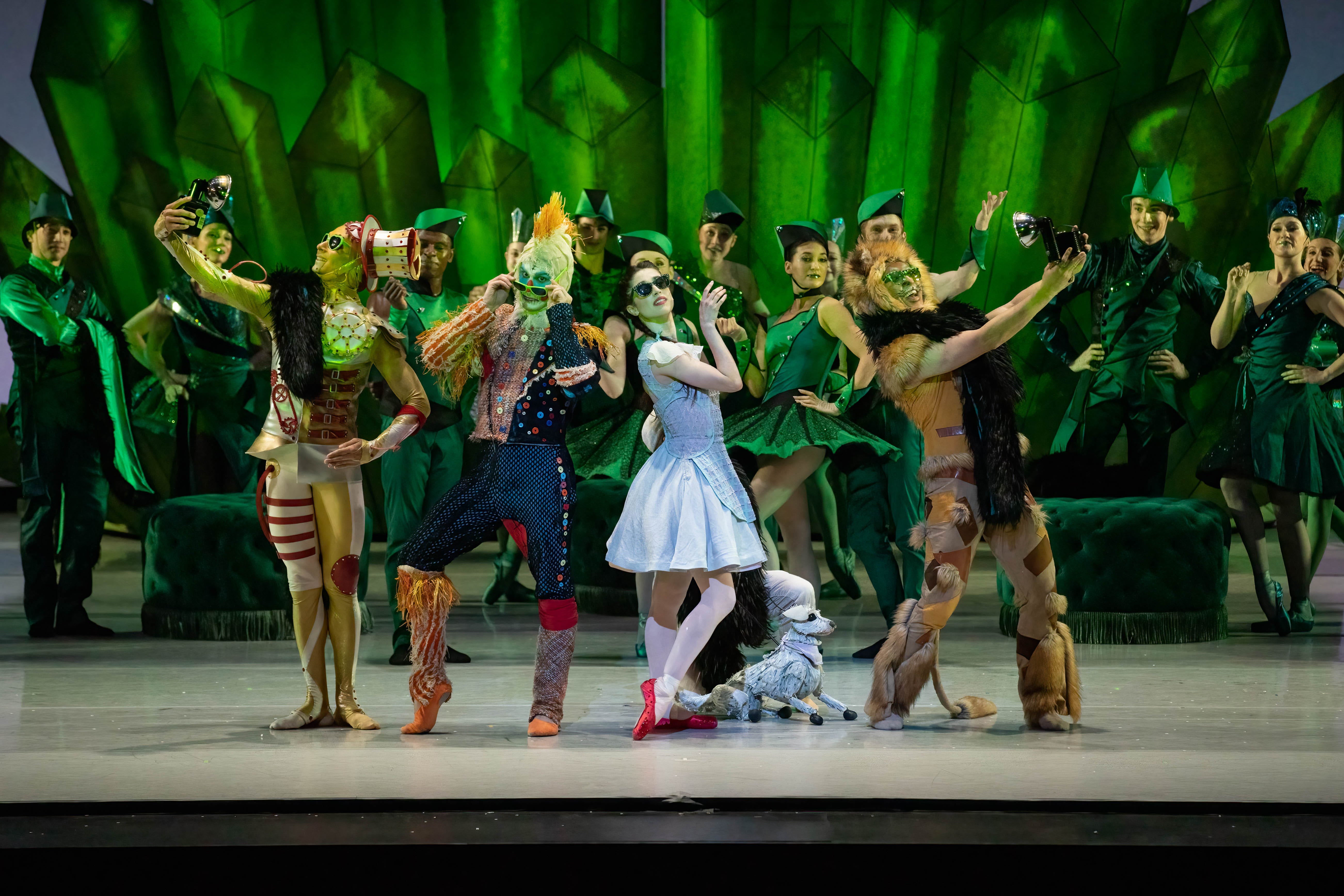
The visual world surrounding the characters is every bit as imaginative.
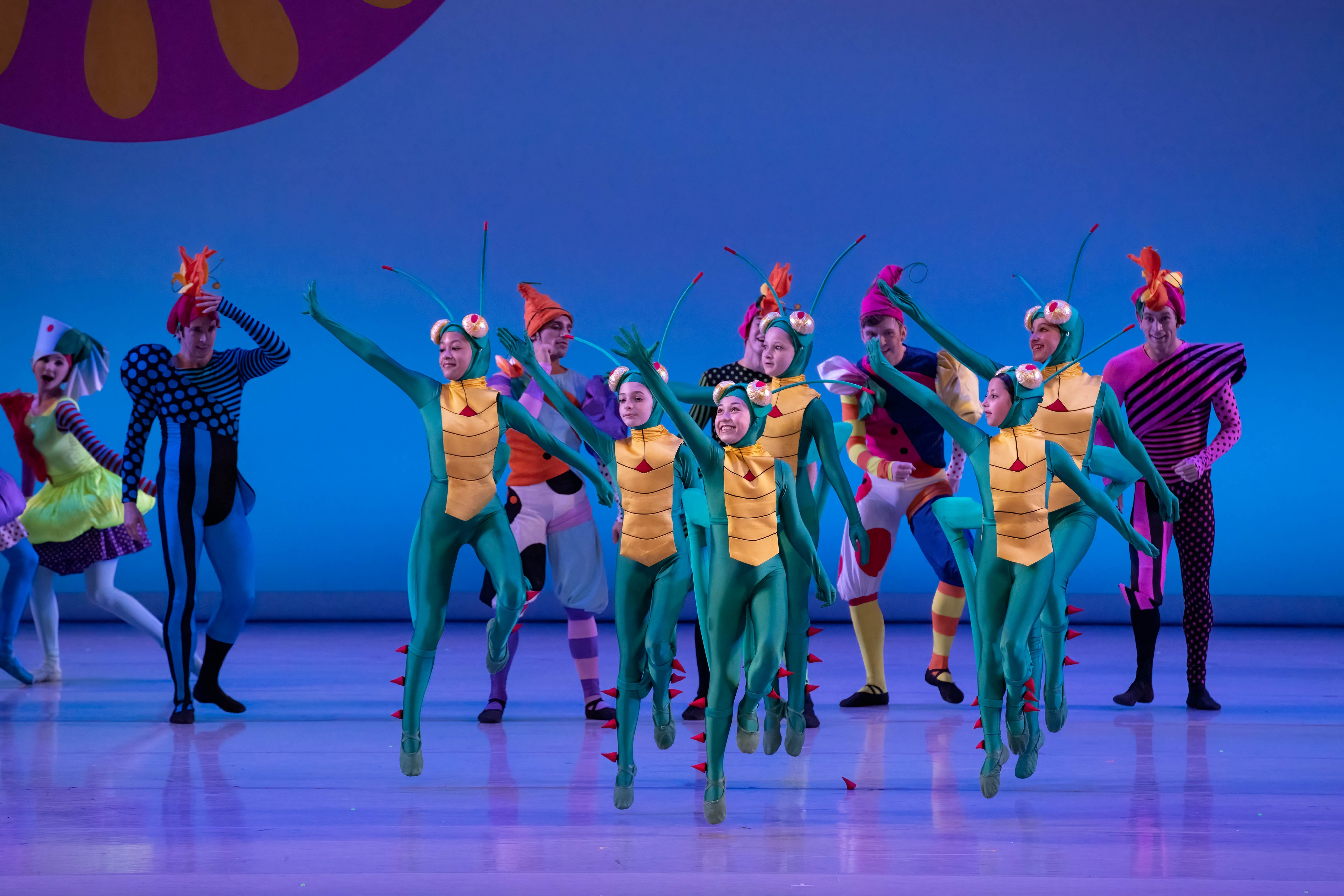
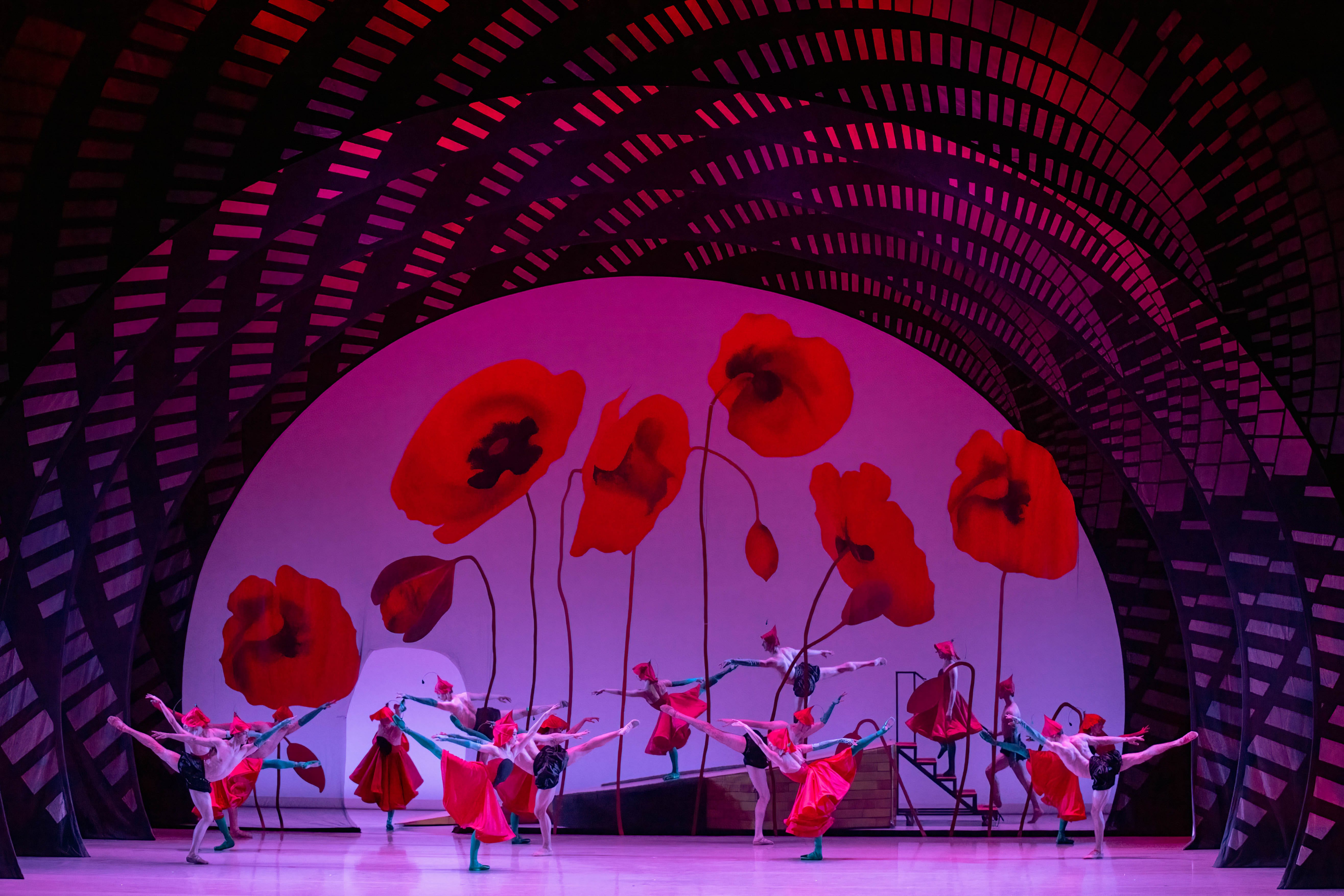
Costume designer Liz Vandal, known for her work with Cirque du Soleil, fills the stage with brilliant colors, elaborate costumes and fantastical characters. The production begins in a gray-toned Kansas. Then Dorothy opens the door into Munchkinland and the stage suddenly explodes with reds, yellows, greens, pinks and purples.
“It’s a feast for the eyes,” Carney said.
That visual feast extends far beyond costumes.
Audiences can expect flying monkeys, airborne witches, projections, puppetry and extensive aerial effects that push the boundaries of what many people expect from ballet.
“Monkeys will fly in this show,” Carney assures us.
The famous flying monkey sequence combines human performers, giant puppets and projected imagery to fill the stage with what appears to be an entire army of airborne creatures.
The production features eight different flying roles altogether, creating significant technical challenges. Specialized flying professionals install custom rigging systems and train performers once the company moves into the theater.
Flying, Carney noted, is far more difficult than it looks.
“If you move your arm, it’s like being in space,” he said. “You will start spinning, and you can’t stop that spin because you have nothing to stop with.”
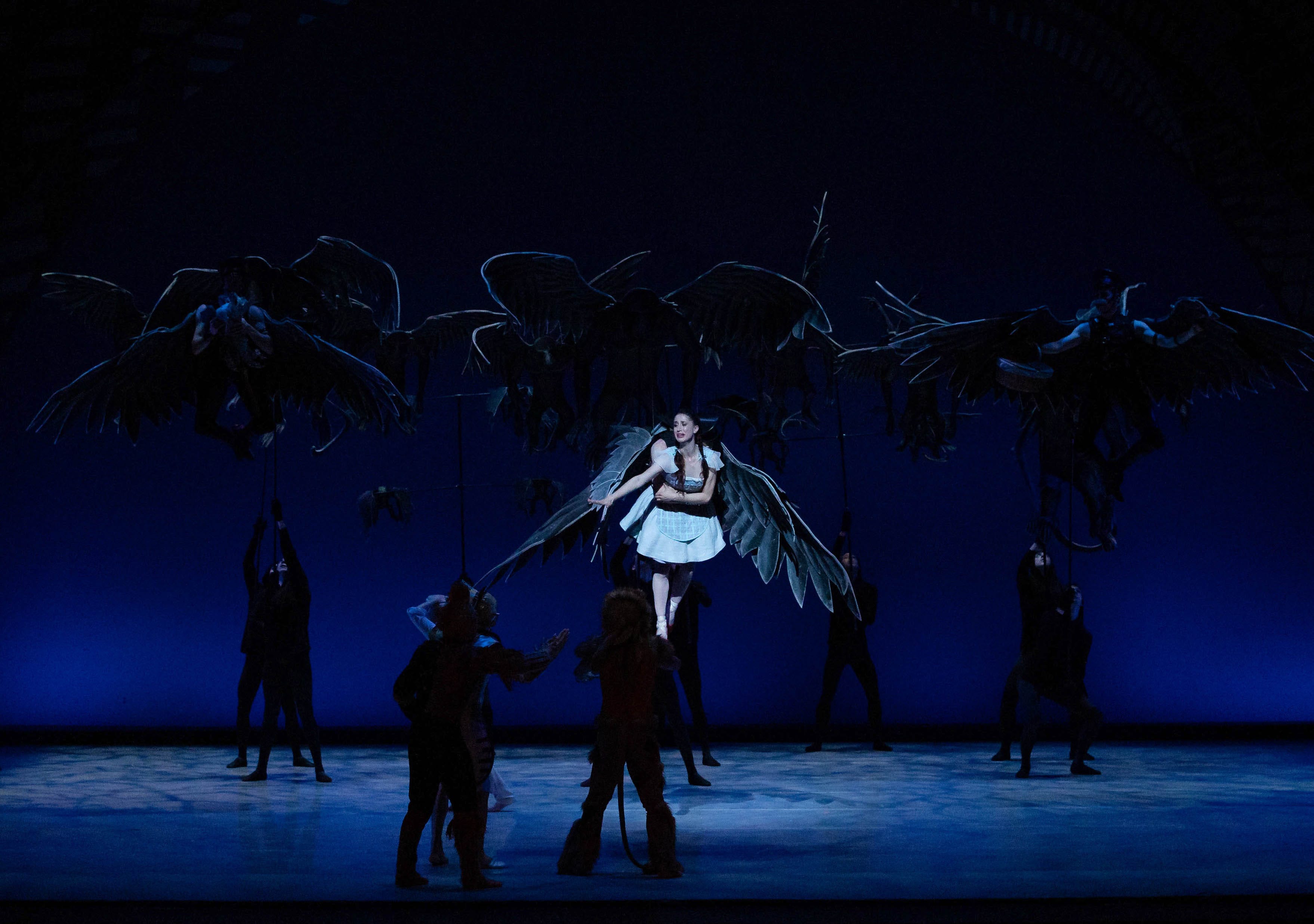
The elaborate effects contribute to a production involving more than 80 performers, including approximately 25 children. While not quite on the scale of Kansas City Ballet’s annual Nutcracker, it ranks among the company’s largest undertakings.
The result is a family-friendly show that appeals to audiences of all ages.
Carney especially enjoys seeing patrons arrive dressed as Dorothy, the Scarecrow, the Tin Man or even the Wicked Witch.
“We typically have somewhere between 20 and 30 Dorothys in the audience from the age of 5 to 85,” he said.
That cross-generational appeal may be one of the production’s greatest strengths. Nearly everyone knows the story, yet Webre’s ballet presents it from a fresh perspective.
The production remains faithful to Baum’s narrative while creating its own artistic world. One notable exception involves Dorothy’s famous footwear. Though Baum’s novel featured silver slippers, the ballet uses the ruby slippers made famous by the film. Securing permission required a special licensing arrangement because the red slippers are associated with the MGM adaptation rather than the original book.
For Carney, however, audiences ultimately connect not because of the special effects or the spectacle, but because of the simple joy at the center of the story.
“It just brings out the kid in everybody,” he said. “Just to have a good time.”