

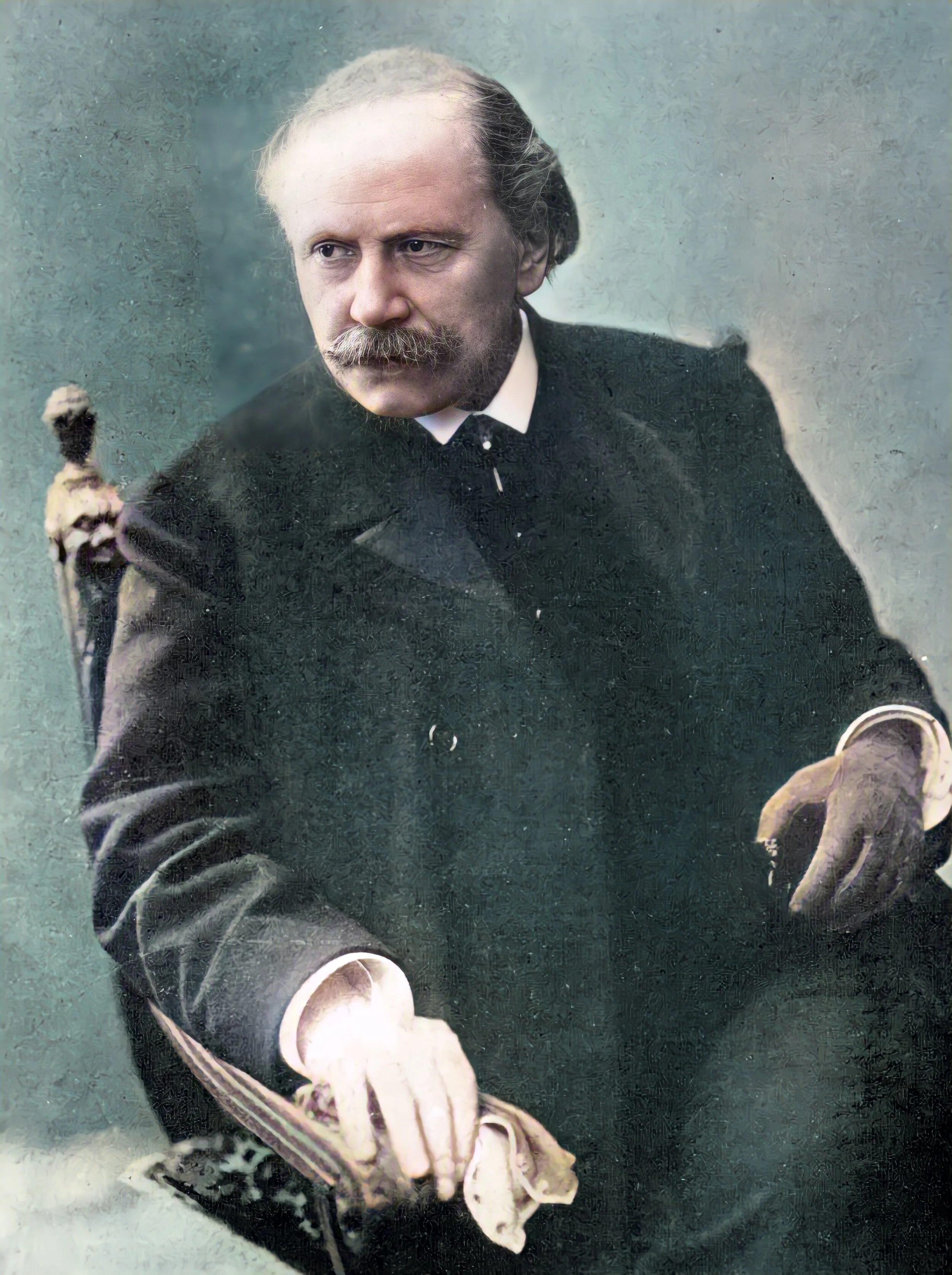
Jules Massenet (1842–1912) was the leading French opera composer of the Belle Époque, celebrated for the lyricism, sensuality, and theatrical instinct that shaped more than thirty operas, including Manon and Werther.
I just love the music of Massenet. His lush, captivating music should be much better known and much more often performed.
Born in Montaud near Saint‑Étienne on May 12, 1842, Massenet entered the Paris Conservatoire at just eleven, studying under Ambroise Thomas and winning the Prix de Rome in 1863. His early successes at the Opéra‑Comique and the acclaim of works like Marie‑Magdeleine established him as a rising voice in French music. By the 1880s and 1890s, he had become the dominant operatic figure in France, admired for a melodic style that was unmistakably French—graceful, emotionally direct, and exquisitely attuned to the stage. Manon (1884) and Werther (1892) quickly secured international footholds, while Thaïs (1894) contributed the enduring “Méditation,” now a staple of the violin repertoire.
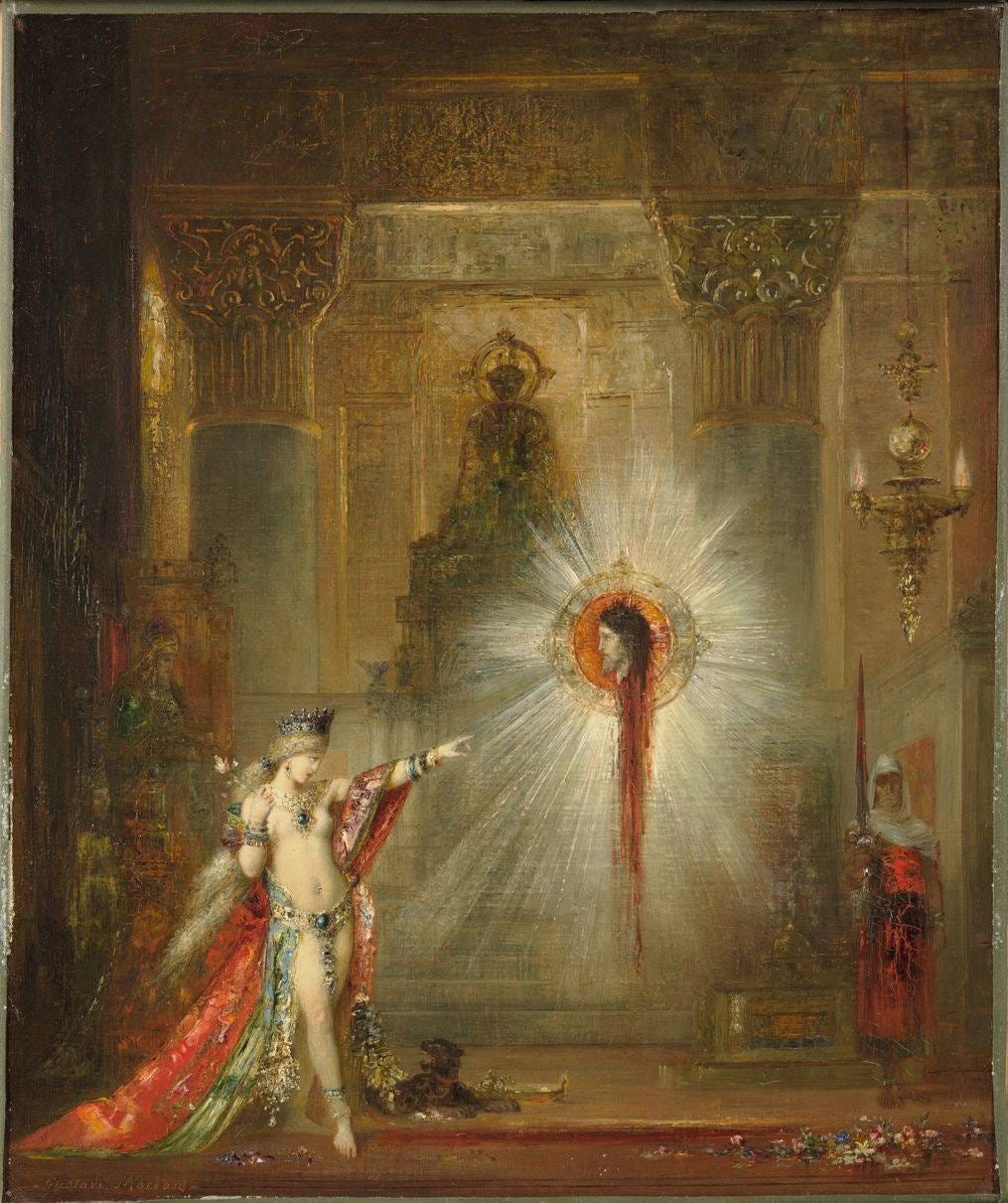
To me, his compositions are the musical equivalent of the art of painter Gustave Moreau. The Symbolist painter was obsessed with the figure of Salomé, King Herod’s stepdaughter, who demanded the head of St. John the Baptist after she performed her erotic dance of the seven veils. Moreau saw Salomé as a figure of beauty, peril, and spiritual ambiguity, and he rendered her in jeweled, dreamlike tableaux. Massenet was also captivated by her and in his opera Hérodiade he portrayed her as a young woman torn between spiritual longing and earthly love.
Across a career that spanned more than four decades, Massenet wrote in nearly every operatic idiom of his time: grand opera in Le Cid, Wagner‑tinged fantasy in Esclarmonde and the exotic orientalism of Le Roi de Lahore. His sensitivity to character—especially his fascination with complex, often “fallen” heroines—gave his operas a psychological immediacy that resonated deeply with audiences.
The ballet music from his opera Le Cid, about the medieval crusader El Cid, is absolutely thrilling, and nobody conducts it better than Louis Frémaux.
CLICK TO PURCHASE

As an Amazon Associate, I earn from qualifying purchases.