

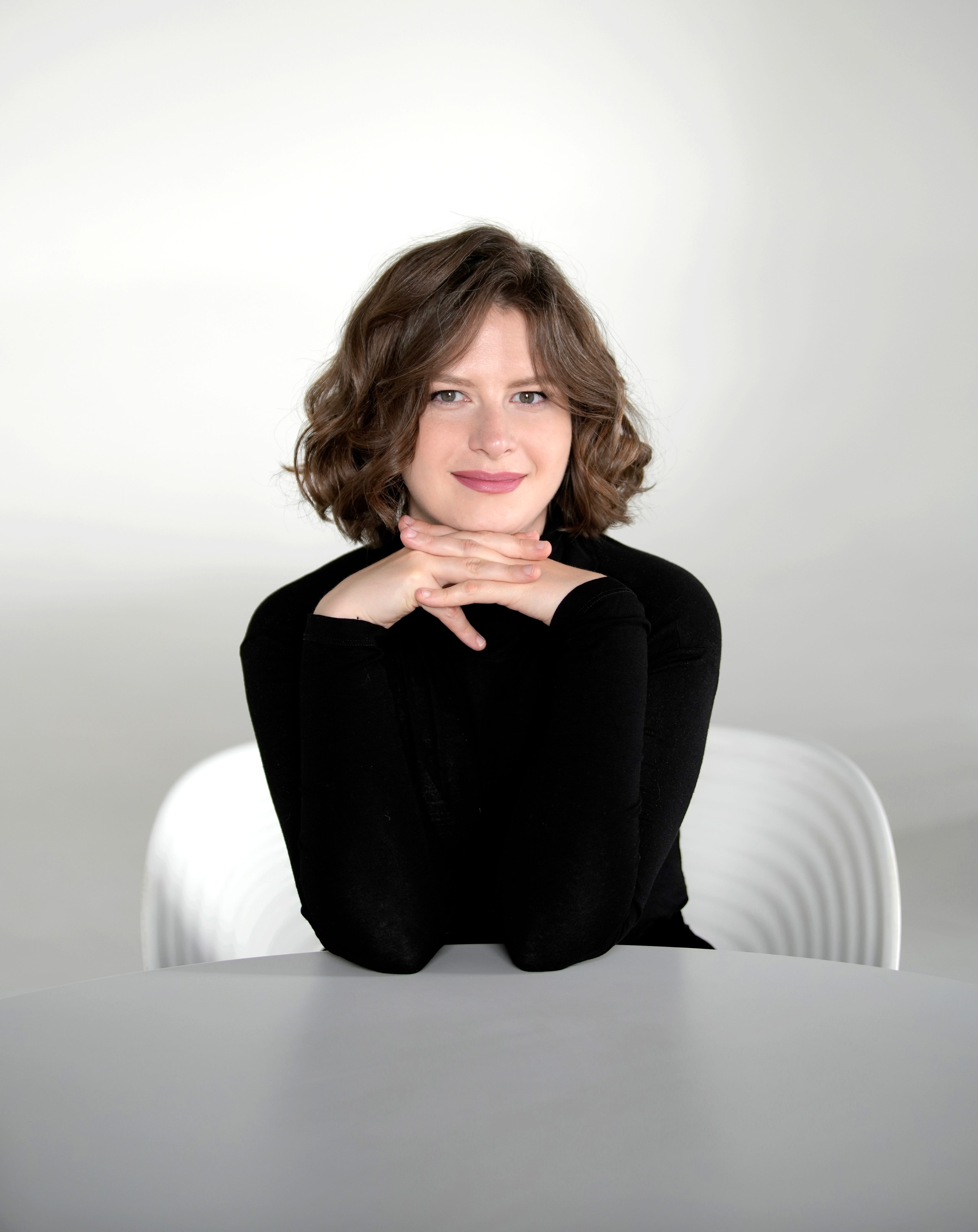
We are very lucky that pianist Tatiana Dorokhova somehow ended up in Kansas City. She arrived here in 2023 to study with Stanislav Ioudenitch at Park University’s International Center for Music, the renowned music school, which Park inexplicably recently closed. Ioudenitch is known for creating competition winners like Behzod Abduraimov and Ilya Shmukler. And he did the same for Dorokhova. She is a a laureate of the prestigious Gurwitz, Santa Cecilia and Enescu International Music Competitions.
Now Dorokhova is going to share her artistry with Kansas City in the most monumental way possible. She will perform all 32 of Beethoven’s piano sonatas in a series of eight concerts over several months at the 1900 Building, beginning October 15.
Dorokhova grew up in Volgograd, in a household where music was a part of daily life. Her parents were folk musicians. Her father played the double‑bass balalaika, “the huge one,” she notes with a laugh, and her mother played accordion. “I remember myself going to their concerts, rehearsals, and lessons since the age of three or four, and I enjoyed every minute very much,” she said. Dorokhova tried both instruments herself, but it was the piano that captured her heart.
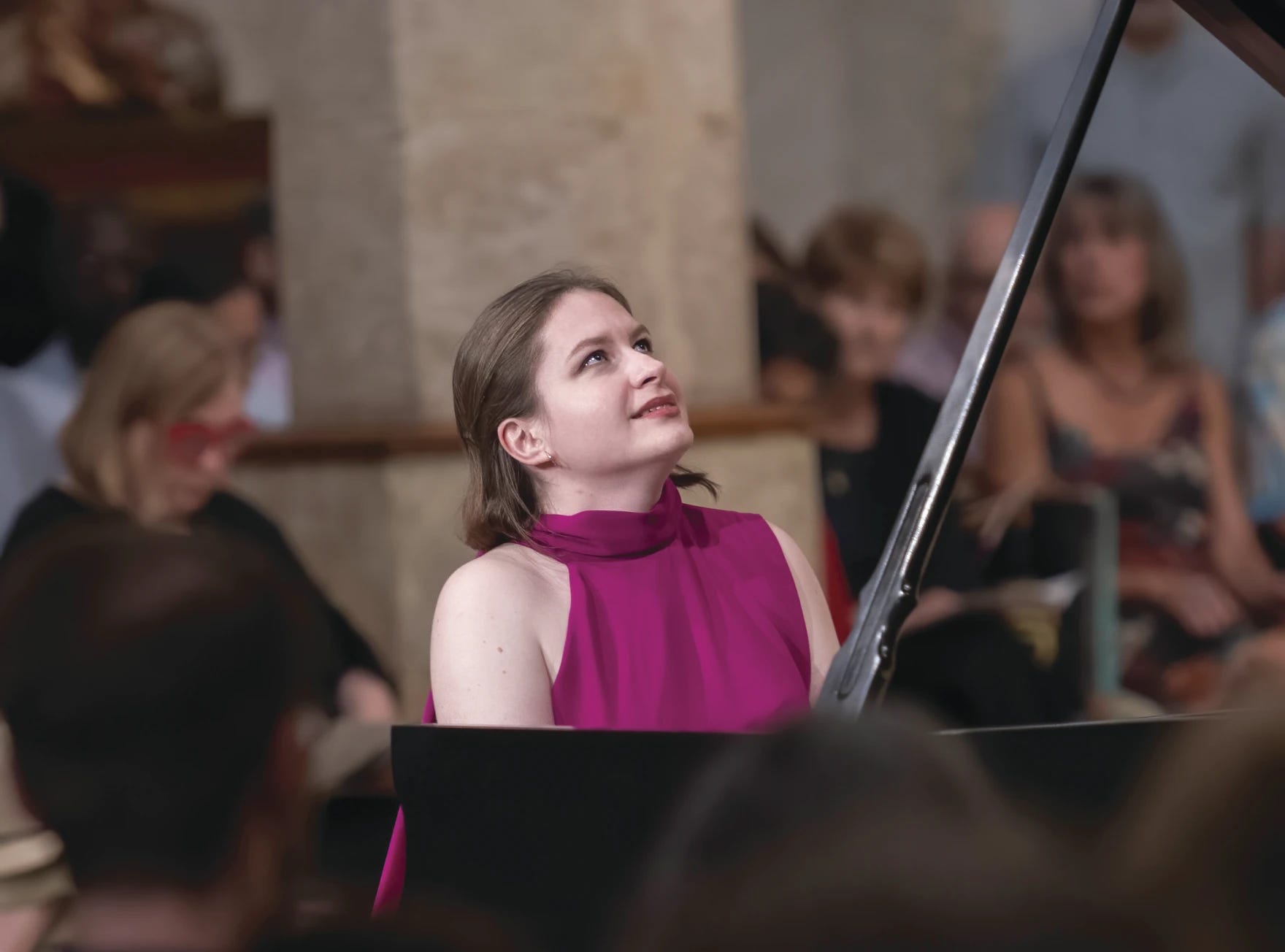
At fifteen, Dorokhova moved to Moscow to attend the Central Music School, one of the most competitive conservatories in the world. The city’s cultural intensity made a deep impression. “Sometimes it was even hard to decide what concert to attend,” she recalls. “There were so many.” That sense of abundance, of music everywhere, all the time, shaped her artistic identity. It also prepared her for the next major chapter in her life: Kansas City.
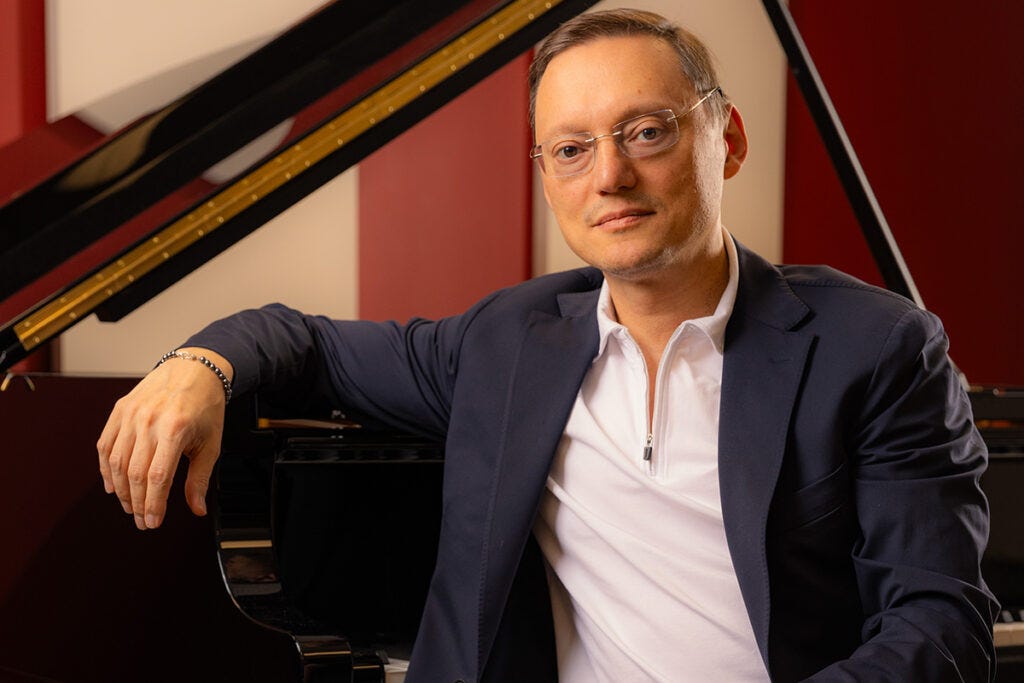
Dorokhova came here to study with Ioudenitch, the Cliburn gold medalist and founder of Park ICM. “I knew about him, and about his reputation,” she says. “I knew that he’s the best, the greatest teacher in the world. And I couldn’t even imagine studying with him.” A friend, pianist Ilya Shmukler, introduced her to Ioudenitch, and the connection changed her life. She speaks of his teaching with reverence: his uncompromising standards, his insistence on precision, his ability to illuminate the expressive core of a phrase. “The most important thing I learned from him,” she says, “is you need to always find the most precise expression in music.”
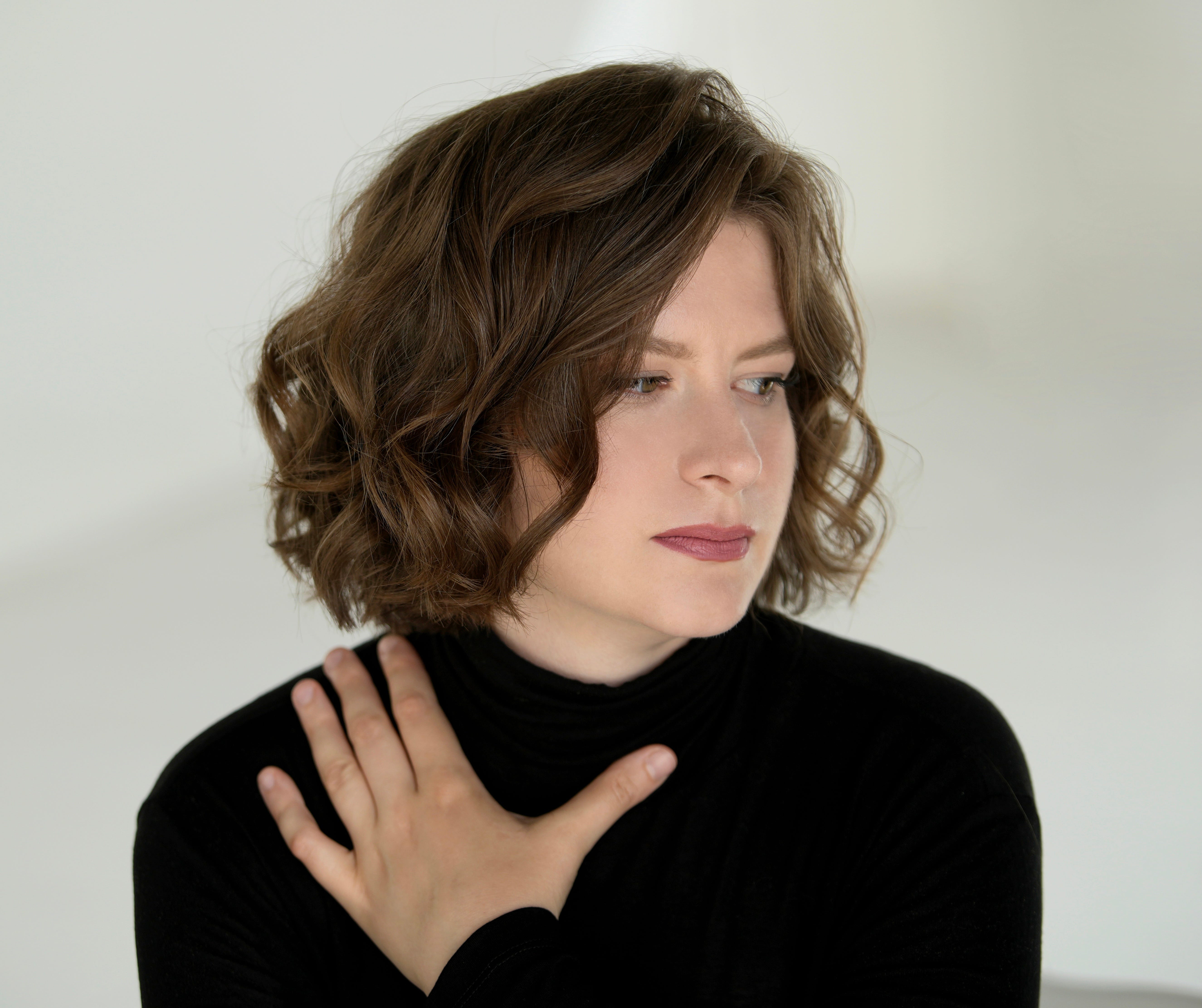
Kansas City, of course, is not Moscow. Dorokhova laughs when she describes her first shock about our Midwestern city: the absence of public transportation. “I realized you can’t exist without a car,” she says. She had never driven before moving to the United States, and learning to drive here was “scary at first,” though she now enjoys it. What wasn’t difficult, she said, was adjusting to the people. “They are so friendly, so open, so supportive. I didn’t experience anything hard.”
That sense of welcome may help explain her confidence in undertaking such an ambitious project here. Beethoven’s sonatas are not simply a collection of pieces; they are a universe. Dorokhova sees them as a single, continuous whole. “You can’t take out any of the sonatas,” she says. “I tried to find weak spots, but I couldn’t.” She laughs again, but the point stands: Beethoven’s cycle is one of the great achievements of Western art, and performing it requires stamina, imagination, and a kind of spiritual resilience.
Dorokhova’s admiration for Beethoven is rooted in what she calls purity and power — qualities she also finds in her other favorite composers: Bach, Brahms, and Prokofiev. “What I like in Beethoven’s music in particular,” she says, “is that it shows us how high the human spirit can rise, and how strong it can be.” She speaks of the sonatas not as monuments but as living works, capable of renewing themselves in performance. Her goal, she says, is “to refresh and to make the music alive.”
“Beethoven’s music is immensely powerful and positive. It is completely satisfying. Beethoven’s music is like a meal made up of all the basic food groups. There is nothing left out.” — Richard Goode
Kansas City has not heard a complete Beethoven sonata cycle since 1988, when Richard Goode performed all 32 works. Dorokhova is aware of the legacy she is stepping into. “It’s a great honor to play after this great Beethoven performer,” she says. But she does not approach the cycle as an act of comparison. Instead, she sees it as a responsibility, a chance to reveal what Beethoven’s music can still say to us. “My goal is also to reveal the thing in his music that help keep my belief in the best in human beings.”
Her influences include Maria Grinberg, Annie Fischer, Artur Schnabel, and András Schiff — pianists whose Beethoven interpretations have shaped generations. But Dorokhova does not try to emulate them. When asked what she brings that is unique, she answers with characteristic humility: “I will bring my personality,” she says. “I don’t know how to describe myself, and I don’t think I know myself the best. This will be a discovery for all of us.”
That discovery begins October 15 at the 1900 Building, with seven more concerts stretching into May. Dorokhova encourages listeners to attend the entire cycle if possible. Each sonata illuminates the others; each concert is a chapter in a larger story.
Dorokhova’s presence in Kansas City is a reminder of how global the city’s musical life has become. A young pianist from Volgograd, shaped by Moscow’s artistic intensity and guided by one of the world’s great teachers, now brings Beethoven’s vast inner world to a local audience. Her approach is thoughtful, serious, and full of quiet joy. And if her personality comes through in the music — as it surely will — Kansas City audiences are in for something special.