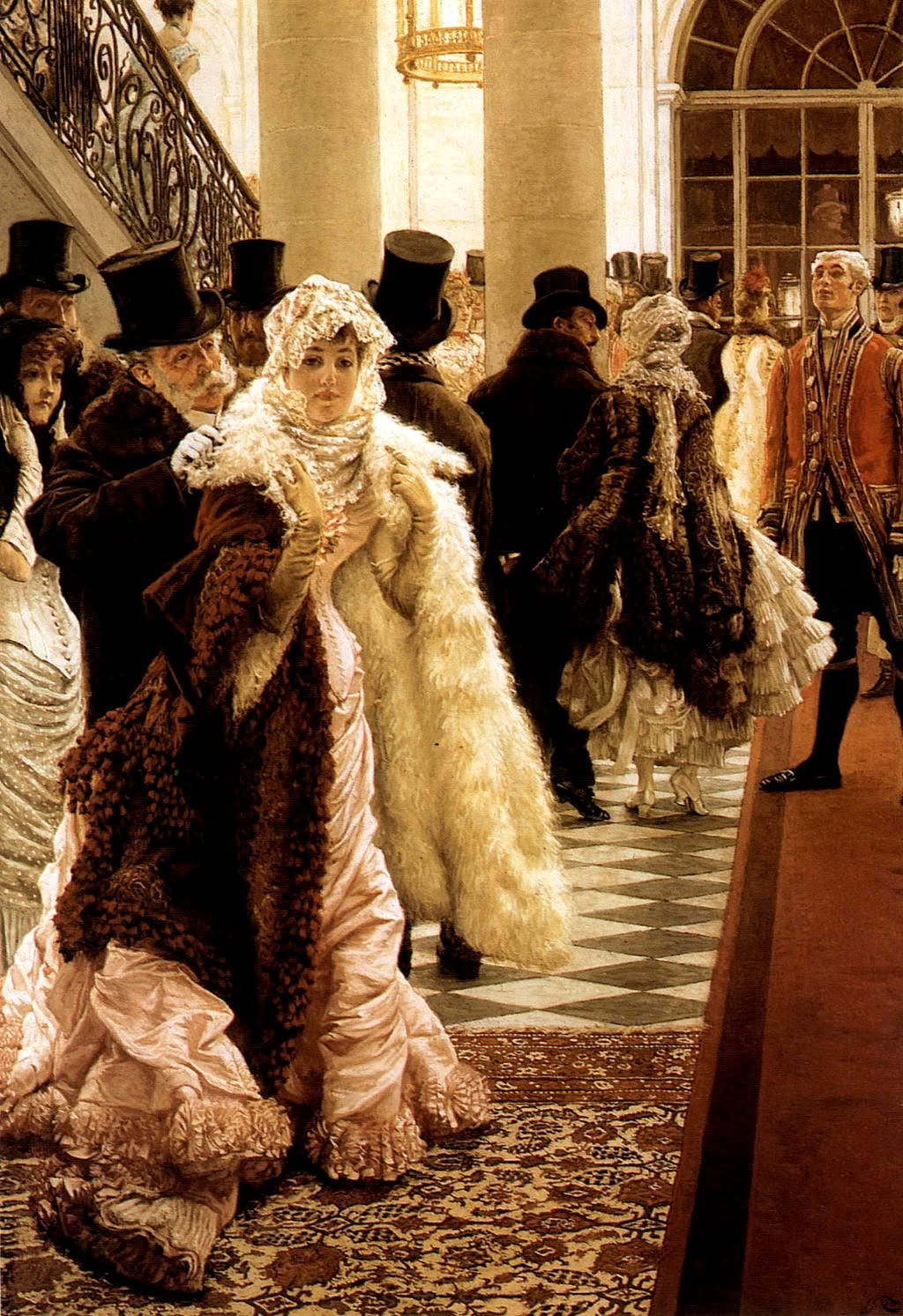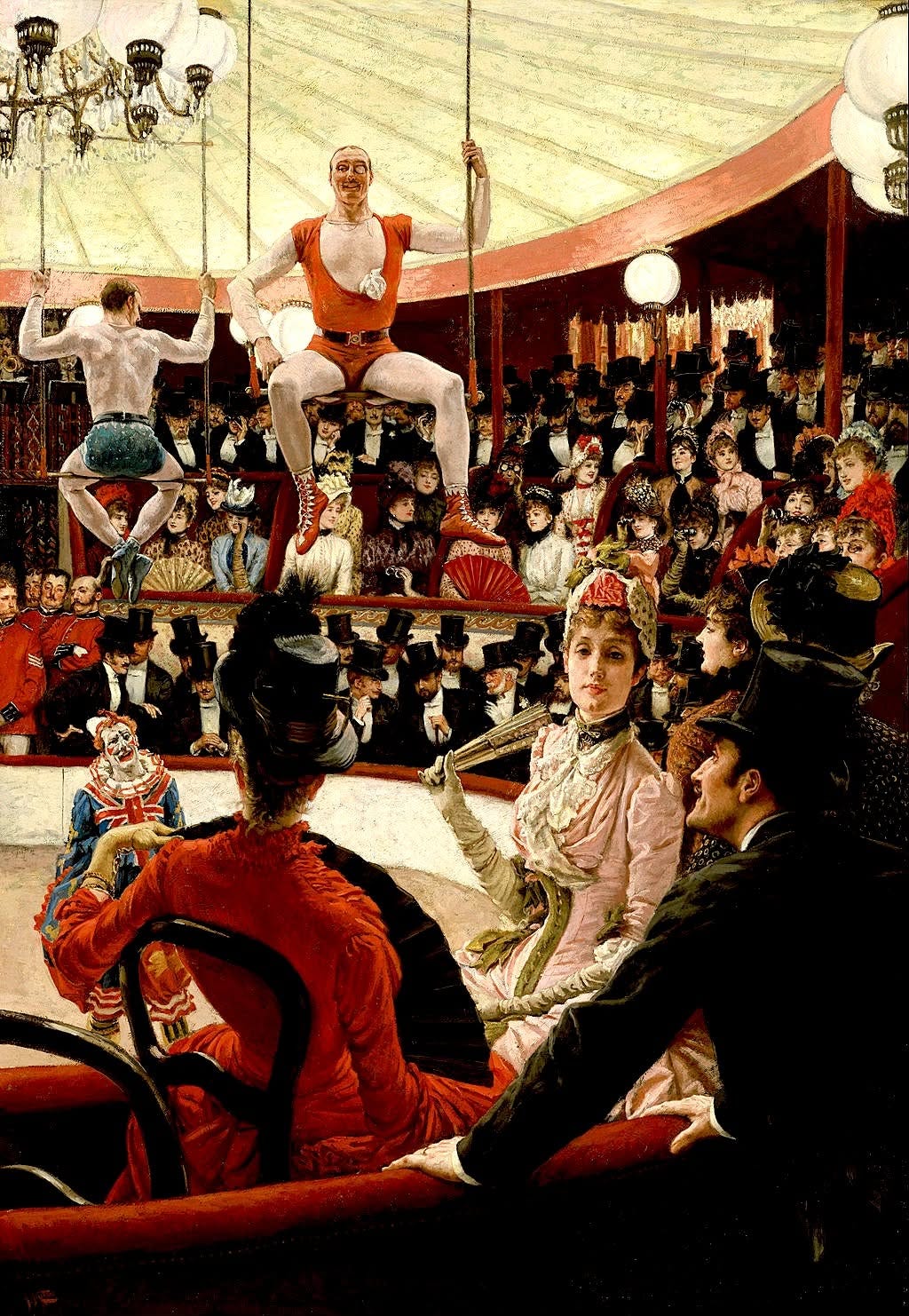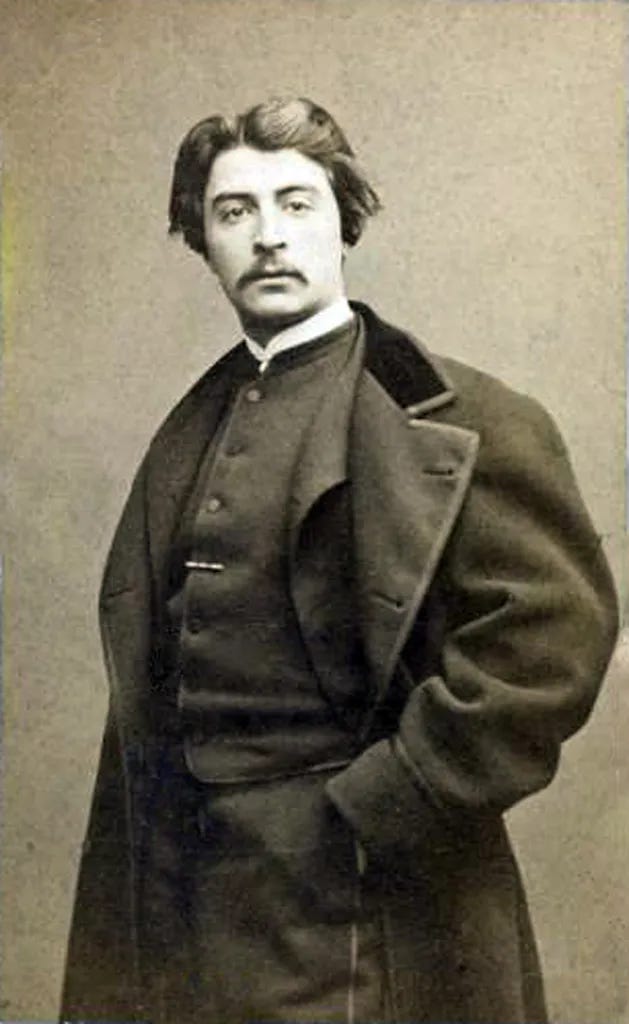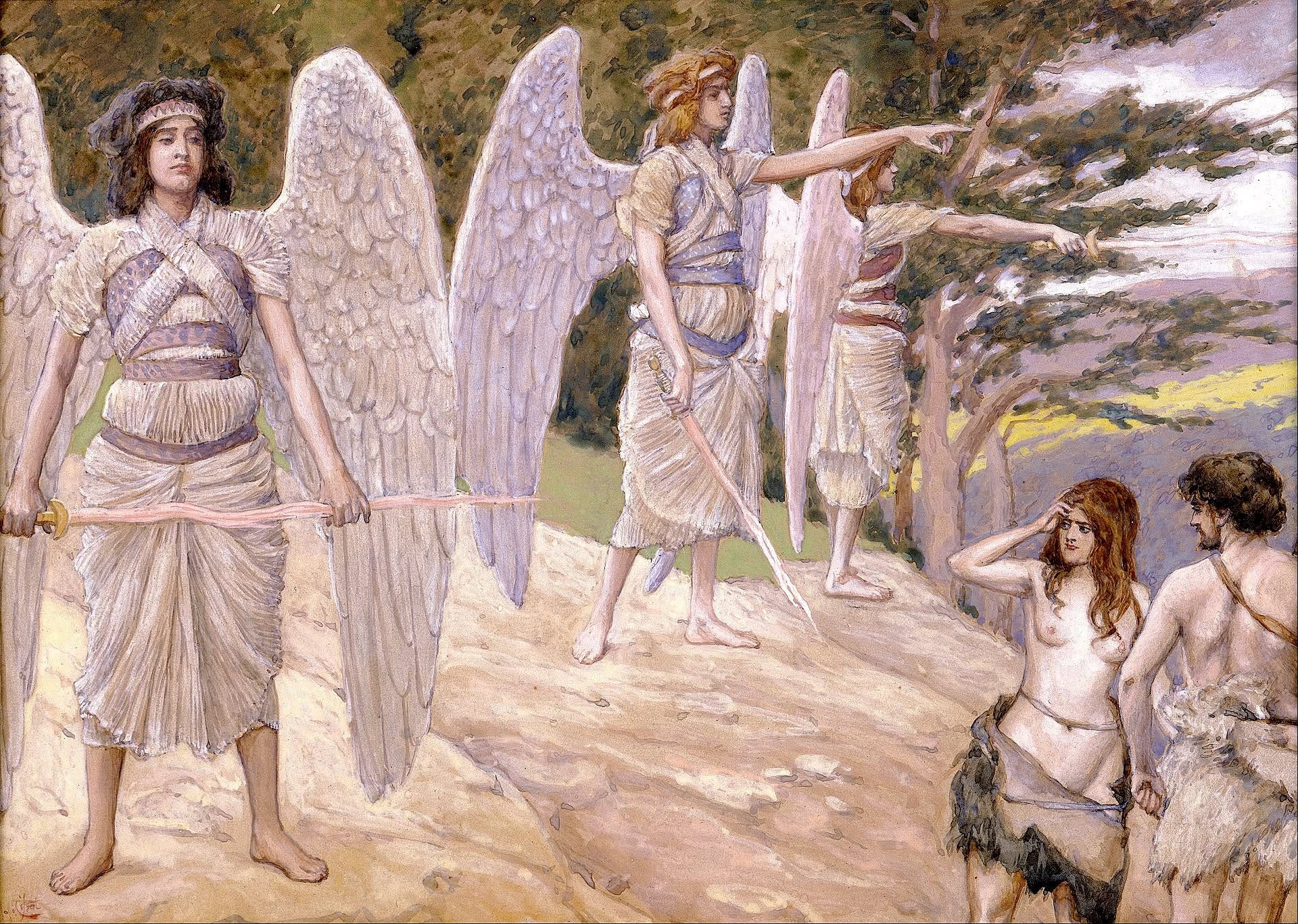
Tissot was a French painter and illustrator best known for his detailed and elegant depictions of fashionable society in late nineteenth-century Europe. His paintings captured the manners, leisure activities, and refined dress of the Belle Époque and Victorian England, earning him a reputation as a keen observer of contemporary high society. Throughout his career, however, Tissot’s interests ranged far beyond social portraiture, encompassing medieval, biblical, and Japoniste subjects that reflected the broad artistic currents of his time. In addition to his work as a painter, he contributed satirical illustrations to Vanity Fair under the pseudonym “Coïdé.”
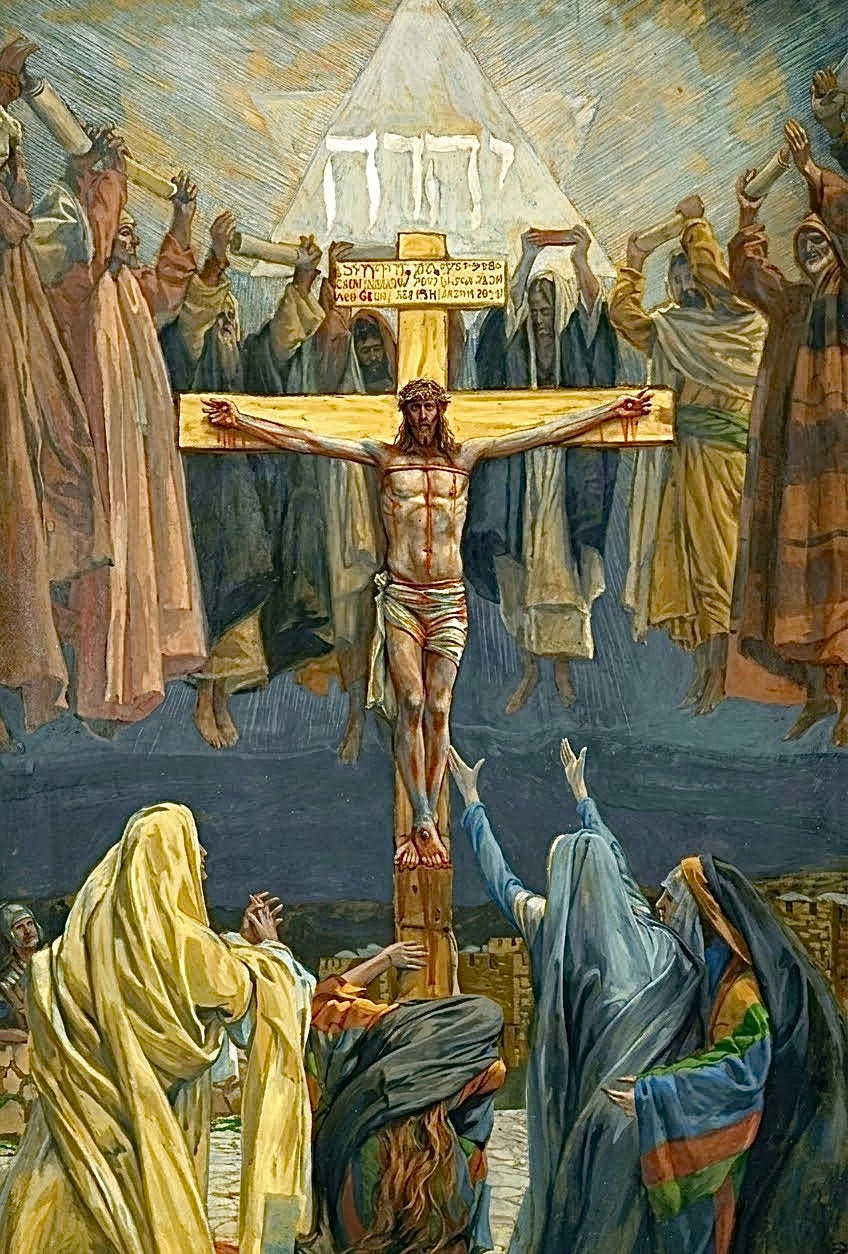
In 1885, after completing The Woman of Paris, Tissot experienced a religious vision while visiting the Church of Saint-Sulpice in Paris. The experience prompted a renewed commitment to his Catholic faith and marked a turning point in his artistic career. Thereafter, he devoted much of his time to creating ambitious series of paintings and illustrations depicting the life of Christ and other biblical subjects, works that would occupy him for the remainder of his life.