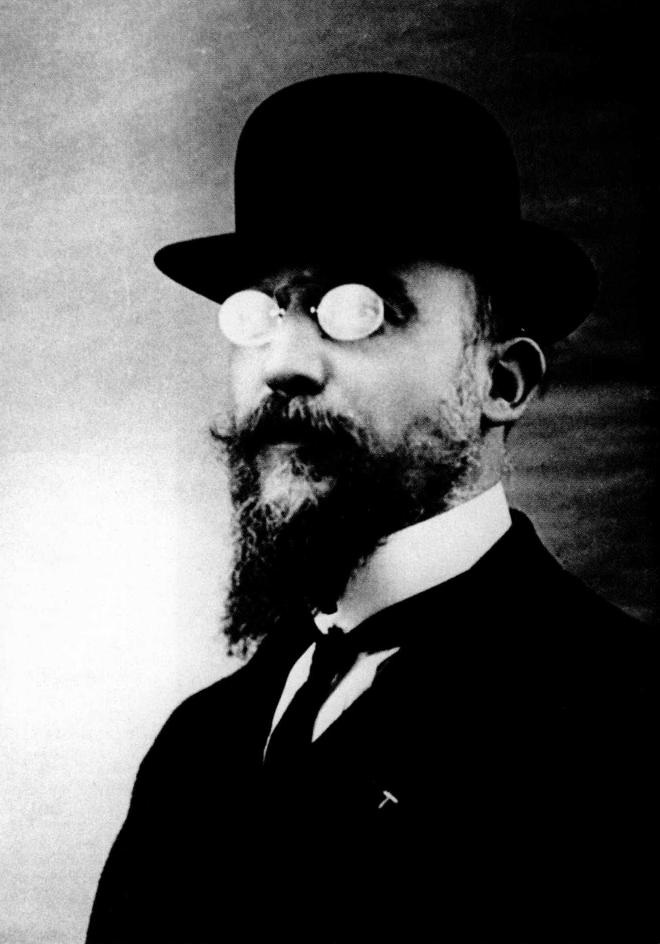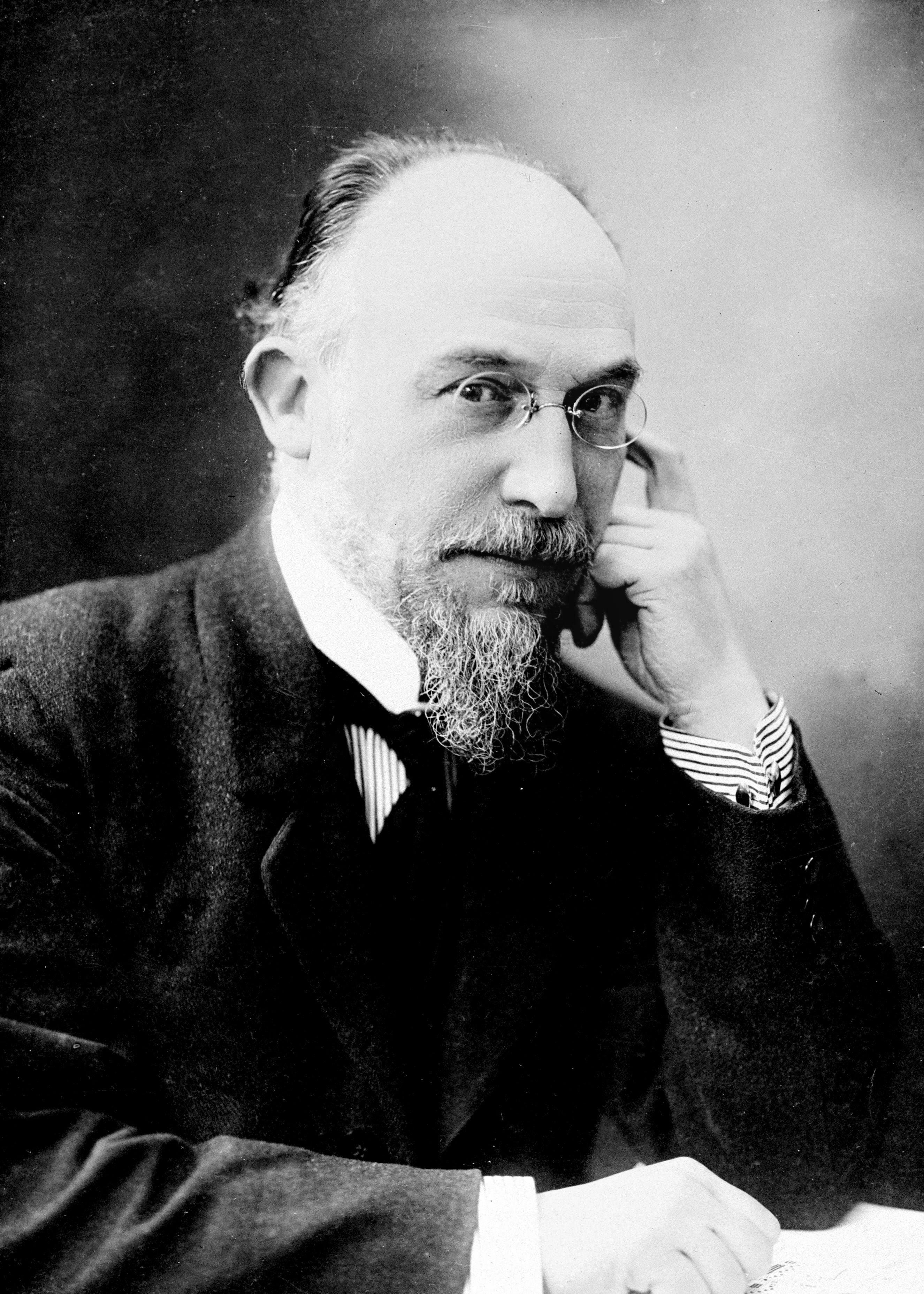
Erik Satie is one of the quirkiest composers in history, so of course that makes him one of my favorites. Mostly known for gnomic miniatures like the Gnossiennes and the hauntingly beautiful three Gymnopedies, there is another side of the composer not many know or which is usually ignored.
One of the things about Satie that absolutely fascinates me is his improbable entanglement with the Catholic occultist Joséphin Péladan, the self-anointed Sâr of the Rosicrucians. When Satie encountered Péladan’s writings during a bout of illness in 1886, he found in them a heady mixture of mysticism, medievalism, and aesthetic absolutism that resonated with his own attraction to ancient chant and monastic austerity. By 1891, the two men met, and Satie became the unofficial (and soon official) composer of Péladan’s Order of the Rose+Croix, providing music for its ceremonies and salons. This period produced some of Satie’s most hauntingly static works, including the Préludes du Fils des étoiles and the Sonneries de la Rose+Croix, pieces whose parallel chords and chant-like lines reflect both his medieval fascinations and Péladan’s mystical theatricality.
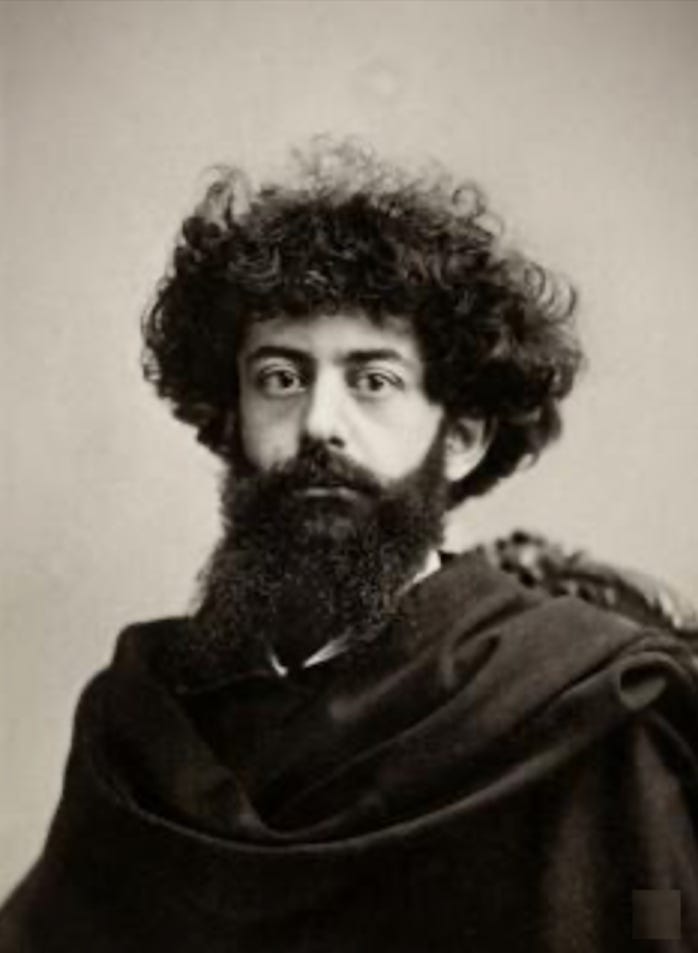
Péladan’s philosophy was a heady fusion of Catholic mysticism, Kabbalah, and a fervent aestheticism that treated Beauty as a salvific force. He believed the modern world had fallen into materialism and spiritual decay, and that only a new aristocracy of artists—initiates he called the elect—could restore transcendence. Drawing on his idiosyncratic readings of the Sefer Yetzirah and Neoplatonism, he imagined the cosmos as a hierarchy of symbolic energies that the artist‑magus could channel through ritualized art. For Péladan, Beauty was not decoration but theurgical action, a way of lifting the soul toward the divine. His Order of the Rose+Croix was meant to be a chivalric brotherhood devoted to purity, symbolism and the regeneration of culture through sacred art. In essence, Péladan preached a mystical Catholic avant‑garde—half monastery, half aesthetic crusade—where the artist served as priest, knight, and magician.
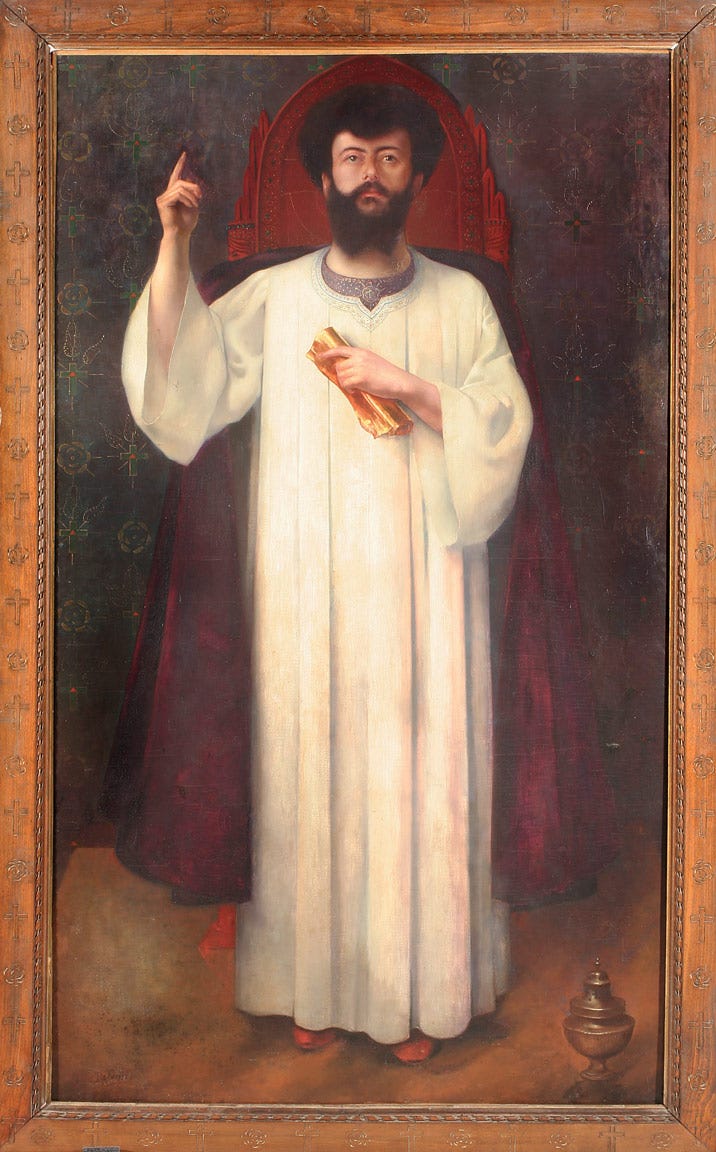
Satie’s most overtly spiritual work, shaped by his years under the influence of Péladan and the Rosicrucian ideal of sacred art, is the Mass of the Poor (Messe des Pauvres). Written between 1893 and 1895, it embodies a theology of humility and consolation: it’s a stark, ascetic liturgy, a Mass for the forgotten, the burdened, and the spiritually hungry. Its musical language—plainchant‑like lines, modal harmonies, and long, hovering organ textures—reflects Satie’s belief that true sacred art should return to a state of contemplative purity.
Satie’s relationship with Péladan was never one of equals. Péladan was charismatic, authoritarian, and convinced of his own spiritual sovereignty, and he treated Satie as a kind of liturgical artisan, a role that both flattered and constrained the young composer. Satie admired Péladan’s vision of the artist as an initiate restoring beauty to a fallen world, but he also bristled at the Sâr’s dogmatism. Their collaboration nonetheless shaped Satie’s public identity: for a brief, incandescent moment, he appeared in quasi-priestly garb, presenting music that seemed to hover outside time, perfectly aligned with Péladan’s dream of a regenerated, symbolist art.
By 1895, the break was inevitable. Satie’s temperament could not coexist indefinitely with Péladan’s grandiose spiritual authoritarianism. He left the Order and, in a characteristic act of both rebellion and parody, founded his own one-man church, the Église Métropolitaine d’Art de Jésus Conducteur, where he served as treasurer, high priest, and sole congregant.
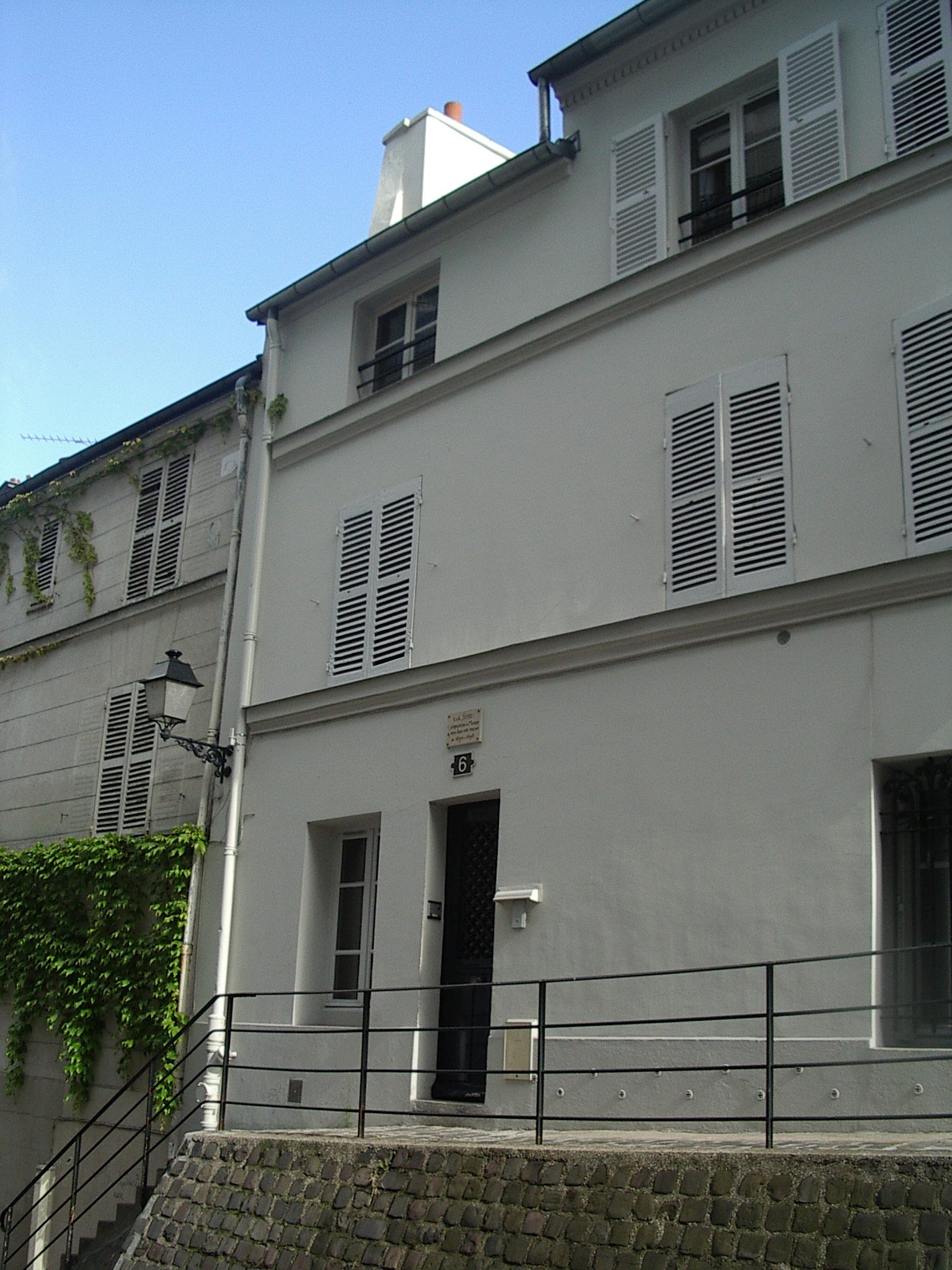
Satie’s Rose+Croix years remained a subterranean current in his later work. Even in the most deadpan of his piano miniatures, one hears the residue of that earlier asceticism—the love of plainchant, the fascination with ritual, the desire for music that seems to exist outside time. Satie may have outgrown Péladan, but the encounter left a permanent imprint: it gave the first glimpse of the paradox that would define him forever—an avant-gardist with the soul of a medieval monk.
Beginning in 1895, Satie adopted a self‑invented uniform of seven identical grey velvet suits, which he wore every single day for decades, earning him the nickname “the Velvet Gentleman.” So I’d like to leave you with one of my favorite vinyl albums, which has never been transferred to CD, The Music of Erik Satie: The Velvet Gentleman. The Camarata Contemporary Chamber Group arranged Satie’s spare, proto‑minimalist music into the sound world of analog synthesizers and studio effects long before the “ambient” label existed. I just love it. It starts off with their arrangement of the three Gymnopédies. Give it a listen.