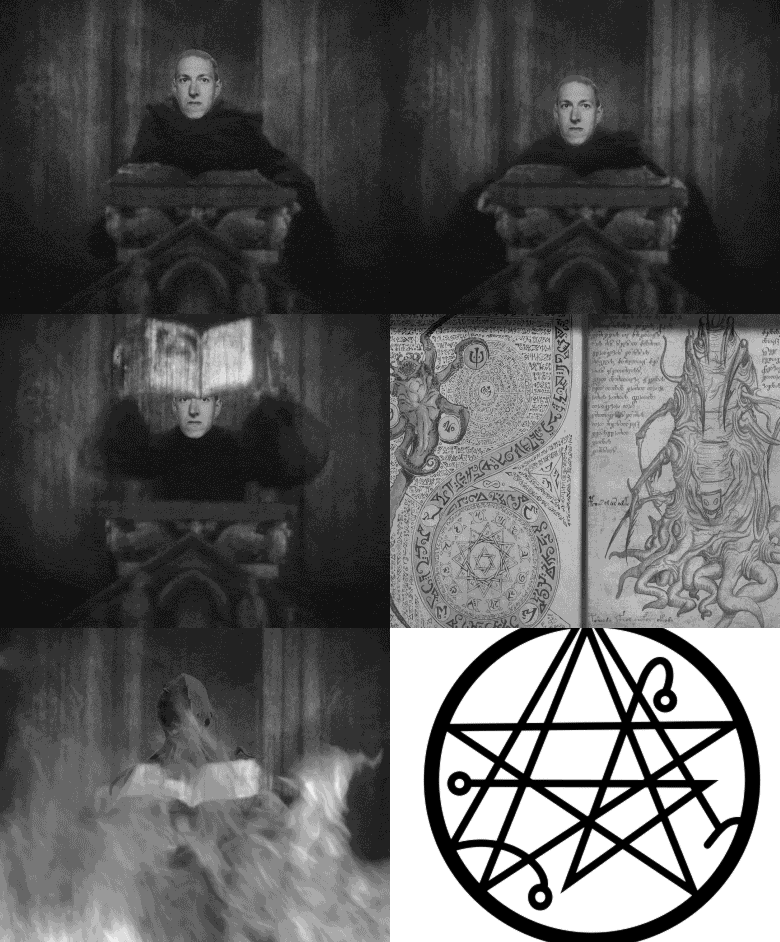
H. P. Lovecraft (1890-1937) was an American writer whose eerie, atmospheric tales reshaped modern horror by shifting fear from ghosts and monsters to the vast, indifferent cosmos.
Living most of his life in Providence, Rhode Island, he published primarily in pulp magazines, developing a style now called cosmic horror—stories where human beings confront forces so ancient and immense that sanity itself falters. His most famous creation, Cthulhu, is a colossal, tentacled entity who sleeps beneath the ocean in the sunken city of R’lyeh, symbolizing the idea that humanity is insignificant in a universe ruled by unknowable powers. The Necronomicon is Lovecraft’s most infamous fictional grimoire, a “book of the dead” attributed to the mad Arab Abdul Alhazred and said to contain forbidden lore about the Old Ones. Within the Cthulhu Mythos, it serves as the central occult text, a volume whose unsettling revelations about entities like Yog‑Sothoth and Cthulhu hint at knowledge no human was meant to possess.
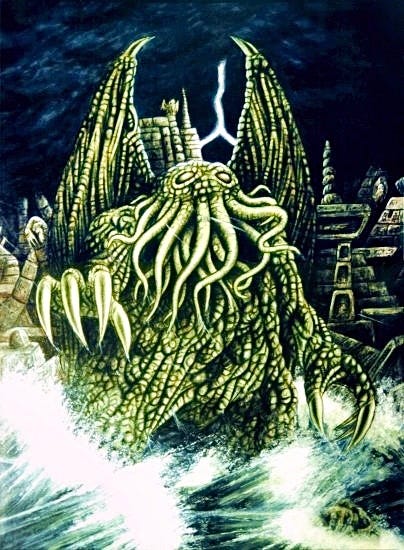
Though Lovecraft died in obscurity, his mythos has become a cornerstone of modern horror, influencing literature, film, games, and the broader cultural imagination.
“Life is a hideous thing, and from the background behind what we know of it peer daemoniacal hints of truth which make it sometimes a thousandfold more hideous.”
"Madness rides the star-wind... claws and teeth sharpened on centuries of corpses... dripping death astride a bacchanale of bats from nigh-black ruins of buried temples of Belial."
"The world is indeed comic, but the joke is on mankind."