
THE VARIETY OF AMERICAN DANCE UNFURLED
Kansas City Ballet Presents Stars and Stripes
By Patrick Neas, KC Arts Beat
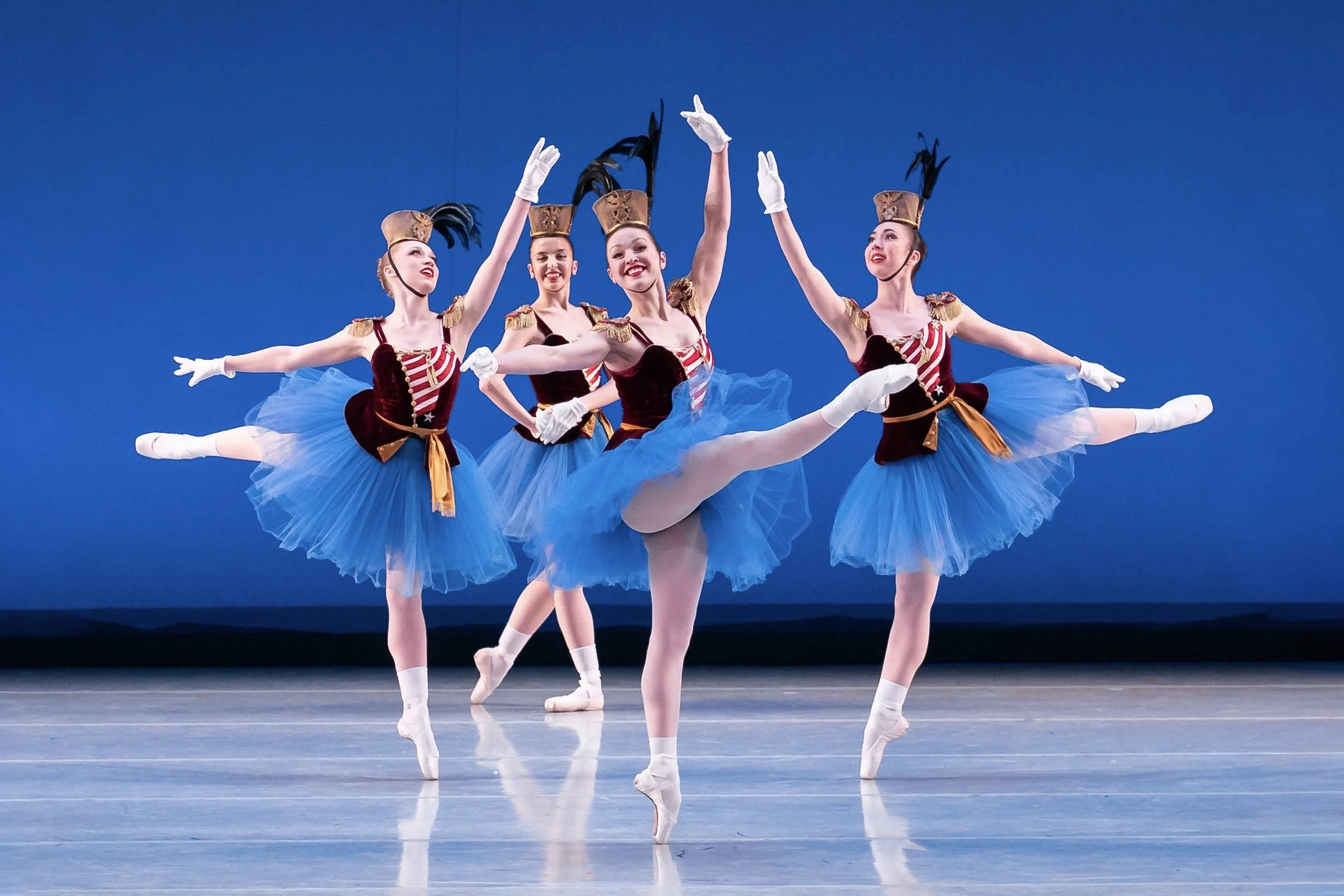
Kansas City Ballet Dancer Kelsey Ivana Hellebuyck with company dancers in George Balanchine's Stars and Stripes © The George Balanchine Trust. Photography by Brett Pruitt & East Market Studios.
When the curtain rises at the Muriel Kauffman Theatre this March, Kansas City Ballet will offer audiences something rare, a star-spangled panorama of American dance history from the 20th century to the present moment. Three works, each rooted in a different facet of the American imagination, will share the stage: Agnes de Mille’s beloved Rodeo, a world premiere by contemporary choreographer Caili Quan, and the headliner, George Balanchine’s jubilant Stars and Stripes.
The program, running March 20–29, is more than a triple bill. It’s a curated journey through the ways artists have imagined, questioned, and celebrated America across generations.
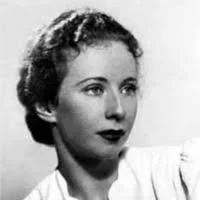
Agnes De Mille

Caili Quan
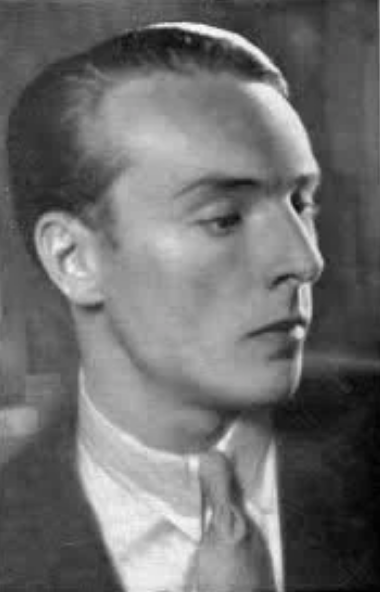
George Balanchine
Balanchine’s Applause Machine
“Stars and Stripes is a massive work,” said Kansas City Ballet artistic director Devon Carney. “To the best of my knowledge, this is a Kansas City premiere. I don’t think it’s ever been done in our city, and it means the world to me to bring it here, especially in the year of our country’s 250th anniversary.”
Balanchine created Stars and Stripes in 1958 for New York City Ballet, setting it to the rousing marches of John Philip Sousa arranged and fully orchestrated by Hershey Kay. The result is one of the most unabashedly joyful works in the ballet canon.
Someone once asked Balanchine why he chose Sousa, and he said, “Because the music makes me happy.”
“Exactly,” Carney said. “And it was also very much an ode to his adopted country. He became a citizen in 1940, and this ballet was his way of honoring the place he loved so dearly.”
Balanchine famously called the ballet an “applause machine,” and Carney embraces that description.
“Oh, it is definitely an applause machine,” he says. “It’s lighthearted, it’s fun, it’s a romp. And when that full American flag backdrop comes down in the finale—well, you just want to get up and cheer.”
The scale of the work is formidable: three regiments, each with 13 dancers, a principal couple leading the charge and 44 dancers onstage in the final movement.
“It takes a tremendous number of well‑tuned dancers to put it on,” Carney explained. “Our company has grown to the point where we can finally do it justice.”
And with the Kansas City Symphony in the pit, Sousa’s marches—originally written for military band—gain a lush, cinematic brilliance. “Hershey Kay orchestrated it for the full breadth of what a symphony orchestra can bring to life,” Carney says. “Hearing it live is thrilling.”
The American West Reimagined
If Stars and Stripes is a colorful burst of fireworks, Agnes de Mille’s Rodeo is its earthy counterpoint, rooted in the dust, humor, and heart of the American West.
Created in 1942 with a commissioned score by Aaron Copland, Rodeo became an instant classic. But its creation story is even more compelling. Copland initially resisted writing another Western ballet after Billy the Kid. De Mille, undeterred, began choreographing anyway, using traditional folk songs as placeholders.
“When Copland finally agreed, he saw that she’d already choreographed to these folk tunes,” Carney said. “So he took signature lines from those songs and built the score around them. It makes the ballet feel incredibly authentic.”
Carney has lived so deeply with this ballet that he can even sing “I Ride an Old Paint,” one of the cowboy songs Copland used in his score. “I’ve danced Rodeo many times,” Carney said. “The Cowgirl role is iconic. It requires a dancer who can be funny, vulnerable, awkward, and utterly sincere.”
De Mille herself originated the role, and Carney notes that the Cowgirl’s personality mirrors the choreographer’s own: “She’s not the girl in the frilly dress. She follows the beat of her own drum. It’s honest. And that honesty is what makes the ballet timeless.”

Kansas City Ballet Dancer Micheal Eaton with company dancers in Agnes de Mille's Rodeo. 2008. Photography by Steve Wilson.
A New Voice in American Dance
Between these two historic works sits a world premiere, Caili Quan’s A Home Away, a contemporary reflection on what it means to belong to America from the outside in. The ballet is set to Dvořák’s “American” Quartet, but audiences will hear it in a way they never have before: fully orchestrated and performed by the Kansas City Symphony, conducted by Ramona Pansegrau, the Ballet’s longtime music director.
Carney credits Pansegrau with shaping the musical identity of the piece from the beginning. “Ramona actually helped Caili find the music,” he explained. “She suggested a couple of different things, and Caili was really drawn to the “American” Quartet.” But there was a challenge: the original score is for string quartet, not a full orchestra. “We have this incredible symphony in the pit,” Carney says, “so Ramona found an orchestrator in Canada who expanded the quartet into a full symphonic work. Hearing it with that richness and depth is just beautiful.”
The result is a sound world that bridges chamber intimacy with orchestral warmth—an ideal match for Quan’s movement language, which blends classical clarity with contemporary fluidity. “She has her own vocabulary,” Carney said. “Something I haven’t seen from other choreographers.”
Quan’s personal history—growing up partly in Guam before building her career in the U.S.—infuses the ballet with a sense of longing, displacement, and discovery. “It expresses her feeling of being in America as a young choreographer making her way,” Carney said. “It’s unexpectedly moving. When I finally watched it after she’d been working for weeks, I cried.”
The dancers, he notes, have thrived under her direction: “She’s fast, witty, demanding, and incredibly creative. Creating a work on our dancers—dancers who live here, who are part of this community—brings out their true talents.”
The ballet will also return this fall at Johnson County Community College’s New Dance Partners, giving audiences a second chance to experience it.
Taken together, the three works form a sweeping portrait of American dance across eras: De Mille’s frontier storytelling, Quan’s contemporary reflection on belonging, and Balanchine’s exuberant salute to his adopted home.
“It’s an evening of Americana,” Carney said. “Three different expressions of American life, each from a different perspective. That’s what makes the program so exciting.”

Guest Artist Caili Quan in rehearsals with Kansas City Ballet Dancers, Elliott Rogers and Angelin Carrant for her world premiere during Stars and Stripes. Photo by Beeh Moynagh of Kansas City Ballet.
Kansas City Ballet presents Stars and Stripes
March 20–29 • Muriel Kauffman Theatre, Kauffman Center for the Performing Arts
For tickets and more information, 816‑931‑8993 or kcballet.org.