
GOOD SWAN/BAD SWAN
Kansas City Ballet Performs Tchaikovksy’s Psychological Masterpiece
By Patrick Neas, KC Arts Beat
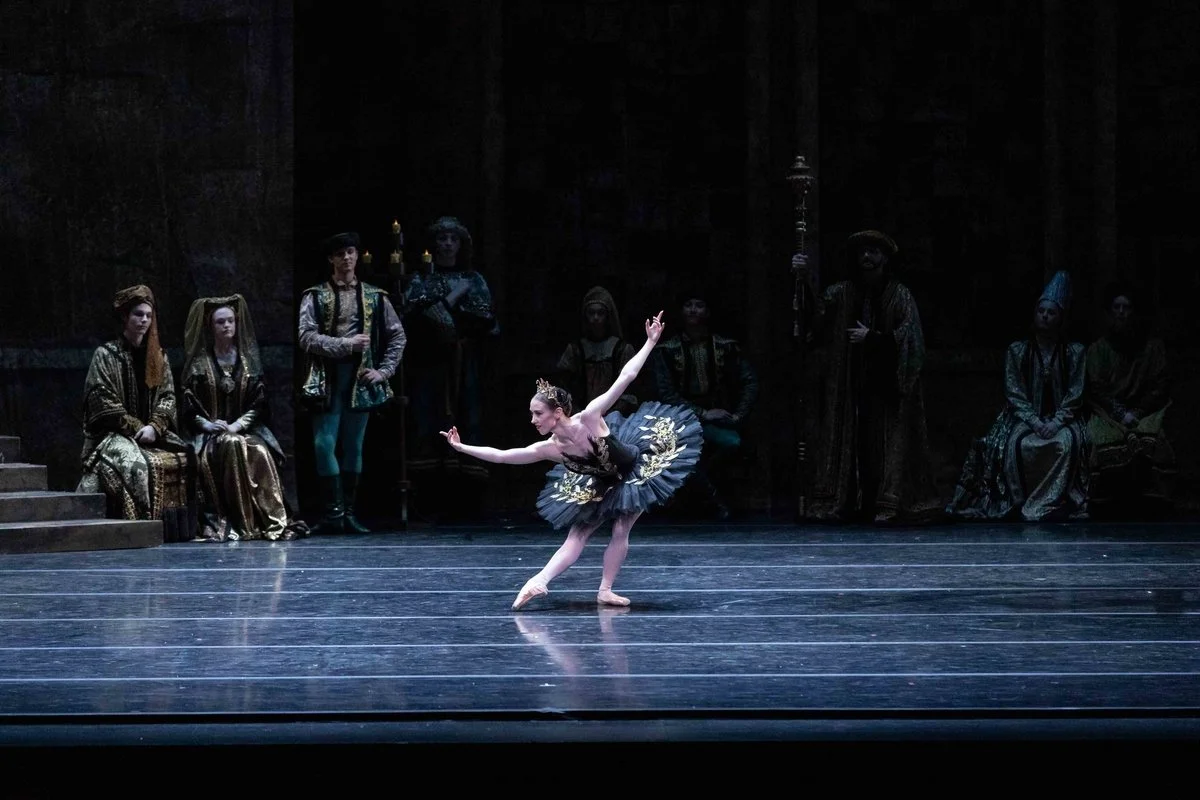
Kaleena Burks as the Black Swan. Photo: Brett Pruitt & East Market Studios
Swiss psychologist Carl Jung was only one year old when Tchaikovsky’s Swan Lake was first performed in Moscow in 1876. But it almost seems like Tchaikovsky wrote his ballet with Jung’s psychological theories in mind. Jung’s concepts about the animus, the anima and the shadow can all be clearly discerned in Tchaikovsky’s masterpiece.
The Kansas City Ballet will perform the psychologically potent Swan Lake for only eight performances at the Muriel Kauffman Theatre Oct. 17 to 26.
“The shadow and light that we all carry within us is going on with the dual role of Odette and Odile,” Devon Carney, artistic director of Kansas City Ballet, said. “One person has to play both ends of the spectrum. Odette is the white swan, who is good and pure, and Odile is evil and dark. The black swan and the white swan are embodied in one person who has to take on these two roles in one night. You have to be a very diverse dancer, a diverse actor, a diverse artist to be able to make both of those roles believable within the psyche of one person. It's a milestone for a female dancer.”
Carney, who is choreographing Swan Lake for Kansas City Ballet, is promising a production respectful of the work’s tradition.
“Swan Lake is a jewel that is important for our world to see because it's a great classic,” Carney said. “It's just like a great piece of literature or the Sistine Chapel or an incredible painting by an artist like Van Gogh. Especially when it comes to the purity of Act Two. I'm still telling the story with my choreography through and through, but we're using the classical ballet vocabulary to tell that story.”
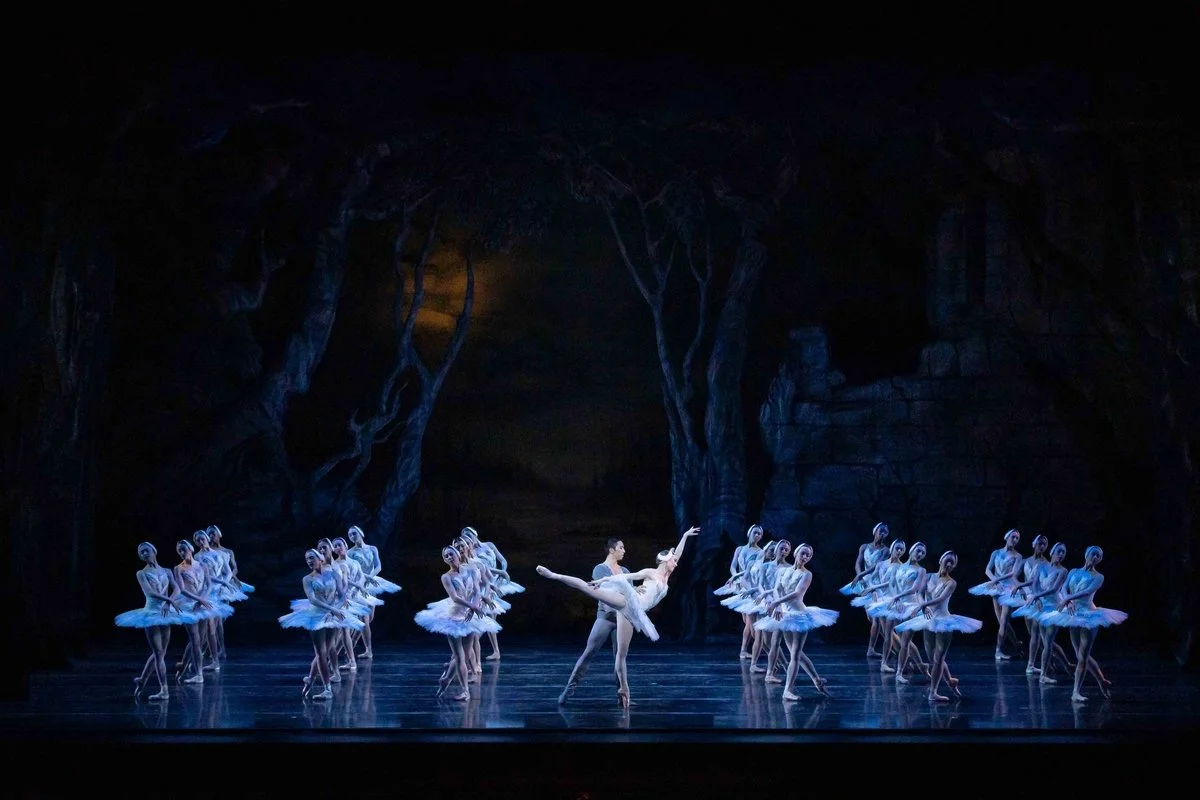
Kansas City Ballet Performing Swan Lake. Photo: Brett Pruitt & East Market Studios
Carney is steeped in the legacy of Swan Lake that has been passed down from generation to generation of dancers and choreographers. As a principal dancer with Boston Ballet, Carney danced the role of Prince Siegfried many times. He has the spirit of the ballet in his body and his soul, and now he is transmitting that tradition to the dancers of Kansas City Ballet.
“Siegfried is the character I danced most,” Carney said. “I lived in that character a lot. I was the guy with the white hat until later in my career when I discovered that black hats can be fun. But a very typical role for me to do was the lead prince. Siegfried has a beautiful variation at the end of act one that I choreographed. It's called a lament, where we get to really see him not as a prince, but as a person. His role has to have this three dimensionality. The important thing is that he's believable and not a cardboard cutout of a prince. He actually has feelings and he has emotions and he has struggles.”
Just as Odile/Odette express some of Jung’s most profound themes, Prince Siegfried does, as well. In fact, a very Jungian way to interpret Swan Lake is to see Odile/Odette as the outer manifestation of the anima struggle within Siegfried himself, as Siegfried is the animus projection of Odette.
“Siegfried wants to have that carefree life and not get married and have a job, basically,” Carney said. “These are the things that make Swan Lake timeless. So Siegfried has this incredibly beautiful, sensitive solo, and then he rushes off into the forest with his crossbow to go hunting with his friends, instead of contemplating what he needs to do, which is be responsible and figure out who he's going to marry. This is a very important moment in the story because he's out in the forest hunting and he sees swans. He's going to shoot the swans only to realize that this one swan is quite unique. That’s when we meet Odette. He falls in love and swears his eternal faithfulness to her.”
In Jungian terms, Siegfried’s encounter with Odette marks the beginning of individuation, the process of becoming whole by integrating unconscious elements. Odette, as a swan maiden, symbolizes the anima—his inner feminine, elusive and idealized. Odile, the Black Swan, represents the deceptive anima—glamorous, seductive, and destructive. His failure to discern between Odette and Odile reflects the danger of anima possession: being overwhelmed by unconscious desires and illusions.
The swan itself is a powerful symbol in Jungian thought. As a creature of both air and water, it bridges conscious and unconscious realms.
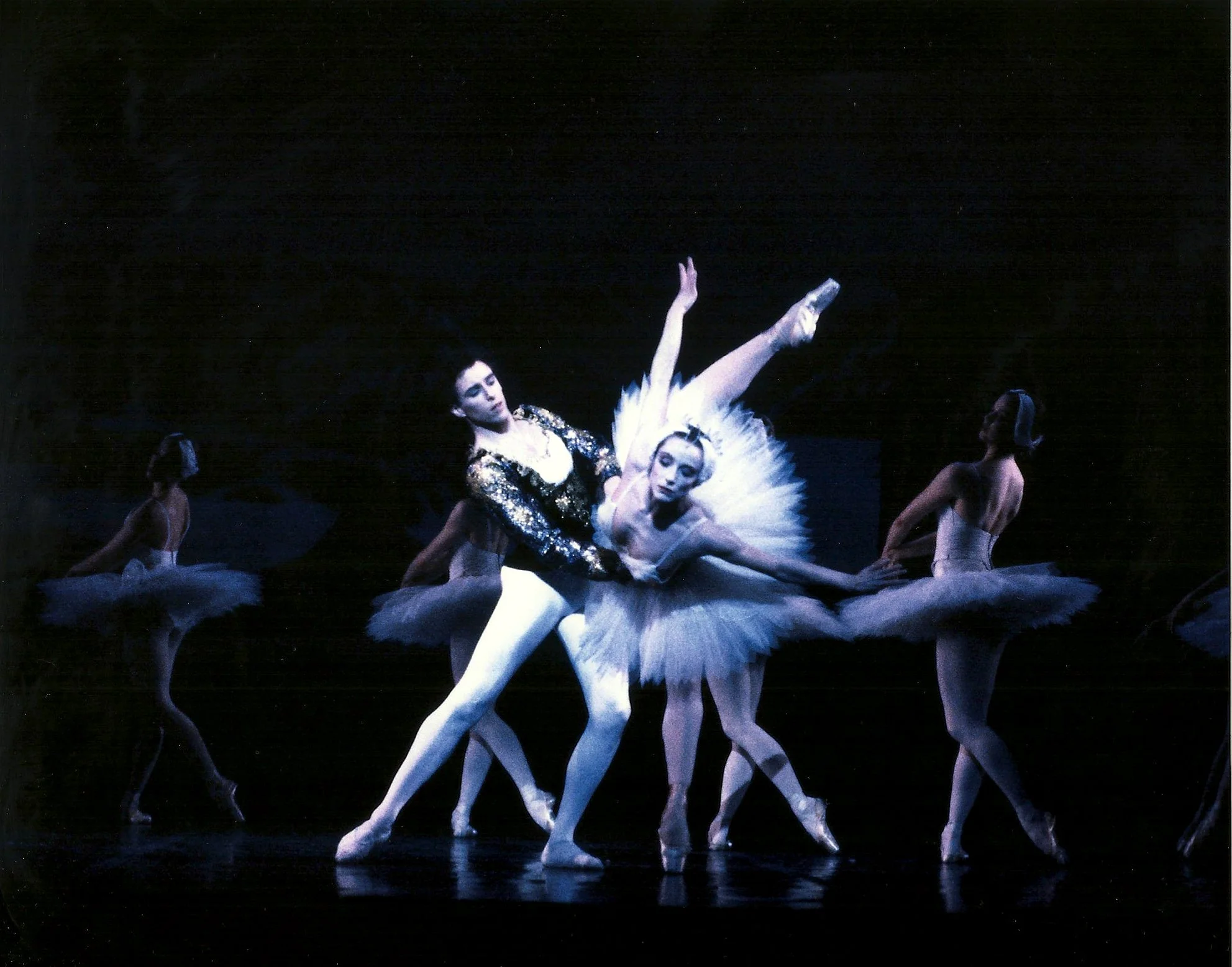
Devon Carney and Christine Mouis in Boston Ballet’s Swan Lake (1988)
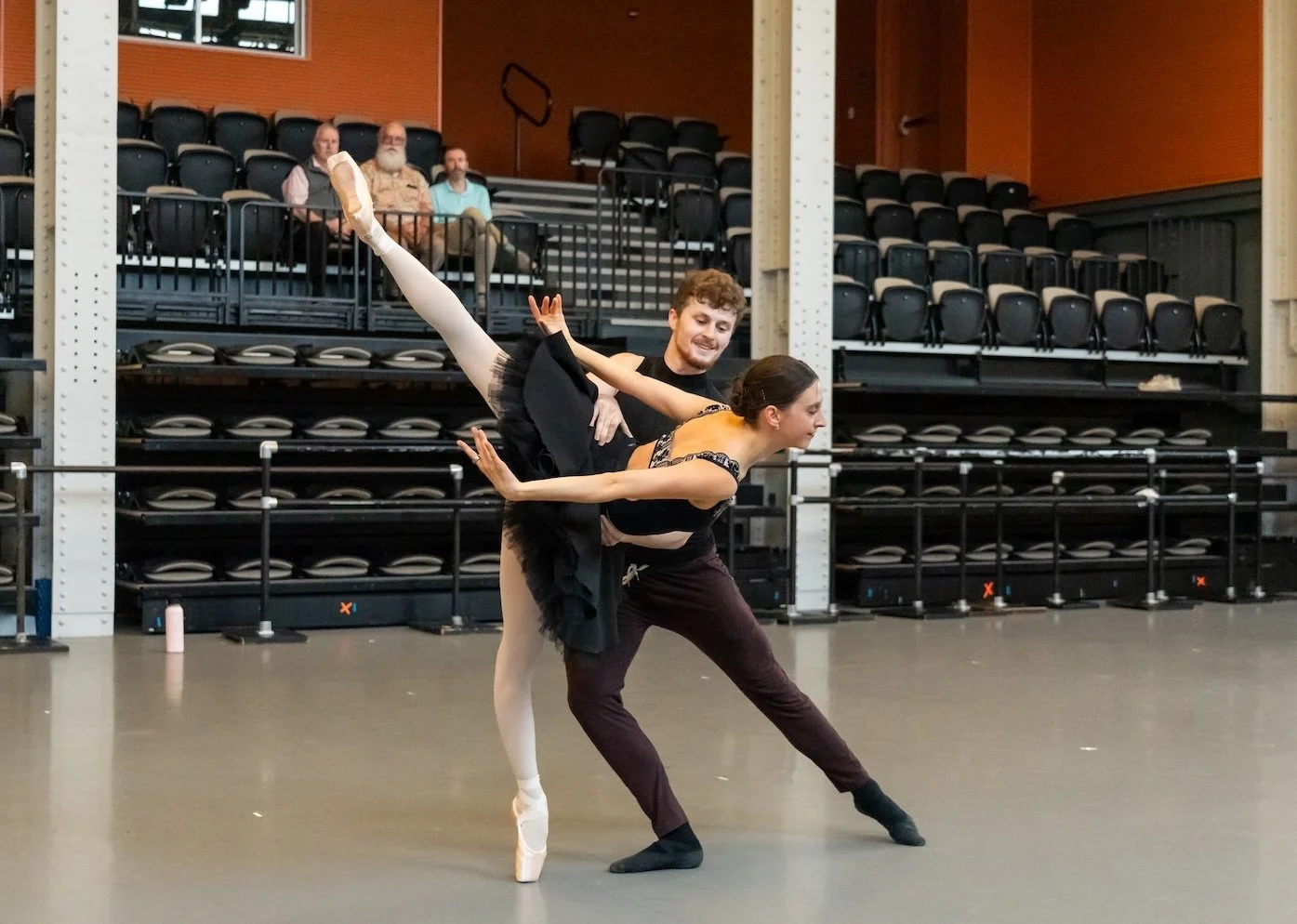
Kansas City Ballet Dancers Paul Zusi and Sidney Haefs in rehearsals for Devon Carney’s Swan Lake
With a character named Siegfried, swan symbolism and overwhelmingly emotional music, one can’t help but think of Richard Wagner’s music dramas. Siegfried is the hero of Wagner’s epic Ring Cycle and his opera Lohengrin is based on the legend of the Knight of the Swan, a mysterious hero who appears on a swan-drawn boat to rescue a damsel in distress. And like Swan Lake, Wagner’s operas lend them themselves uncannily to Jungian analysis.
So was Tchaikovsky inspired by Wagner, who died seven years after Swan Lake had its premiere?
“I would not be surprised because some of what Tchaikovsky wrote in Swan Lake has a very Wagnerian, grand operatic feel to it,” Carney said. “Oh my goodness, what an incredible overture. It tells the entire story musically and it has huge lines of music that just uplift you and carry you. I can almost imagine hearing voices while this music is going on.”
Ramona Pansegrau, the Kansas City Ballet’s music director, like Carney, has lived with Swan Lake throughout her decades-long career. Her love and respect for the work has only deepened over the years.
“Tchaikovsky changed ballet music forever,” she said. “His music supports the story with its moody and colorful musical changes. It subliminally tells the story with stunning instrumentation such as the haunting oboe theme. The composer stated that, to him, the sound of the harp was the sound of wind ruffling the feathers of a swan.”
Pansegrau recalled her time at Boston Ballet working with Carney on Swan Lake.
“I first encountered Swan Lake when I was principal pianist for Boston Ballet,” she said. “Before the Soviet Union fell, Boston and Russia collaborated in a “glasnost” Swan Lake. Seven Russian principal dancers came to Boston and danced with Boston principals. The couples were paired American and Russian. They couldn’t talk to each other in words, only in music and dance. Kansas City artistic director Devon Carney was in one of the pairings. It was a transcendent time for me.”
Pansegrau’s work on Swan Lake in Boston was the start of a life-long love affair that she says continues with the current production.
“With Devon here in Kansas City creating his own Swan Lake, I feel incredibly fortunate that we have that memory in common. I think it’s helped create a deeper understanding for me as a conductor with his interpretation of this beautiful ballet.”
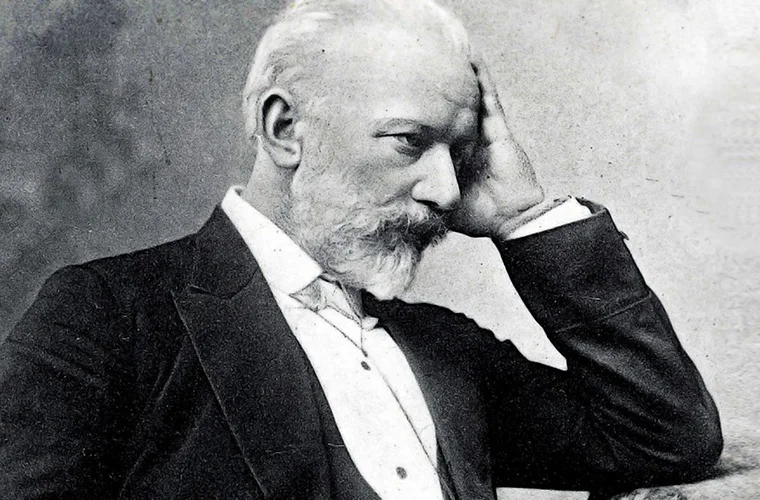
Peter Ilyich Tchaikovsky
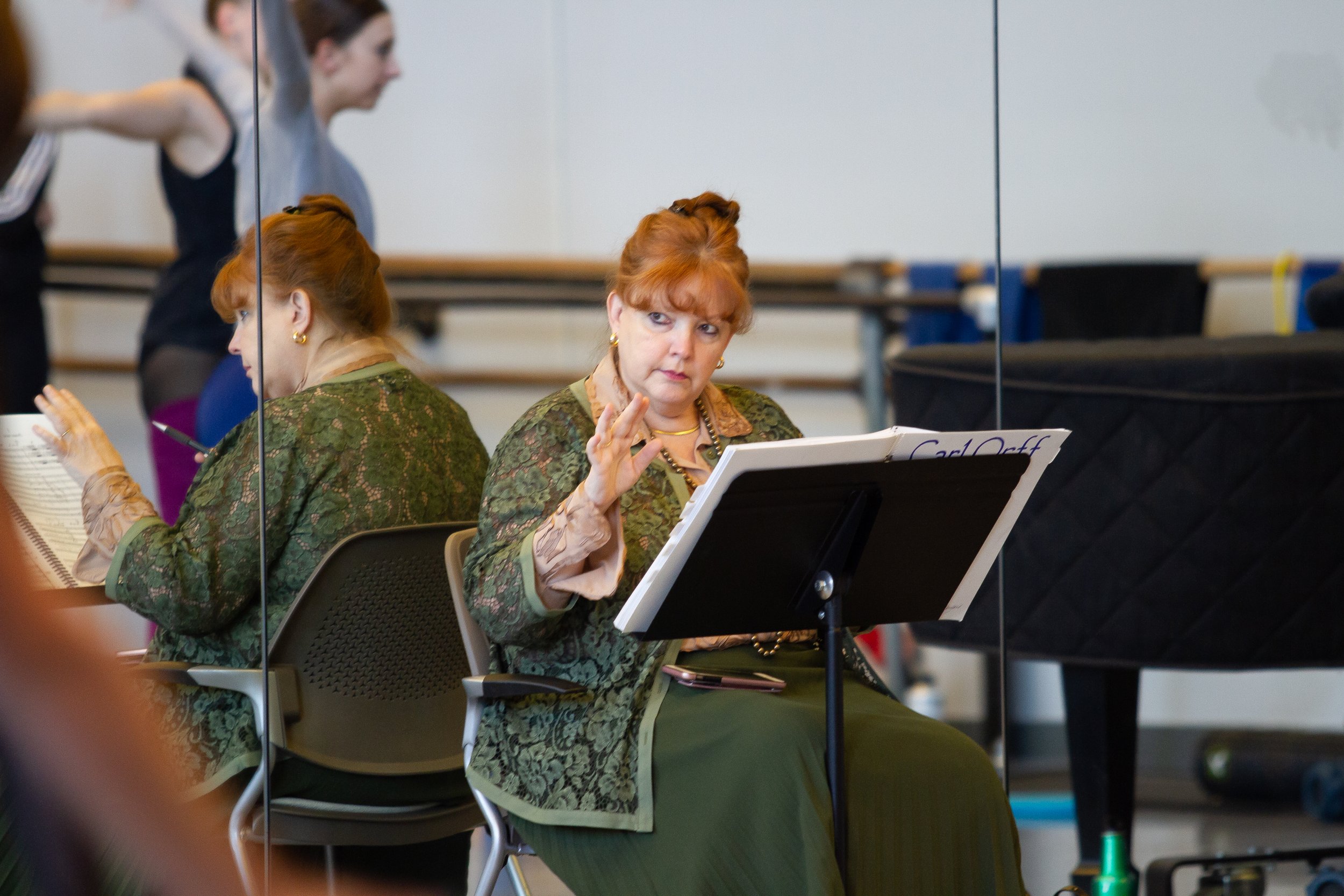
Ramona Pansegrau
Jung said there is no coming into consciousness without pain. Thus, Act Three.
“At this point, the sorcerer Rothbart brings in his daughter, Odile,” Carney said. “She’s electric. She's sensual. She's a seductress. And Siegfried falls head over heels for her. Rothbart has put Siegfried under a spell to make him think that his daughter, Odile, is actually Odette. So Prince Siegfried dances a whole pas de deux with Odile, a huge technical tour de force. Unfortunately he thinks he's swearing his love to Odette, but he’s swearing his love to Odile, thus causing Odette to become trapped in a curse that Rothbart has put on her, unless it can somehow be broken.”
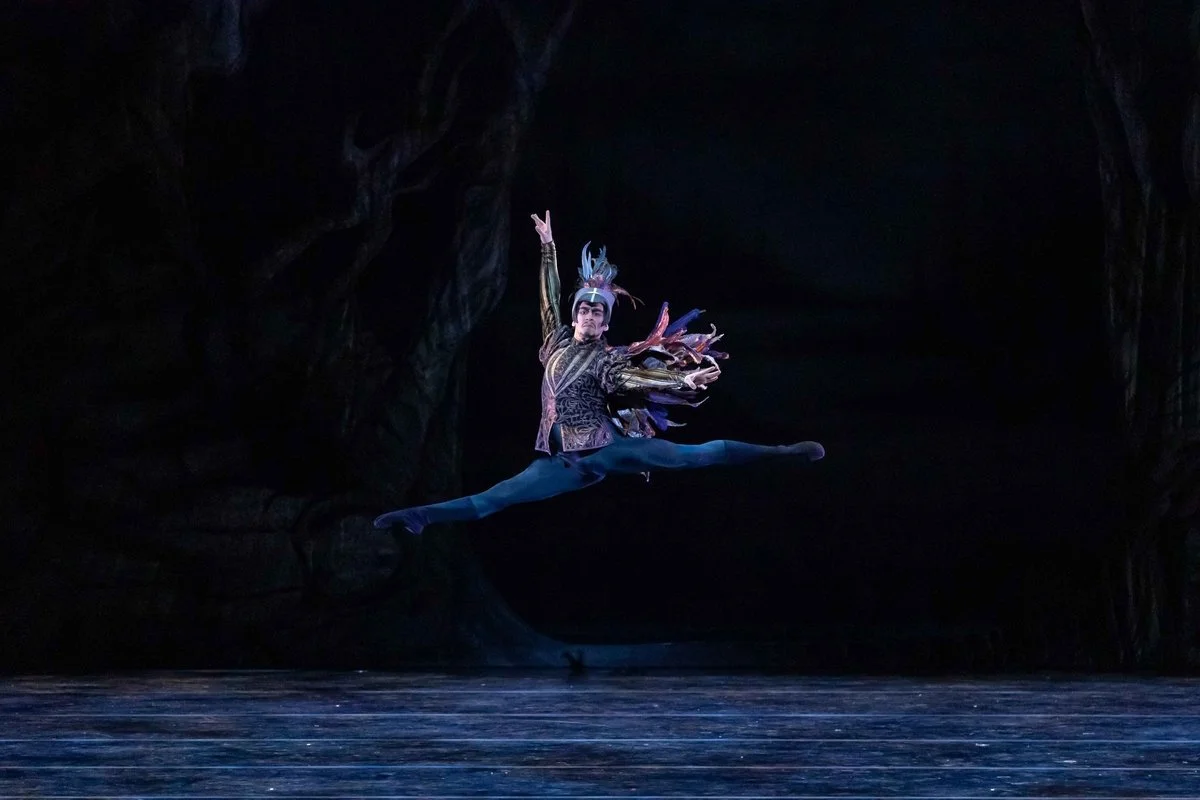
Cameron Thomas as Rothbart. Photo: Brett Pruitt & East Market Studios
That “technical tour de force” is only one of many jaw-dropping moments you will encounter. Whether one gives a fig about Jungian psychology or not, Swan Lake is a tremendous entertainment, filled with spectacle, amazing ensemble work and powerful music performed live.
“It's a timeless classic that truly represents the classical world of dance,” Carney said. “And the Swans are the embodiment and heart and soul of the ballet. It’s extremely challenging to get 24 women to move as a single unit and breathe together, arms up, arms down, move as one. It takes a tremendous amount of rehearsal to get that many people together moving simultaneously, and it's glorious when it happens, when they do move as one. It's breathtaking to see that unison movement. It's absolutely astounding.”
But does Prince Siegfried finally individuate? You’ll have to come to the Muriel Kauffman Theatre to find out.
KANSAS CITY BALLET PRESENTS SWAN LAKE
7:30 p.m. Oct. 17, 28, 23, 24 and 25 and 1:30 p.m. Oct. 19, 25 and 26.
Muriel Kauffman Theatre, Kauffman Center for the Performing Arts.
$34 -$149. 816-931-8993 or kcballet.org
