
AMERICAN WARMTH, CZECH FIRE AND SOME RIP-ROARIN’ SURPRISES
The Frontier Quartet Presents Quartet Rodeo
By Patrick Neas, KC Arts Beat
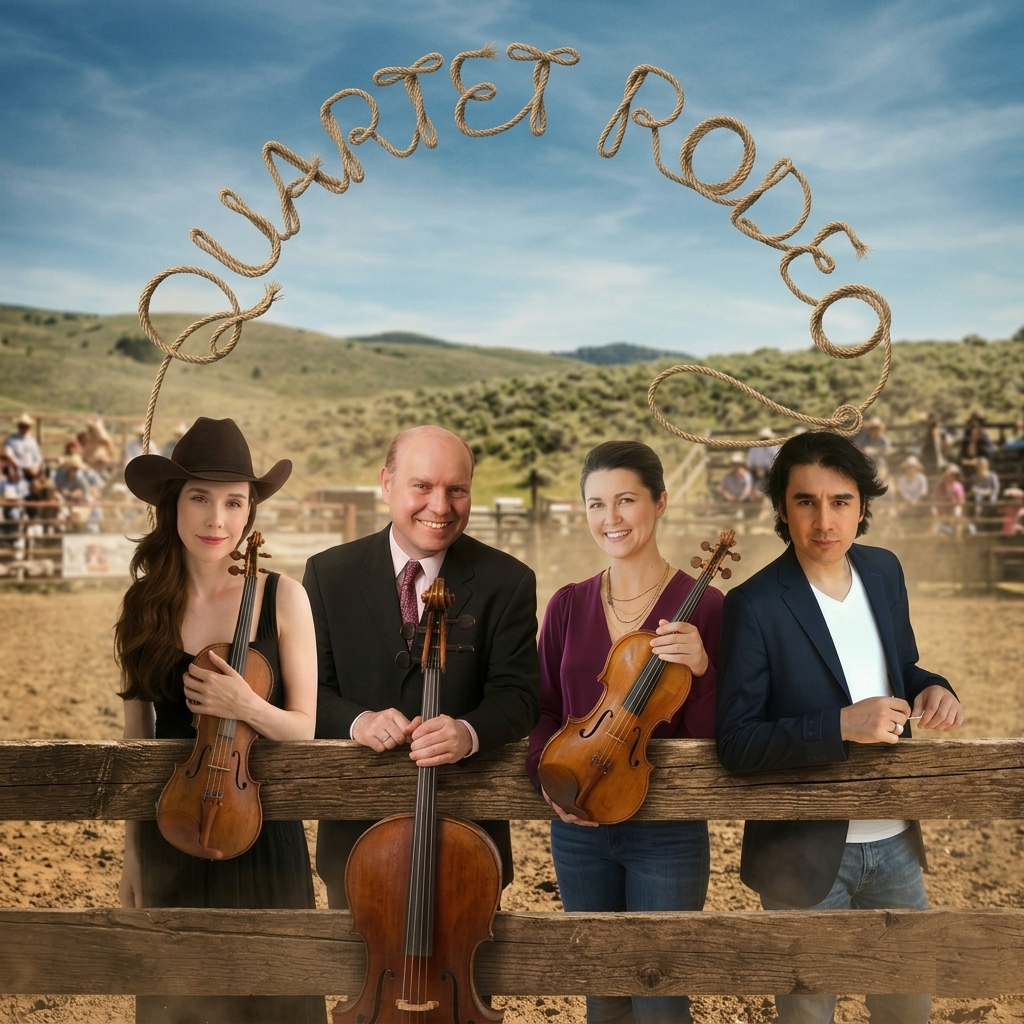
The Frontier Quartet’s upcoming Quartet Rodeo promises to bull rope some of the most soulful, spirited, and surprising works of chamber‑music, pairing the homespun warmth of Dvořák’s “American” Quartet with the raw autobiographical fire of Smetana’s From My Life, then swinging into Copland’s beloved “Simple Gifts” before galloping off into the contemporary brilliance of Dinuk Wijeratne’s Two Pop Songs on Antique Poems. It’s a program designed to move effortlessly from Czech lyricism to American folk clarity to modern rhythmic intensity — a full panorama of frontier energy, both old and new.
Violinist Destiny Mermagen talks about the concert with the kind of enthusiasm that makes chamber music feel alive. The concert performed by the Frontier Quartet will take place at 3 p.m. March 22 at Pine Ridge Presbyterian Church, a venue Mermagen described as welcoming, accessible, and increasingly beloved by Kansas City audiences.
“It’s really easy to get to,” she said, noting its location off Northwest Barry Road near Zona Rosa. “A lot of people don’t know about it, but it’s becoming more known because they just have such a great space and lots of fun people play there.”
The Frontier Quartet is a relatively new ensemble, though its members have been making music together for years. Mermagen and her husband, cellist Mike Mermagen, perform frequently with NAVO, the Kansas City–based ensemble led by Shah Sadikov and Véronique Mathieu. The four musicians realized they had the makings of a natural quartet, and the Frontier Quartet was born.
“We did our first concert two years ago, and it was called Quartet Rodeo,” Mermagen said. “The name was such a hit that I thought, we’ve got to do more Copland and more fun American frontier‑like pieces.”
This year’s program continues that spirit, blending American folk material with two pillars of Czech chamber music, a pairing that may surprise some listeners but makes perfect sense to Mermagen. She spoke with real affection for the deep musical kinship between Czech composers and American folk traditions, especially through the legacy of Antonín Dvořák.
“I have such a soft spot for Dvořák,” she said. “He never wrote a bad tune.”
The Frontier Quartet will perform Dvořák’s beloved “American” Quartet, a work infused with the composer’s fascination with Native American melodies and African American spirituals — influences he absorbed during his 1893 stay with the Czech community in Spillville, Iowa.
“The American Quartet is just so warm and cozy,” she said. “The second movement is soul‑stirring. If you listen to it and it doesn’t move your soul, then I don’t know what will.”
The program also features music by Bedřich Smetana, Dvořák’s great compatriot and a founding figure of Czech national music. The Frontier Quartet will perform the first two movements of Smetana’s autobiographical quartet From My Life, a work written as the composer was going deaf.
Mermagen explained the emotional and musical significance of the piece.
“Smetana actually went deaf, similarly to Beethoven,” she said. “He opens the quartet with the pitch he hears ringing in his ears when he’s going deaf. It’s intense, but it’s also very easy to listen to. It’s so eloquently written.”
The second movement, a polka, offers a contrasting burst of humor and character. “In this section he musically describes what he views the aristocracy to be like,” Mermagen said. “It’s kind of a joke in a way. He’s just so creative.”
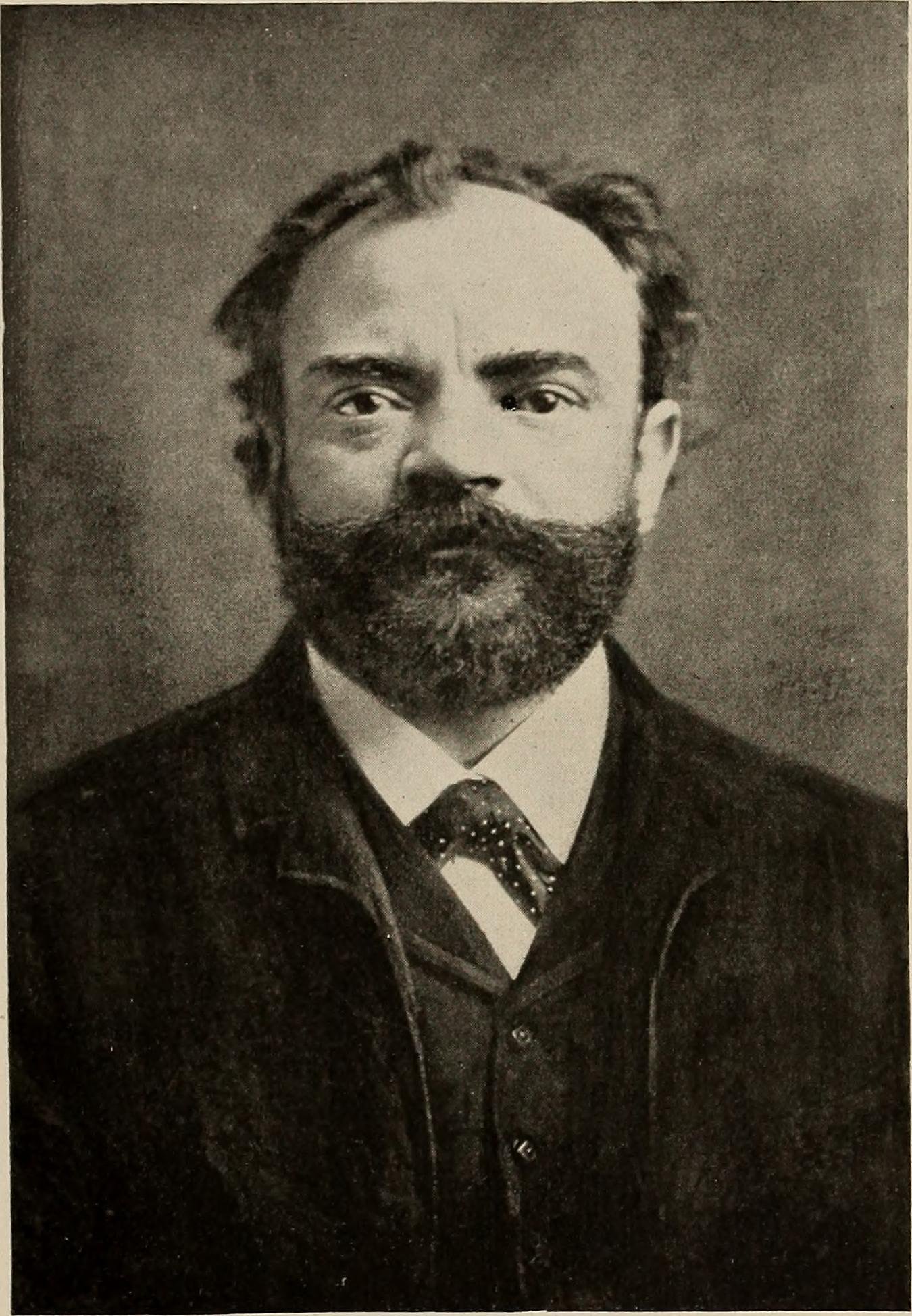
Antonín Dvořák
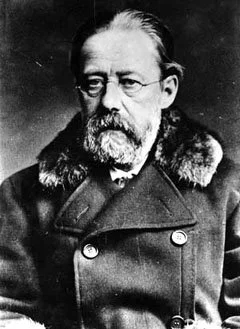
Bedřich Smetana
The American side of the program includes a newly arranged quartet version of Aaron Copland’s “Simple Gifts.” Mermagen commissioned the arrangement after performing a duo version with her husband and wanting to expand it for the Frontier Quartet — and for the young musicians of Prairie Classical, the nonprofit she founded.
“We’re having some Prairie Classical youth members join us for a quartet performance of Simple Gifts,” she said. “It’ll be really fun.”
Youth mentorship is central to Prairie Classical’s mission, and Mermagen spoke passionately about giving young musicians meaningful opportunities to perform alongside professionals.
“It’s so exciting for them to get up on the stage and play with the adults,” she said. “We need more better role models for children. That’s how I try to use Prairie Classical, to show people what the music business can be like and what appropriate adult behavior can also be like.”
Prairie Classical, now in its third season, funds its concerts entirely through community donations. The organization will soon be eligible to apply for grants, but for now, the generosity of supporters keeps the performances free and accessible.
“We have a very supportive community that continues to give donations,” Mermagen said. “It’s completely community funded.”
Quartet Rodeo also includes a contemporary surprise: a movement from Dinuk Wijeratne’s Two Pop Songs on Antique Poems, a work the quartet performed in Canada and immediately wanted to bring to Kansas City.
“When I play new music, I try to have an open mind, but some of it’s bad,” Mermagen said with a laugh. “This is not bad. It’s so cool. I thought, wow, we have to do this in the States when we get back. It’s epic.”
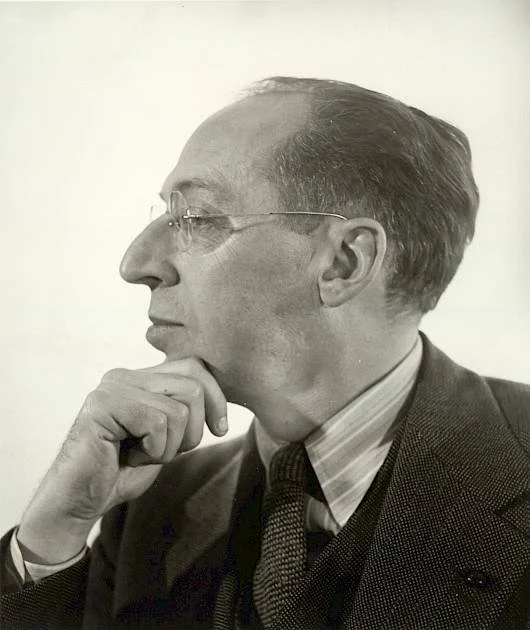
Aaron Copland
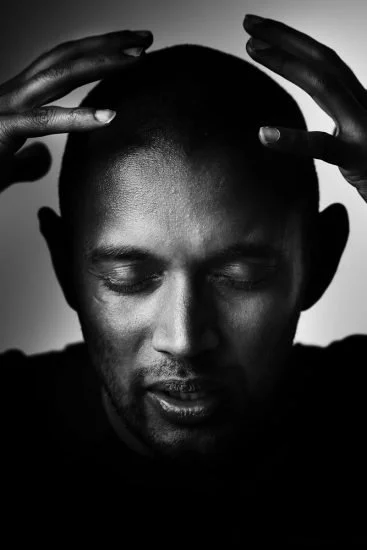
Dinuk Wijeratne
Beyond her work with the Frontier Quartet and Prairie Classical, Mermagen maintains a lively presence as a radio host on Kansas Public Radio, where she brings her mix of curiosity, humor, and adventurous programming to listeners across the region. Her show airs 9 a.m. to noon Monday through Friday, and 1 to 4 p.m. on Saturdays. It’s available on the KPR app, local frequencies, and online streaming.
With Quartet Rodeo, the Frontier Quartet offers a blend of heart, history, and frontier spirit, a program that moves easily from Czech lyricism to American folk simplicity to contemporary fire. For Mermagen, the through‑line is simple: music that speaks directly to the soul.
“Classical music will save the world,” she said, repeating one of Prairie Classical’s mottos. And with a program like this — warm, generous, and offered freely to the community — you can believe she means it.
The Frontier Quartet Presents Quartet Rodeo
The concert is free. To RSVP, https://www.prairieclassical.org/rsvp-quartet-rodeo